Daily rapid antigen testing at aged care homes is key to curbing outbreaks given fewer than one-third of Canberra's residential aged care staff are fully vaccinated, experts say.
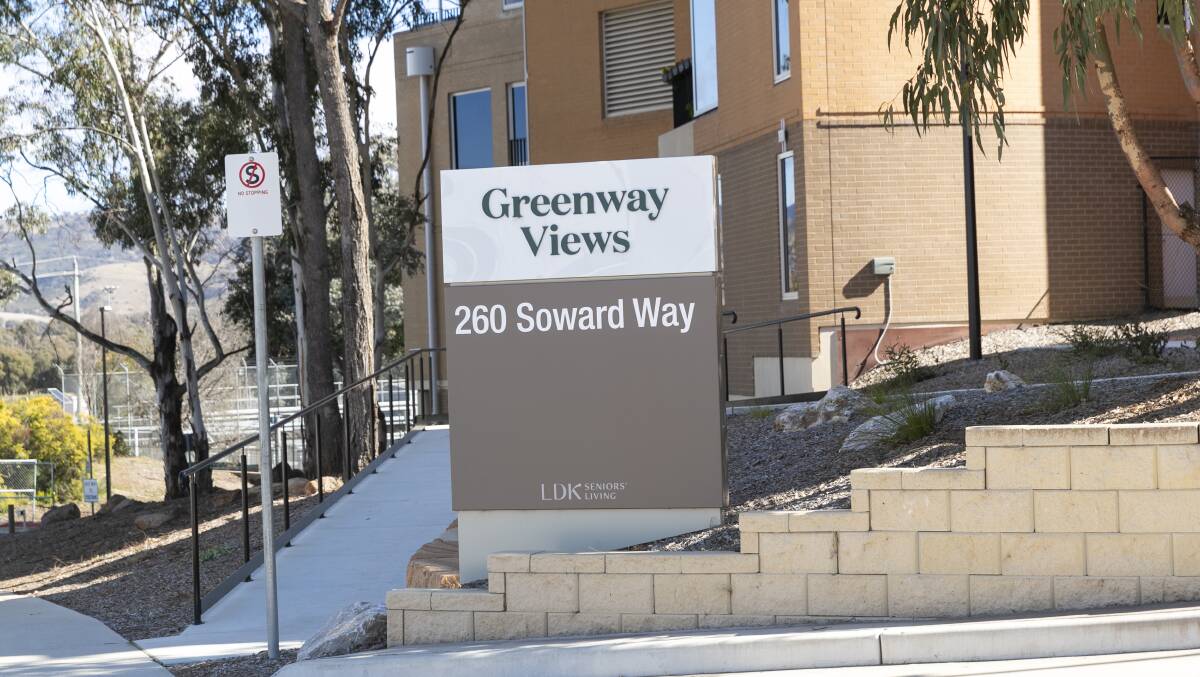
A Tuggeranong aged care facility has been plunged into lockdown after an aged care worker tested positive and worked three shifts at the Greenway Views retirement village while unknowingly infectious.
The shifts were between August 10-12. The worker developed symptoms last Friday and was tested.
The worker had their first vaccine dose. ACT chief health officer Dr Kerryn Coleman was hopeful this would reduce transmission.
The vaccine rollout to aged care workers has been sluggish - last month fewer than one-quarter in the ACT were fully vaccinated. In response, the ACT dedicated Pfizer doses at its mass vaccination hub to front line health, residential aged and disability care workers.
ACT Chief Minister Andrew Barr said the number of vaccinated aged care workers in the territory followed that of the general population, 53 per cent of the adult population had received their first dose and 29 per cent were fully vaccinated.
"The numbers we're talking about are around 1000 aged care workers who are yet to have a first doses," Mr Barr said.
"There are obviously thousands of aged care workers but at least half have had their first dose, which is broadly similar to the general community."
LDK Seniors' Living chief executive Byron Cannon told ABC Radio 70 per cent of staff at Greenway Views had received their first dose and 28 per cent were fully vaccinated. Of the residents, 90 per cent had their first dose and 43 per cent had their second dose.
Greenway Views is classified as a retirement village but provides home care packages to residents.
Dr Coleman said while this was the first time the ACT recorded a case in an aged-care facility, health authorities had prepared for the scenario over the past 18 months.
"We are working very, very closely with the village to contain this outbreak. Our priority is to minimise the risk of transmission and protect the residents and staff in the village," she said
"We are putting in additional safety measures. We have a team out there at the moment and we are including looking at full PPE for staff."
Professor Mary-Louise McLaws, a University of NSW epidemiologist, said rapid antigen testing was needed across aged care homes.
"I can say just looking at the numbers in the ACT that the numbers of second doses are not high enough," Prof McLaws said.
"[If] there's only a third of staff in the ACT who have received both vaccines, that's not high enough for any protection.
"The only way to work around that problem is to ensure you are doing daily testing, with real-time testing ... you need screening tests such as rapid antigen tests."
Prof Peter Collignon, an infectious diseases expert from the Australian National University, said it was important vaccines were saved for new residents, who may have not been covered in the initial vaccine rollout earlier in the year.