Getting to the Super Bowl is a tremendous feat, but losing in it is the most painful team experience in pro football.
For 59 teams, they know all too well the journey of climbing a mountain all season long to reach the summit, only to be knocked down to the base. In some cases, the squads that got there were fortunate to arrive in the first place, ones that truly had little business getting so far. But others appeared to be juggernauts, dynasties in progress, only to be dealt a cruel defeat at a most inopportune moment.
Below, we ranked the 59 Super Bowl losers from worst to best. We looked at how dominant they were during the regular season, using factors such as record, points per game and yards per play differentials. We also looked at star power and which teams had the best runs up to their ultimate loss.
Without further ado, let’s get to the list, starting with a team still searching for its first Super Bowl victory.
59. 2008 Arizona Cardinals (9–7)
Key stats: YPP +0.6 | PPG +0.1
Top players: QB Kurt Warner, WR Larry Fitzgerald, S Adrian Wilson
Coach: Ken Whisenhunt
The Cardinals have the distinction of being the worst team to reach the Super Bowl. They outscored their opponents by one point during the regular season, won only nine games in a division featuring three other teams that combined for 13 wins, and then went on a wild ride in the playoffs, winning three straight before losing in the final seconds to the Steelers in Super Bowl XLIII.
58. 1979 Los Angeles Rams (9–7)
Key stats: YPP +0.4 | PPG +0.9
Top players: RB Wendell Tyler, DE Jack Youngblood, S Nolan Cromwell
Coach: Ray Malavasi
For much of the 1970s, the Rams were a dynamo in the regular season. They won seven NFC West titles but never reached the Super Bowl. Then, in ’79, Los Angeles staggered into the playoffs at 9–7 with a backup quarterback in Vince Ferragamo. In the postseason, the Rams beat Roger Staubach and the Cowboys before shutting out the Buccaneers, only to lose 31–19 to the dynastic Steelers at the Rose Bowl.
57. 2003 Carolina Panthers (11–5)
Key stats: YPP +0.4 | PPG +1.3
Top players: WR Steve Smith Sr., DE Julius Peppers, RB Stephen Davis
Coach: John Fox
Carolina was a one-year wonder, almost toppling the Patriots and keeping the first half of their dynasty from happening. The Panthers won 11 games and the NFC South before going on an improbable playoff run, beating the high-octane Rams in double overtime before upending the top-seeded Eagles. Ultimately, Carolina fell on the final play of Super Bowl XXXVIII to New England on a 41-yard Adam Vinatieri field goal.
56. 1994 San Diego Chargers (11–5)
Key stats: YPP +0.1 | PPG +4.7
Top players: LB Junior Seau, RB Natrone Means, DE Leslie O’Neal
Coach: Bobby Ross
Save for the brilliance of linebacker Junior Seau, the Chargers had little to brag about, which is why they were 18.5-point underdogs in Super Bowl XXIX to the 49ers before losing 49–26. San Diego failed to win a playoff game or the AFC West in every other season of the 1990s except for ’92.
55. 1985 New England Patriots (11–5)
Key stats: YPP +0.7 | PPG +4.5
Top players: LB Andre Tippett, G John Hannah, WR Stanley Morgan
Coach: Raymond Berry
The Patriots weren’t supposed to make the playoffs. They hadn’t been there since the 1982 season, when the strike helped spur the enlarged Super Bowl Tournament. But the ’85 edition caught fire and went into the postseason as a fifth-seeded wild-card team. They beat the Jets in the first round before stunning the top-seeded Raiders in the divisional round.
In the AFC championship, the Patriots broke an 18-game losing streak at the Orange Bowl, beating Dan Marino and the Dolphins, 31–14. But in the Super Bowl, New England was a 10-point underdog to the one-loss Bears and were pummeled, 46–10, and outgained 408–123 in total yards at the Louisiana Superdome.
54. 1995 Pittsburgh Steelers (11–5)
Key stats: YPP +0.4 | PPG +5.0
Top players: LB/DE Kevin Greene, LB Greg Lloyd, C Dermontti Dawson
Coach: Bill Cowher
The Steelers were incredibly consistent in the 1990s. After coach Bill Cowher arrived ahead of the ’92 season, Pittsburgh went to the postseason six consecutive years, but only reached the Super Bowl in the ’95 campaign.
The Steelers earned the AFC’s second seed. In the divisional round, they knocked off the Bills before holding off the upstart Colts when Indianapolis receiver Aaron Bailey dropped a would-be, game-winning Hail Mary. Entering the Super Bowl as 13.5-point underdogs, the Steelers fell 27–17 to the dynastic Cowboys, with quarterback Neil O’Donnell throwing three interceptions, including two to Super Bowl MVP Larry Brown.
53. 2000 New York Giants (12–4)
Key stats: YPP +0.5 | PPG +5.1
Top players: DE Michael Strahan, LB Jessie Armstead, RB Tiki Barber
Coach: Jim Fassel
At 7–4 and having lost two consecutive games, Giants coach Jim Fassel had enough. At a weekly press conference, Fassel guaranteed the playoffs. From there, the Giants won seven straight, including playoff contests over the Eagles and Vikings, the latter of which was a 41–0 whitewash at Giants Stadium.
In the Super Bowl, New York was utterly overwhelmed by the Ravens. Baltimore entered the game with the league’s top-ranked scoring defense, allowing only 10.3 points per game. On Super Sunday, the Ravens didn’t permit a point, save for Ron Dixon’s kickoff-return touchdown in the third quarter of a 34–7 blowout victory for Baltimore.
52. 1999 Tennessee Titans (13–3)
Key stats: YPP -0.1 | PPG +4.2
Top players: T Bruce Matthews, DE Jevon Kearse, QB Steve McNair
Coach: Jeff Fisher
Tennessee was a 13-win wild-card team that famously escaped the opening round of the playoffs, beating the Bills with the Music City Miracle. From there, the Titans beat Peyton Manning in his first postseason foray before knocking off the 14–2 Jaguars in the AFC title game, giving them all three of their 1999 defeats.
In the Super Bowl, Tennessee fell behind the Greatest Show on Turf Rams by a 16–0 count before rallying to tie. After permitting a 73-yard Isaac Bruce touchdown, the Titans drove to St. Louis’s 10-yard line with six seconds remaining. Quarterback Steve McNair found receiver Kevin Dyson on a slant, but Dyson was tackled by linebacker Mike Jones at the 1-yard line to end one of the best Super Bowls of all time.
51. 1986 Denver Broncos (11–5)
Key stats: YPP +0.2 | PPG +3.2
Top players: QB John Elway, DE Rulon Jones, LB Karl Mecklenburg
Coach: Dan Reeves
The 1986 Broncos would be one of the more forgotten Super Bowl participants, if not for The Drive. That season, Denver won the AFC West with a respectable 11–5 mark and then took care of the Patriots in the divisional round.
In Cleveland for the conference title game, the Broncos trailed 20–13 in the final minutes, pinned on their own 2-yard line. From there, Elway drove Denver 98 yards to the tying score before a Rich Karlis field goal won the game in overtime. However, Super Bowl XXI saw the Giants dispatch the Broncos, 39–20, with New York quarterback Phil Simms throwing only three incompletions in the victory.
50. 2021 Cincinnati Bengals (11–5)
Key stats: YPP +0.4 | PPG +5.0
Top players: QB Joe Burrow, WR Ja’Marr Chase, DE Trey Hendrickson
Coach: Zac Taylor
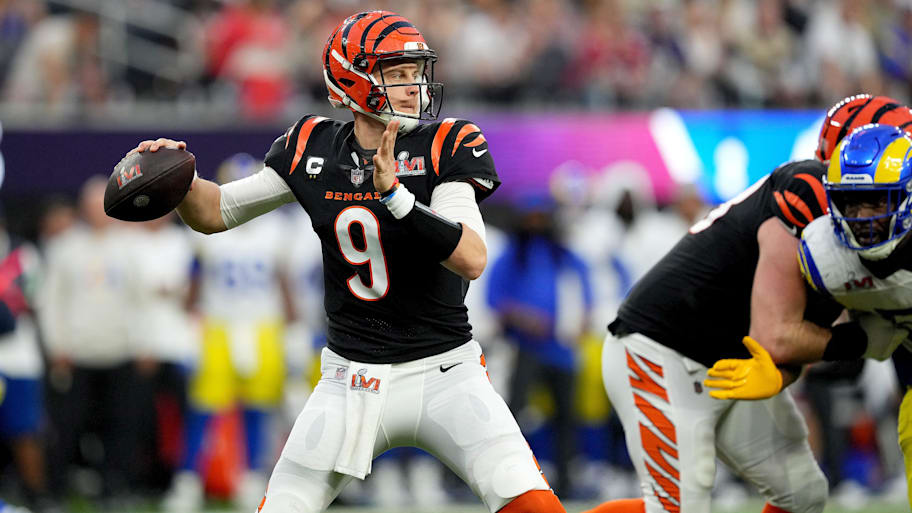
Cincinnati came out of nowhere in 2021. Bengals rookie quarterback Joe Burrow tore multiple ligaments in his knee in 2020, and as a result, Cincinnati finished the season with the No. 5 pick in the draft.
The Bengals took future All-Pro receiver Ja’Marr Chase with the selection, pairing him with a healthy Burrow and took off. Cincinnati won the AFC North, beat the Raiders and the top-seeded Titans in its first two playoff games, and then rallied from a 21–3 deficit in Kansas City to stun the Chiefs in the AFC title game. In the Super Bowl, the Bengals fell 23–20 to the Rams, losing on a Cooper Kupp touchdown with 1:25 remaining.
49. 1996 New England Patriots (11–5)
Key stats: YPP -0.1 | PPG +6.5
Top players: RB Curtis Martin, LB Willie McGinest, CB Ty Law
Coach: Bill Parcells
The Patriots had some pieces of their future dynasty on this squad, including Adam Vinatieri, Lawyer Milloy, McGinest and Law. However, the 1996 edition was focused more on quarterback Drew Bledsoe and his top targets, receiver Terry Glenn and tight end Ben Coates, who combined for 1,814 yards and 15 touchdowns. For his part, Bledsoe threw for 4,086 yards and 27 touchdowns, earning Pro Bowl honors.
In the playoffs, New England dispatched the Steelers and Jaguars before running into Brett Favre and the Packers in Super Bowl XXXI. The Patriots lost, 35–21, with Favre throwing for 246 yards and two touchdowns, while Bledsoe tossed four interceptions.
48. 2024 Kansas City Chiefs (15–2)
Key stats: YPP -0.2 | PPG +3.4
Top players: QB Patrick Mahomes, DT Chris Jones, TE Travis Kelce
Coach: Andy Reid
The Chiefs lived a charmed life in their quest for a three-peat. Kansas City played in 13 one-score games, including the playoffs, and won them all, helping the Chiefs clinch their ninth consecutive AFC West title.
In the postseason, Kansas City survived the Texans in the divisional round behind eight sacks and a Travis Kelce touchdown before beating the Bills in the playoffs for the fourth time in five years. Yet in the Super Bowl, the Eagles raced out to a 34–0 lead before winning 40–22, crushing any Chiefs’ hopes of making history.
47. 1993 Buffalo Bills (12–4)
Key stats: YPP -0.1 | PPG +5.1
Top players: RB Thurman Thomas, QB Jim Kelly, DE Bruce Smith
Coach: Marv Levy
The fourth consecutive Bills team to make the Super Bowl, the 1993 edition featured the same roster, unfortunately for Buffalo, with the same outcome.
Earning the conference’s top seed for the third time in four seasons, the Bills survived the Raiders in the divisional round before taking care of Joe Montana’s Chiefs. However, Buffalo once again lost to the Cowboys in the Super Bowl, this time 30–13 at the Georgia Dome.
46. 1987 Denver Broncos (10–4–1)
Key stats: YPP +0.2 | PPG +6.1
Top players: QB John Elway, DE Rulon Jones, LB Karl Mecklenburg
Coach: Dan Reeves
After reaching their first Super Bowl in the John Elway era, the Broncos made a return trip despite the season being interrupted by the NFLPA strike for three weeks. Denver not only won the AFC West but also earned home-field advantage throughout the postseason with John Elway winning MVP honors.
In the divisional round, the Broncos smashed the underdog Oilers, 34–10, before facing the Browns in a rematch of the 1986 AFC title game. Denver won a classic, 38–33, when Cleveland running back Earnest Byner fumbled in the final two minutes, going in for a game-tying touchdown. In the Super Bowl, Washington blitzed the favored Broncos, 42–10, behind a 35-point second quarter.
45. 1970 Dallas Cowboys (10–4)
Key stats: YPP +1.0 | PPG +5.6
Top players: QB Roger Staubach, DT Bob Lilly, T Rayfield Wright
Coach: Tom Landry
Known at the time as Next Year’s Champions, the Cowboys went into 1970 with the hope of reaching and winning their first Super Bowl. Unfortunately for future Hall of Fame coach Tom Landry, only the first part was accomplished.
Winners of the NFC East, Dallas beat the Lions by a bizarre 5–0 score at the Cotton Bowl before going on the road and defeating the 49ers at Kezar Stadium in the NFC championship game, closing that building for good. In the Super Bowl, the Cowboys lost, 16–13, to the Colts on Jim O’Brien’s 32-yard field goal. Dallas scored only 13 points off seven Baltimore turnovers, while committing four of its own.
44. 1992 Buffalo Bills (11–5)
Key stats: YPP +0.8 | PPG +6.1
Top players: RB Thurman Thomas, QB Jim Kelly, DE Bruce Smith
Coach: Marv Levy
After losing two consecutive Super Bowls, the Bills came back strong once again. This time, however, they were a wild-card team and the AFC’s fourth seed after sustaining injuries to quarterback Jim Kelly and running back Thurman Thomas.
With both Kelly and Thomas sidelined in the wild-card round, the Bills trailed Houston 35–3 before authoring the greatest comeback in NFL playoff history, winning 41–38 in overtime. Buffalo advanced to the Super Bowl by beating the Steelers and Dolphins on the road, but were crushed in Pasadena by the Cowboys, who rolled to a 52–17 victory off nine Bills’ turnovers.
43. 1982 Miami Dolphins (7–2)
Key stats: YPP +0.4 | PPG +5.4
Top players: LB A.J. Duhe, RB Andra Franklin, DT Bob Baumhower
Coach: Don Shula
In the strike-shortened 1982 campaign, the Dolphins earned the AFC’s second seed behind a defense known as the Killer B’s. With the Blackwood brothers, Bob Baumhower, Doug Betters, Kim Bokamper and Bob Brudzinski populating the unit, Miami ranked second in points allowed.
In the Super Bowl Tournament, the Dolphins dispatched the Patriots, Chargers and Jets at the Orange Bowl. Come Super Sunday, Miami encountered future Hall of Fame back John Riggins and an upstart Washington team. Despite being favorites, Miami lost 27–17 as Riggins ran for 166 yards, including a game-winning 43-yard touchdown jaunt in the fourth quarter.
42. 1989 Denver Broncos (11–5)
Key stats: YPP +0.3 | PPG +7.5
Top players: QB John Elway, S Steve Atwater, LB Karl Mecklenburg
Coach: Dan Reeves
After losing the Super Bowl in 1986 and ’87, the ’89 Broncos followed a similar script. Winning the AFC West once more behind the right arm of John Elway and a defense ranking first in points allowed at 14.1 per game, Denver had home-field advantage.
In the divisional round, the Broncos narrowly escaped the upset-minded Steelers, 24–23, before pummeling the Browns during their third matchup across four seasons in the conference championship game. However, the Super Bowl was once again a disaster. Denver lost 55–10 to the 49ers, with Joe Montana throwing five touchdown passes.
41. 1981 Cincinnati Bengals (12–4)
Key stats: YPP +0.5 | PPG +7.3
Top players: QB Ken Anderson, WR Cris Collinsworth, T Anthony Muñoz
Coach: Forrest Gregg
Every once in a while, a team can come from nowhere to challenge for a championship. Such was the case with the 1981 Bengals, who, after failing to qualify for the postseason each of the past five years, came within a victory of winning it all behind MVP quarterback Ken Anderson.
In their first season wearing a striped helmet, the Bengals won the AFC North and earned home-field advantage. After beating the Bills, Cincinnati hosted what became known as the Freezer Bowl, beating the Chargers 27–7 in -59 degree weather (with the wind chill) for the AFC title. In the Super Bowl, the Bengals trailed the 49ers 20–0 before rallying, only to come up short, 26–20.
40. 1975 Dallas Cowboys (10–4)
Key stats: YPP +0.9 | PPG +5.9
Top players: QB Roger Staubach, DT Randy White, T Rayfield Wright
Coach: Tom Landry
In a rare year where the 1970s Cowboys were expected to be rebuilding rather than contending for a title, Dallas decided to flip the script behind Pro Bowl quarterback Roger Staubach and his 17 touchdown passes.
After winning 10 games and earning the NFC’s wild-card spot, the Cowboys pulled off a heartstopper in the divisional round, beating the Vikings in Minnesota on Drew Pearson’s 50-yard Hail Mary grab in the final minute. After winning 37–7 over the Rams the following weekend, Dallas attempted to dethrone the champion Steelers but lost 21–17, as Pittsburgh receiver Lynn Swann caught four passes for 161 yards and a touchdown.
39. 1974 Minnesota Vikings (10–4)
Key stats: YPP +0.6 | PPG +8.2
Top players: RB Chuck Foreman, QB Fran Tarkenton, DT Alan Page
Coach: Bud Grant
Few teams were more consistent than the 1970s Vikings. Minnesota won six consecutive NFC Central titles and 11 of 13. The Vikings also reached four Super Bowls, including 1974, their third trip to the ultimate game. With 10 wins, Minnesota finished in the top five in both offensive and defensive scoring while running back Chuck Foreman led the league with 15 touchdowns.
In the postseason, the Vikings beat the Cardinals and Rams at Metropolitan Stadium, earning their second consecutive Super Bowl appearance. Minnesota’s defense allowed only 16 points, but the Vikings lost, 16–6, to the Steelers, giving Pittsburgh its first championship.
38. 1988 Cincinnati Bengals (12–4)
Key stats: YPP +1.2 | PPG +7.4
Top players: QB Boomer Esiason, DT Tim Krumrie, RB Ickey Woods
Coach: Sam Wyche
Much like the 1981 Bengals, the ’88 Bengals came from nowhere before losing to the 49ers in a one-score Super Bowl. And, like the ’81 team, they had an MVP quarterback in Boomer Esiason.
The 1988 team revolutionized offense, becoming the first to play no-huddle throughout the entire season. The result was 12 wins, a league-best 28 points per game and an AFC title after beating the Seahawks and Bills in the conference playoffs. In the Super Bowl, Cincinnati led 16–13 in the final minute before Joe Montana found John Taylor for the game-winning touchdown with 34 seconds remaining.
37. 2004 Philadelphia Eagles (13–3)
Key stats: YPP +1.0 | PPG +7.8
Top players: WR Terrell Owens, S Brian Dawkins, QB Donovan McNabb
Coach: Andy Reid
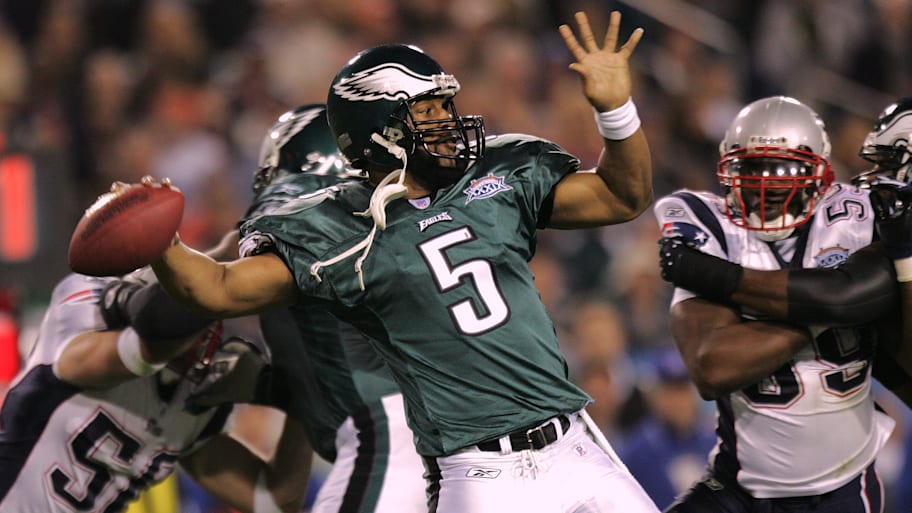
After three consecutive NFC title game losses, the Eagles finally broke through with Andy Reid and quarterback Donovan McNabb leading the way alongside a terrific defense.
In Reid’s sixth season, the Eagles won 13 games as McNabb earned Pro Bowl honors with 31 touchdown passes. The defense finished second in points against, helping top-seeded Philadelphia beat the Vikings and Falcons to reach Super Bowl XXXIX. The Eagles hung tough but lost to the defending champion Patriots, 24–17.
36. 1977 Denver Broncos (12–2)
Key stats: YPP +0.3 | PPG +9.0
Top players: LB Randy Gradishar, DT Lyle Alzado, QB Craig Morton
Coach: Red Miller
The Broncos were a longtime doormat before 1977, never making the playoffs across their first 18 years of existence. But things came together behind the Orange Crush defense, a unit that had four first-team All-Pros while allowing 10.3 points per game.
After winning the AFC West, the Broncos dispatched the dynastic Steelers in the divisional round before overcoming the Raiders, 20–17, in the AFC championship game. In Super Bowl XII, Denver ran into the Cowboys and their Doomsday Defense in a 27–10 defeat while committing eight turnovers.
35. 2012 San Francisco 49ers (11–4–1)
Key stats: YPP +1.3 | PPG +7.7
Top players: LB Patrick Willis, LB NaVorro Bowman, RB Frank Gore
Coach: Jim Harbaugh
The Niners were a machine in 2012, winning behind the combination of Alex Smith and Colin Kaepernick at quarterback. The roster featured nine Pro Bowlers, including NaVorro Bowman and Patrick Willis, who helped San Francisco rank second in points allowed.
In the postseason, the second-seeded 49ers handled the Packers in the divisional round behind Kaepernick’s 181 rushing yards. Then, after beating the Falcons in the NFC title game, San Francisco fell behind the Ravens 28–6 before a furious rally, only to fall 34–31 when a fourth-and-goal pass from the 5-yard line to Michael Crabtree fell incomplete in the final two minutes.
34. 1972 Washington (11–3)
Key stats: YPP +1.0 | PPG +8.4
Top players: RB Larry Brown, LB Chris Hanburger, WR Charley Taylor
Coach: George Allen
How good was Washington in 1972? It faced the undefeated Dolphins in Super Bowl VII and entered as only a one-point underdog.
Washington’s Hall of Fame coach George Allen transformed the team from a perennial loser into an NFC champion in his second year. Allen relied heavily on MVP running back Larry Brown, who rushed for 1,216 yards and eight scores, while also fielding a defense ranked third in points allowed. In the playoffs, Washington dispatched the Packers and Cowboys by a combined score of 42–6 before falling 14–7 to the only undefeated team in NFL history.
33. 1973 Minnesota Vikings (12–2)
Key stats: YPP +0.4 | PPG +9.1
Top players: RB Chuck Foreman, QB Fran Tarkenton, DT Alan Page
Coach: Bud Grant
In 1973, the Vikings rolled to a 12–2 record and easily handled Washington and Dallas, scoring 27 points in each game before facing the defending champion Dolphins in Super Bowl VIII. However, Minnesota was manhandled in a 24–7 defeat, while Miami rushed for 196 yards and three touchdowns.
32. 1991 Buffalo Bills (13–3)
Key stats: YPP +0.9 | PPG +8.5
Top players: RB Thurman Thomas, QB Jim Kelly, DE Bruce Smith
Coach: Marv Levy
After falling on the final play of Super Bowl XXV, the Bills rebounded in 1991 to not only win the AFC East but also earn home-field advantage. Buffalo’s offense was led by MVP running back Thurman Thomas, who totaled 2,038 yards, the third of four consecutive seasons in which he led the league in that category.
In the postseason, Buffalo easily beat Kansas City in the divisional round before surviving a 10–7 win over Denver. Unfortunately for the Bills, the Super Bowl was once again unfulfilling. Washington raced to a 24–0 lead before winning 37–24, giving the Bills the second of what became four consecutive Super Bowl defeats.
31. 1976 Minnesota Vikings (11–2–1)
Key stats: YPP +0.5 | PPG +9.2
Top players: RB Chuck Foreman, QB Fran Tarkenton, WR Sammy White
Coach: Bud Grant
After losing two of the prior three Super Bowls, the Vikings regrouped once more. Fran Tarkenton threw for 2,961 yards and 17 touchdowns in a Pro Bowl campaign, while receiver Sammy White earned Offensive Rookie of the Year after 906 yards and 10 touchdowns.
Behind a potent offense and the league’s second-ranked scoring defense, the Vikings beat Washington and the Los Angeles Rams at Metropolitan Stadium before facing the one-loss Raiders at the Rose Bowl in Super Bowl XI. Minnesota surrendered 32 points and 429 yards, losing its fourth and final title game of the Bud Grant era.
30. 2018 Los Angeles Rams (13–3)
Key stats: YPP +0.4 | PPG +8.9
Top players: DT Aaron Donald, QB Jared Goff, RB Todd Gurley
Coach: Sean McVay
The Rams emerged as a contender under coach Sean McVay in 2017, winning the NFC West. The following year, McVay led Los Angeles to a 13–3 mark while quarterback Jared Goff earned Pro Bowl honors and running back Todd Gurley was a first-team All-Pro with 1,251 rushing yards and 21 total touchdowns to pace the NFL.
The NFC West champs earned the second seed. L.A. beat Dallas in the divisional round before escaping in overtime against the Saints in New Orleans, primarily thanks to a dubious non-call on blatant pass interference in the fourth quarter by Nickell Robey-Coleman. However, the Patriots beat the Rams 13–3 in the Super Bowl, with Los Angeles managing just 260 total yards.
29. 2020 Kansas City Chiefs (14–2)
Key stats: YPP +0.7 | PPG +7.0
Top players: QB Patrick Mahomes, DT Chris Jones, TE Travis Kelce
Coach: Andy Reid
Kansas City was a juggernaut in many ways. Patrick Mahomes had an MVP-worthy season with 4,740 passing yards and 38 touchdown passes for the league’s top-ranked offense. The Chiefs went 14–1 before a meaningless season-ending loss in Week 17. Yet, they also won a litany of close games down the stretch, including their last seven wins, each coming by one score.
In the AFC playoffs, Mahomes played through a toe injury, which eventually required surgery. Kansas City beat the Browns and Bills but suffered a brutal blow when left tackle Eric Fisher sustained a torn Achilles tendon. In the Super Bowl, Mahomes was under duress all evening against an overwhelming Buccaneers team, which won its second title by pummeling the Chiefs, 31–9.
28. 2016 Atlanta Falcons (11–5)
Key stats: YPP +1.1 | PPG +8.4
Top players: WR Julio Jones, QB Matt Ryan, DE Vic Beasley Jr.
Coach: Dan Quinn
Perhaps no team has had a more painful ending to a fairy tale season. The 2016 Falcons won the NFC South behind an offense led by MVP quarterback Matt Ryan, who threw for 38 touchdowns and 4,944 yards. With Kyle Shanahan as the offensive coordinator, the unit finished second in yards and first in points.
In the postseason, Atlanta rolled past the Seahawks and Packers before arriving at Super Bowl LI for a date with the Patriots. There, the Falcons ran out to a 28–3 lead in the third quarter before everything fell apart. New England scored 31 unanswered points to capture its fifth championship of the Tom Brady era, while leaving Atlanta ringless.
27. 2002 Oakland Raiders (11–5)
Key stats: YPP +0.8 | PPG +9.1
Top players: WR Jerry Rice, QB Rich Gannon, S Charles Woodson
Coach: Bill Callahan
Oakland had come close to reaching the Super Bowl the two years prior, losing to the Ravens in the AFC title game and falling to the Patriots in the infamous Tuck Rule game. In 2002, the offense hummed with MVP quarterback Rich Gannon throwing to a pair of Hall of Fame wideouts in Jerry Rice and Tim Brown, leading the NFL with 4,689 passing yards.
The Raiders handled the Jets 30–10 in the divisional round before beating the Titans in front of the Black Hole, returning to the Super Bowl for the first time since 1983. However, the Buccaneers and former coach Jon Gruden were waiting. Tampa Bay won 48–21 in Jack Murphy Stadium on the strength of three defensive touchdowns.
26. 1998 Atlanta Falcons (14–2)
Key stats: YPP +0.5 | PPG +9.5
Top players: RB Jamal Anderson, WR Tony Martin, WR Terance Mathis
Coach: Dan Reeves
Atlanta wasn’t supposed to sniff the Super Bowl. The Falcons had only made the playoffs twice in the 1990s before the ’98 season and had never reached the NFC title game in franchise history. Yet behind star running back Jamal Anderson and his 1,846 rushing yards and 14 touchdowns, Atlanta won 14 games and earned the NFC’s second seed.
In the divisional round, the Falcons knocked off the perennially-contending 49ers before engineering a shocking upset of the 15–1 Vikings, winning 30–27 in overtime after Gary Anderson’s famous missed kick in the fourth quarter. In Super Bowl XXXIII, Dan Reeves saw his former pupil, Broncos quarterback John Elway, get the last laugh as Denver won 34–19.
25. 2022 Philadelphia Eagles (14–3)
Key stats: YPP +1.1 | PPG +7.9
Top players: WR A.J. Brown, C Jason Kelce, T Lane Johnson
Coach: Nick Sirianni
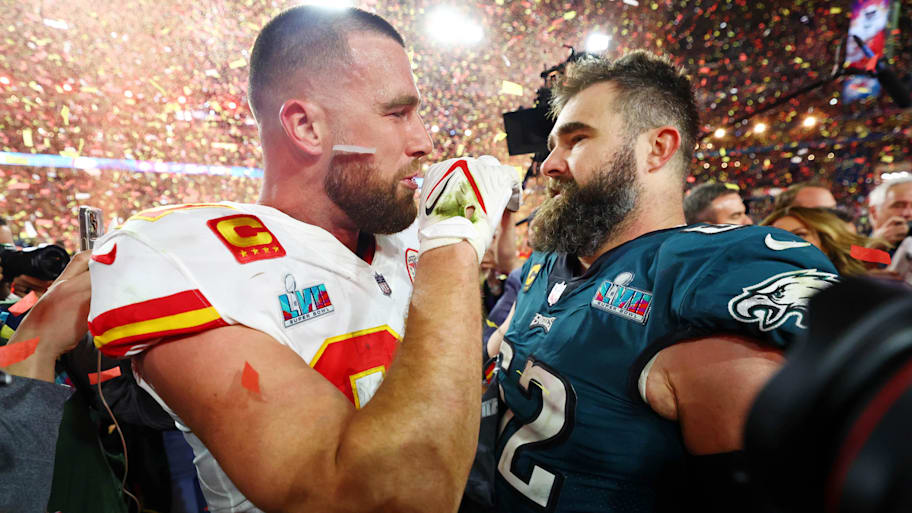
The Eagles have proven to be one of the best teams of their era, reaching three Super Bowls in eight years. In 2022, Philadelphia was a machine as Jalen Hurts earned second-team All-Pro honors, while Miles Sanders, A.J. Brown and DeVonta Smith all amassed over 1,000 yards. Defensively, the Eagles led the league with 70 sacks.
In the postseason, Philadelphia was dominant at home, beating the overmatched Giants and 49ers by a combined score of 69–14. But in the Super Bowl, the Eagles couldn’t hold off the Chiefs despite a double-digit, second-half lead. Kansas City won 38–35 while the Eagles were held without a sack.
24. 2006 Chicago Bears (13–3)
Key stats: YPP +0.4 | PPG +10.8
Top players: LB Brian Urlacher, LB Lance Briggs, RB Thomas Jones
Coach: Lovie Smith
Many remember the 2006 Bears as a speed bump to the Colts, who finally won their first Super Bowl with Peyton Manning at the controls. But while Rex Grossman might be the worst starting quarterback to grace Super Bowl Sunday, Chicago was far from a farce.
The Bears were a defensive menace behind star linebackers Lance Briggs and Brian Urlacher, and cornerback Charles Tillman. They ranked third in points permitted and fifth in yards, holding teams to 10 points or fewer in six regular-season games. Unfortunately, Chicago couldn’t slow down the Colts in the Miami rain in Super Bowl XLI, losing 29–17 while Dominic Rhodes rushed for 113 yards and a score.
23. 2011 New England Patriots (13–3)
Key stats: YPP +0.1 | PPG +10.7
Top players: QB Tom Brady, TE Rob Gronkowski, WR Julian Edelman
Coach: Bill Belichick
After winning three Super Bowls in four seasons to establish their dynasty between 2001 and ’04, the Patriots failed to win another championship despite going 16–0 in 2007. But in ’11, New England roared back to the Super Bowl after winning another AFC East title, with Tom Brady throwing for 5,235 yards and 39 touchdowns.
As the AFC’s top seed, the Patriots beat the Broncos and Ravens in the postseason before squaring off with the Giants in Super Bowl XLVI. New York was an underwhelming opponent, having given up more points than it scored in the regular season. Still, the Giants outplayed the Patriots for the second time in five years on the sport’s biggest stage, winning 21–17.
22. 2010 Pittsburgh Steelers (12–4)
Key stats: YPP +1.1 | PPG +8.9
Top players: QB Ben Roethlisberger, S Troy Polamalu, LB James Harrison
Coach: Mike Tomlin
Pittsburgh was amid a tremendous run entering the 2010 season, having won two of the five past Super Bowls. Under Mike Tomlin, with Ben Roethlisberger under center, the Steelers won the AFC once more, as the defense ranked second, with Hall of Fame safety Troy Polamalu patrolling deep and James Harrison collecting 10.5 sacks.
In the postseason, Pittsburgh dispatched the Ravens and Jets at Heinz Field before taking on the sixth-seeded Packers in Super Bowl XLV, led by Aaron Rodgers. Rodgers shredded the Steelers, throwing for 304 yards and three touchdowns in a 31–25 victory. Tomlin never again reached the Super Bowl in Pittsburgh, ironically ending his career there with Rodgers.
21. 1971 Miami Dolphins (10–3–1)
Key stats: YPP +0.9 | PPG +10.1
Top players: RB Larry Csonka, WR Paul Warfield, LB Nick Buoniconti
Coach: Don Shula
The Dolphins were a marvel in the early 1970s. Despite being an expansion team in ’66 and coming over from the AFL in the ’70 merger, Miami was quickly a force to be reckoned with behind future Hall of Fame coach Don Shula and fullback Larry Csonka.
Csonka powered the AFC East champions to 10 wins by rushing for 1,051 yards and seven scores, while the no-name defense ranked third in points allowed. Come the postseason, Miami pulled a double-overtime upset over the Chiefs on Christmas Day before shutting out Johnny Unitas and the Colts, 21–0. In the Super Bowl, however, the Dolphins were hammered 24–3 by the Cowboys, delaying their title dreams by a year.
20. 1980 Philadelphia Eagles (12–4)
Key stats: YPP +1.0 | PPG +10.1
Top players: RB Wilbert Montgomery, WR Harold Carmichael, DE Claude Humphrey
Coach: Dick Vermeil
The Eagles were a doormat for the better part of two decades. They had one winning season between 1962 and ’77. But they rose in ’80 under coach Dick Vermeil, riding the talents of 1,000-yard back Wilbert Montgomery, Hall of Fame receiver Harold Carmichael, and the league’s top-ranked scoring defense.
After winning the NFC East with 12 wins, Philadelphia dispatched the Vikings in the divisional round before defeating the Cowboys, 20–7, to advance to its first Super Bowl. On that Sunday, Ron Jaworski threw three interceptions, all to linebacker Rod Martin, as the Eagles lost 27–10 to the Raiders at the Louisiana Superdome.
19. 1966 Kansas City Chiefs (11–2–1)
Key stats: YPP +1.5 | PPG +12.3
Top players: QB Len Dawson, LB/DE Bobby Bell, DT Buck Buchanan
Coach: Hank StramL.A. Memorial Coliseum.
The Chiefs were the first representative of the American Football League in the Super Bowl, and they earned their way convincingly. Kansas City won the AFL West with 11 wins, led by a group of Hall of Famers, including Len Dawson, Buck Buchanan, Bobby Bell and Johnny Robinson.
Kansas City went to Buffalo in the AFL title game and dismantled the league’s two-time defending champion, beating the Bills 31–7 behind the league’s top-ranked offense and second-ranked defense. But in Super Bowl I, Kansas City proved no match for Vince Lombardi and his dynastic Packers, losing 35–10 at the L.A. Memorial Coliseum.
18. 2005 Seattle Seahawks (13–3)
Key stats: YPP +0.9 | PPG +11.4
Top players: RB Shaun Alexander, T Walter Jones, QB Matt Hasselbeck
Coach: Mike Holmgren
The 2005 Seahawks will always be remembered for Shaun Alexander and his MVP season, in which he rushed for 1,880 yards and 27 touchdowns. However, Seattle was a dominant team, winning four games by at least 25 points, including consecutive wins over the Eagles and 49ers by a combined score of 83–3.
In the postseason, the top-seeded Seahawks beat Washington and Carolina each by double digits before facing the sixth-seeded Steelers in the Super Bowl. Entering as a four-point underdog, Seattle fell 21–10 in perhaps the worst-officiated Super Bowl in history.
17. 2009 Indianapolis Colts (14–2)
Key stats: YPP +0.9 | PPG +6.8
Top players: QB Peyton Manning, WR Reggie Wayne, DE Dwight Freeney
Coach: Mike Caldwell
If they hadn’t chosen to rest starters the last two weeks of the regular season, the Colts would have likely gone unbeaten. At 14–0, Indianapolis rolled with six double-digit wins while Peyton Manning threw for 4,500 yards and 33 touchdowns to take home MVP honors. Defensively, the combination of Dwight Freeney and Robert Mathis amassed 23 sacks and 41 QB hits.
In the postseason, top-seeded Indianapolis hammered the Ravens and Jets before entering Super Bowl XLIV as a 4.5-point favorite against the Saints. However, despite taking a 10–6 lead into halftime, the Colts fell behind before Manning threw a 74-yard pick-six to Tracy Porter, sealing Indianapolis’s fate.
16. 1997 Green Bay Packers (13–3)
Key stats: YPP +1.0 | PPG +8.8
Top players: QB Brett Favre, DE Reggie White, WR Antonio Freeman
Coach: Mike Holmgren
After winning it all the year before, the 1997 Packers attempted to go back-to-back. Brett Favre won his third consecutive MVP award in ’97, splitting it with Barry Sanders as he threw for a league-high 35 touchdowns. On defense, Reggie White added 11 sacks, giving him his 11th season of double-digit sacks.
Following wins over the Buccaneers and top-seeded 49ers in the NFC playoffs, Green Bay entered the Super Bowl as an 11-point favorite against the Broncos. Stunningly, the Packers fell 31–24 primarily due to three turnovers and nine penalties, as John Elway won his first championship.
15. 2014 Seattle Seahawks (12–4)
Key stats: YPP +1.3 | PPG +8.7
Top players: QB Russell Wilson, CB Richard Sherman, RB Marshawn Lynch
Coach: Pete Carroll
If one more yard had been gained, the Seahawks would be remembered as one of the greatest teams of all time. Instead, they’re arguably the biggest what-if in NFL history, along with the 1990s Bills. After winning Super Bowl XLVIII, the Seahawks won another NFC West title, ranked first in defense and watched Marshawn Lynch lead the league with 13 rushing touchdowns.
After beating the Panthers and surviving the Packers in overtime of the NFC title game, Seattle met New England in perhaps the most significant Super Bowl of all time. Trailing 28–24 with under a minute remaining, offensive coordinator Darrell Bevell called a pass from the 1-yard line instead of handing off to Lynch amidst his 102-yard game. Russell Wilson’s throw was intercepted by Malcolm Butler, ending the back-to-back dream.
14. 2017 New England Patriots (13–3)
Key stats: YPP +0.2 | PPG +10.1
Top players: QB Tom Brady, WR Julian Edelman, TE Rob Gronkowski
Coach: Bill Belichick
Another year in the 2000s, another year where the Patriots made a deep run. Tom Brady won his third MVP award in 2017, with a league-best 4,577 passing yards, while receiver Brandin Cooks and tight end Rob Gronkowski went over the 1,000-yard threshold.
After winning their ninth consecutive AFC East title, the top-seeded Patriots took down the Titans. They survived with a controversial call against the Jaguars, when Jacksonville linebacker Myles Jack was ruled down after a fumble recovery. In the Super Bowl, the Patriots were 4.5-point favorites against the Nick Foles–led Eagles but lost 41–33 despite Brady throwing for a Super Bowl record 505 yards.
13. 2019 San Francisco 49ers (13–3)
Key stats: YPP +1.3 | PPG +10.5
Top players: TE George Kittle, LB Fred Warner, DE Nick Bosa
Coach: Kyle Shanahan
While Jimmy Garoppolo was an average quarterback, the rest of the Niners’ roster was loaded in 2019. San Francisco had a heap of Pro Bowlers and All-Pros, including Fred Warner, Dee Ford, Arik Armstead, Nick Bosa, Richard Sherman, George Kittle, Deebo Samuel, Kyle Juszczyk and others, helping it capture the NFC West title and the conference’s top seed.
The 49ers were a machine in the NFC playoffs, beating the Vikings and Packers by a combined score of 64–30 before reaching Super Bowl LIV. Once there, San Francisco took a 20–10 lead into the final eight minutes but surrendered 21 unanswered points to Patrick Mahomes and the Chiefs, losing 31–20.
12. 2015 Carolina Panthers (15–1)
Key stats: YPP +0.6 | PPG +12.0
Top players: QB Cam Newton, LB Luke Kuechly, LB Thomas Davis
Coach: Ron Rivera
Carolina won its first 14 regular-season games and fielded the league’s top scoring offense, led by MVP quarterback Cam Newton, who scored 45 total touchdowns while throwing for 3,837 yards. Defensively, Carolina was led by corner Josh Norman and linebackers Luke Kuechly and Thomas Davis, a unit that ranked sixth.
As the NFC’s top seed, the Panthers ran through the Seahawks and Cardinals, beating Arizona 49–15 in the conference title game. In Super Bowl 50, Carolina entered as a five-point favorite but couldn’t generate much offense against the Broncos, scoring 10 points while committing 12 penalties and four turnovers.
11. 1967 Oakland Raiders (13–1)
Key stats: YPP +1.5 | PPG +16.8
Top players: WR Fred Biletnikoff, G Gene Upshaw, QB Daryle Lamonica
Coach: John Rauch
The 1967 Raiders have an argument as the greatest single-season AFL team. They ranked first in points offensively and first in yards defensively. They won by an average margin of 16.8 points per game, fourth-best of any team on this list. Quarterback Daryle Lamonica led the circuit with 30 touchdown passes, helping Oakland win the AFL West.
In the AFL title game, Oakland annihilated the Houston Oilers, 40–7, earning a date with Vince Lombardi’s Packers in Super Bowl II. Unfortunately for the Raiders, they were dismantled by Green Bay, 33–14, as three turnovers and 160 rushing yards against sealed their fate.
10. 1990 Buffalo Bills (13–3)
Key stats: YPP +1.0 | PPG +10.4
Top players: RB Thurman Thomas, QB Jim Kelly, DE Bruce Smith
Coach: Marv Levy
After reaching the playoffs but falling short of the franchise’s first Super Bowl appearance, the Bills finally made it to the big game. In 1990, Buffalo changed its offensive scheme to emphasize the no-huddle, and the result was a top-scoring offense, with Thurman Thomas leading the NFL with 1,829 scrimmage yards.
Buffalo appeared unstoppable in the postseason, beating the Dolphins and Raiders, scoring 44 and 51 points, respectively. Going into Super Bowl XXV as seven-point favorites against the Giants, Buffalo was expected to win it all, facing a backup quarterback in Jeff Hostetler. However, New York possessed the ball for 40 minutes and 33 seconds, leading to a 20–19 upset victory.
9. 2023 San Francisco 49ers (12–5)
Key stats: YPP +1.6 | PPG +11.4
Top players: RB Christian McCaffrey, TE George Kittle, LB Fred Warner
Coach: Kyle Shanahan
San Francisco has teetered on the brink of its sixth championship for years. In 2023, the Niners were a strong bet to finally capture that elusive ring behind a loaded roster, including 10 players who were either Pro Bowlers or All-Pros. At season’s end, San Francisco was third in points for and against, earning the NFC’s top seed.
In the postseason, the Niners survived a pair of close calls against the Packers and Lions at Levi’s Stadium, winning each by a field goal. In the Super Bowl, the Niners had a lead in each quarter and then, in overtime, but ultimately couldn’t stop Patrick Mahomes, who engineered a 13-play, 75-yard drive to win another Lombardi Trophy.
8. 1983 Washington (14–2)
Key stats: YPP +0.0 | PPG +13.0
Top players: QB Joe Theismann, CB Darrell Green, G Russ Grimm
Coach: Joe Gibbs
Washington didn’t outgain its opponents on a per-play basis, something almost unheard of by any team reaching the Super Bowl. However, Joe Gibbs’s team outscored opponents by a comical 13 points per game. How? Washington set a league record with a plus-43 turnover ratio.
In the regular season, Washington defended its Super Bowl title by breezing to an NFC East title before hammering the Rams, 51–7. In the NFC title game, it survived 24–21 against Joe Montana’s 49ers. But in Super Bowl XVIII, the Raiders crushed Washington, 38–9, ending any hopes of a repeat.
7. 2013 Denver Broncos (13–3)
Key stats: YPP +1.0 | PPG +13.0
Top players: QB Peyton Manning, DE DeMarcus Ware, WR Demaryius Thomas
Coach: John Fox
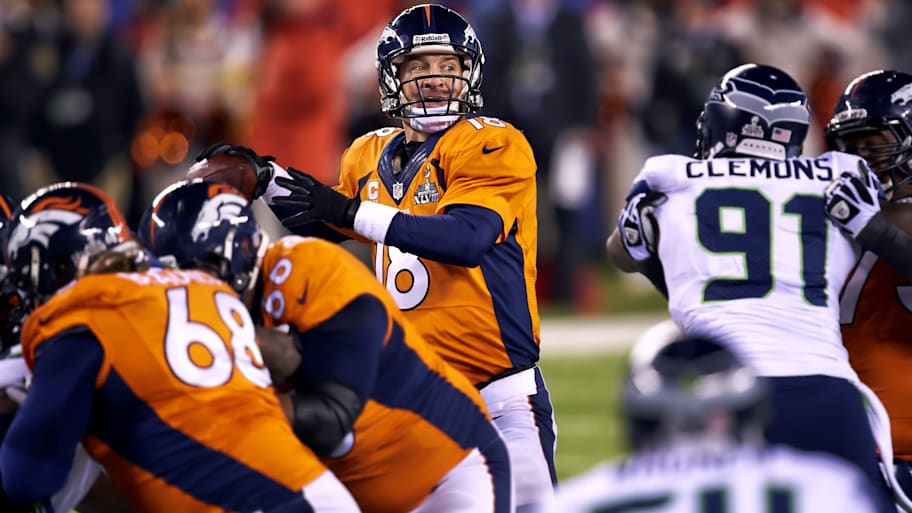
The Broncos were not a balanced team, as their defense ranked 22nd in points allowed. That said, Denver had one of the best offenses ever witnessed, scoring 37.9 points per game while Peyton Manning set all-time single-season records with 5,477 passing yards and 55 touchdown passes.
In the postseason, Denver beat the Chargers and Patriots at home to set up a date with the Seahawks and their top-ranked scoring defense in a classic confrontation of styles. In Super Bowl XLVIII, the Broncos proved no contest for Seattle, losing 43–8 in one of the more lopsided Super Bowls of all time.
6. 1978 Dallas Cowboys (12–4)
Key stats: YPP +1.3 | PPG +11.0
Top players: QB Roger Staubach, RB Tony Dorsett, DT Randy White
Coach: Tom Landry
The Cowboys were coming off a title in 1977, and rolled into ’78 as one of the most talented teams the NFL has seen in the last half-century. The roster was full of Hall of Famers, including Roger Staubach, Tony Dorsett, Drew Pearson, Randy White, Cliff Harris and Jackie Smith, helping Dallas claim the NFC East title and home-field advantage in the playoffs.
After beating the Falcons and Rams to reach Super Bowl XIII, the Cowboys met the Steelers in a game to determine the team of the ’70s. Unfortunately for Dallas, Pittsburgh won 35–31 behind Terry Bradshaw, who threw for 300 yards for the first time in his career.
5. 1984 Miami Dolphins (14–2)
Key stats: YPP +1.3 | PPG +13.5
Top players: QB Dan Marino, WR Mark Clayton, WR Mark Duper
Coach: Don Shula
In his second season, Dan Marino torched the league with a record 5,084 yards and 48 touchdowns, earning MVP honors. The offense led the NFL with 32.1 points per game, while the defense ranked seventh in points against.
In the AFC playoffs, Miami rolled past the Seahawks and Steelers, setting up a dream Super Bowl against Joe Montana and the 49ers. It turned into a nightmare for the Dolphins, as San Francisco won 38–16 while Marino threw two interceptions and was sacked four times by the one-loss Niners.
4. 1969 Minnesota Vikings (12–2)
Key stats: YPP +1.3 | PPG +17.6
Top players: DT Alan Page, DE Carl Eller, T Ron Yary
Coach: Bud Grant
For much of the 1969 season, the Vikings were considered one of the greatest teams in history. They compiled a 12-game winning streak, allowing a league-low 9.5 points per game. The offense also paced the NFL with 27.1 points per game, with quarterback Joe Kapp and his 19 touchdown passes finishing second in MVP voting.
In the NFL playoffs, Minnesota beat the Rams and breezed past the Browns to reach Super Bowl IV. There, the Vikings were 12-point favorites over the AFL’s Chiefs but were handily upset, losing 23–7 at Tulane Stadium. Five turnovers, including three lost fumbles, doomed Minnesota.
3. 2001 St. Louis Rams (14–2)
Key stats: YPP +1.9 | PPG +14.3
Top players: QB Kurt Warner, RB Marshall Faulk, WR Isaac Bruce
Coach: Mike Martz
The Rams appeared to be a dynasty in progress after winning the Super Bowl in 1999. In 2001, they were still humming as the Greatest Show on Turf with two-time MVP Kurt Warner, the ’00 MVP Marshall Faulk, and a pair of superstar receivers in Isaac Bruce and Torry Holt. In ’01, Faulk went for 2,147 total yards and 21 touchdowns, Bruce and Holt each had 1,000-yard campaigns and Warner threw for 4,830 yards and 36 touchdowns.
In the playoffs, St. Louis defeated the Packers and Eagles at home, making it a two-touchdown favorite against the upstart Patriots. But in Super Bowl XXXVI, New England won 20–17 off a Ty Law pick-six off Warner before Tom Brady led a game-winning drive in the final two minutes, capped by Adam Vinatieri’s 48-yard field goal as time expired.
2. 1968 Baltimore Colts (13–1)
Key stats: YPP +1.5 | PPG +18.4
Top players: DE Bubba Smith, QB Earl Morrall, LB Mike Curtis
Coach: Don Shula
The 1968 Colts started the season with what appeared to be a crippling blow, as Johnny Unitas was sidelined with an elbow injury. Incredibly, replacement Earl Morrall not only stepped in but won MVP honors with a league-best 26 touchdown passes while the defense allowed an NFL-low 10.3 points per game.
In the postseason, the Colts beat the Vikings before avenging their only loss of the season, hammering the Browns 34–0 at Cleveland. Installed as 18-point favorites over the AFL’s Jets in Super Bowl III, the Colts were stunned in the Orange Bowl. Baltimore committed five turnovers and missed two field goals, losing 16–7.
1. 2007 New England Patriots (16–0)
Key stats: YPP +1.3 | PPG +19.7
Top players: QB Tom Brady, WR Randy Moss, WR Wes Welker
Coach: Bill Belichick
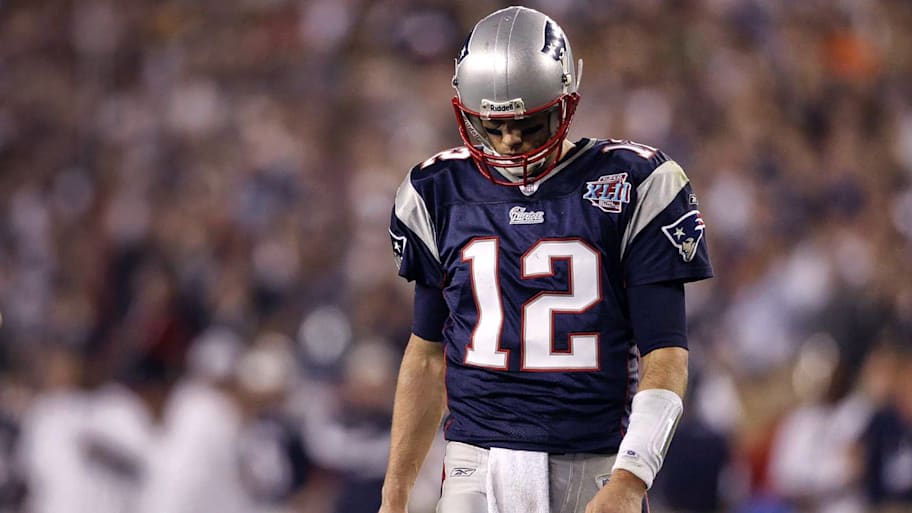
The 2007 Patriots are widely considered the greatest team not to win the Super Bowl. They were undefeated, ran through the NFL with an obscene +19.7 point differential per game, setting records along the way, including Tom Brady throwing 50 touchdowns and Randy Moss catching 23 of them.
Brady won MVP honors, Moss was named Offensive Player of the Year and the Patriots crushed everyone in their path. In the playoffs, they beat the Jaguars and Chargers to set up Super Bowl XLII with the fifth-seed Giants. Installed as a 12.5-point favorite, New England’s vaunted offense, which scored 36.8 points per game, managed only 14.
In the game’s final minutes, Eli Manning found David Tyree for his infamous 32-yard Helmet Catch before Manning connected with Plaxico Burress for a game-winning, 13-yard touchdown, giving New York an improbable win and dealing the Patriots their first loss of the campaign.
More NFL on Sports Illustrated
- Patriots Rematch Digs Up Memories for Seahawks Who Lost 11 Years Ago
- The 60 Greatest Moments in Super Bowl History
- Peyton Manning Did Something Awesome for Drake Maye Before Super Bowl LX
- Josh Allen Has No Excuses for the Bills
This article was originally published on www.si.com as Ranking the 59 Super Bowl Losers From Worst to Best.