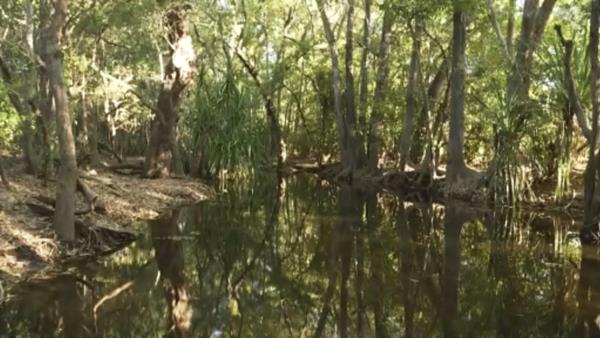
In a tragic incident in northern Australia, a 12-year-old girl lost her life after being attacked by a 4.2-meter (14-foot) crocodile while swimming with her family. This marks the first fatal crocodile attack in the Northern Territory since 2018, reigniting discussions on managing the crocodile population in the region.
Following the attack near Palumpa, an Outback Indigenous community, wildlife rangers worked tirelessly to locate and neutralize the crocodile responsible. After receiving approval from the traditional landowners, the rangers successfully shot the animal, confirming through analysis that it was indeed the one that had killed the young girl.
Experts revealed that the crocodile, estimated to be at least 30 years old, was a male due to its size. Saltwater crocodiles, considered a totem by many Indigenous Australians, can live up to 70 years and continue growing throughout their lives.
Recent efforts to manage crocodile numbers in the Northern Territory include a 10-year plan that aims to increase culling rates near human habitats from 300 to 1,200 a year. With a human population of around 250,000 and an estimated crocodile population of 100,000, authorities emphasize the need to prevent crocodiles from outnumbering humans.
Despite federal legislation outlawing crocodile hunting in 1971, the crocodile population in the Northern Territory has rebounded significantly from a low of 3,000. Crocodile scientist Grahame Webb highlighted that crocs have been regulating their own population by preying on each other for food and territory.
The tragic events have deeply impacted the family of the victim, with local police providing ongoing support to all those affected. The incident serves as a stark reminder of the delicate balance between wildlife conservation and human safety in regions where humans and crocodiles coexist.