Note: The following piece contains spoilers for both Homer's and Nolan's 'The Odyssey'.
Get breaking news anytime, anywhere. Download the TOI app now!
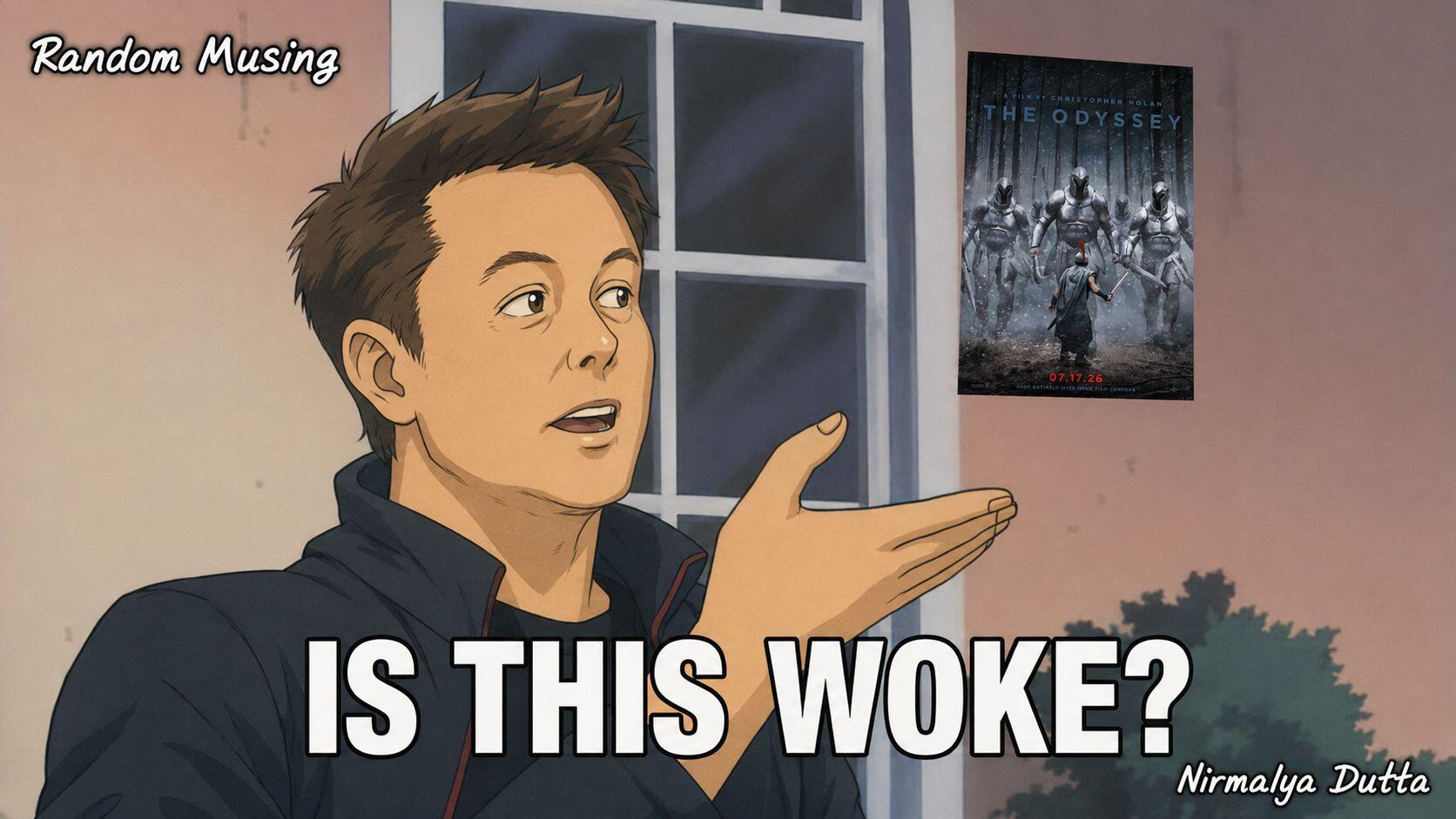
A few years ago, at a popular literature festival, Yann Martel, the author of Life of Pi, made a rather pertinent point about the importance of The Iliad and The Odyssey in Western culture. He argued that, much like the Mahabharata and the Ramayana formed the edifice of Indic civilisation, Homer’s two epics, along with the Bible, were foundational texts of Western civilisation. Perhaps that explains why Musk—who appears to have anointed himself Elon the Lionheart, defender of Western civilisation against wokeness, coloured people and DEI—has been raging against the film ever since the Trojan horse of fake news claimed that Achilles was being played by trans actor Elliot Page.
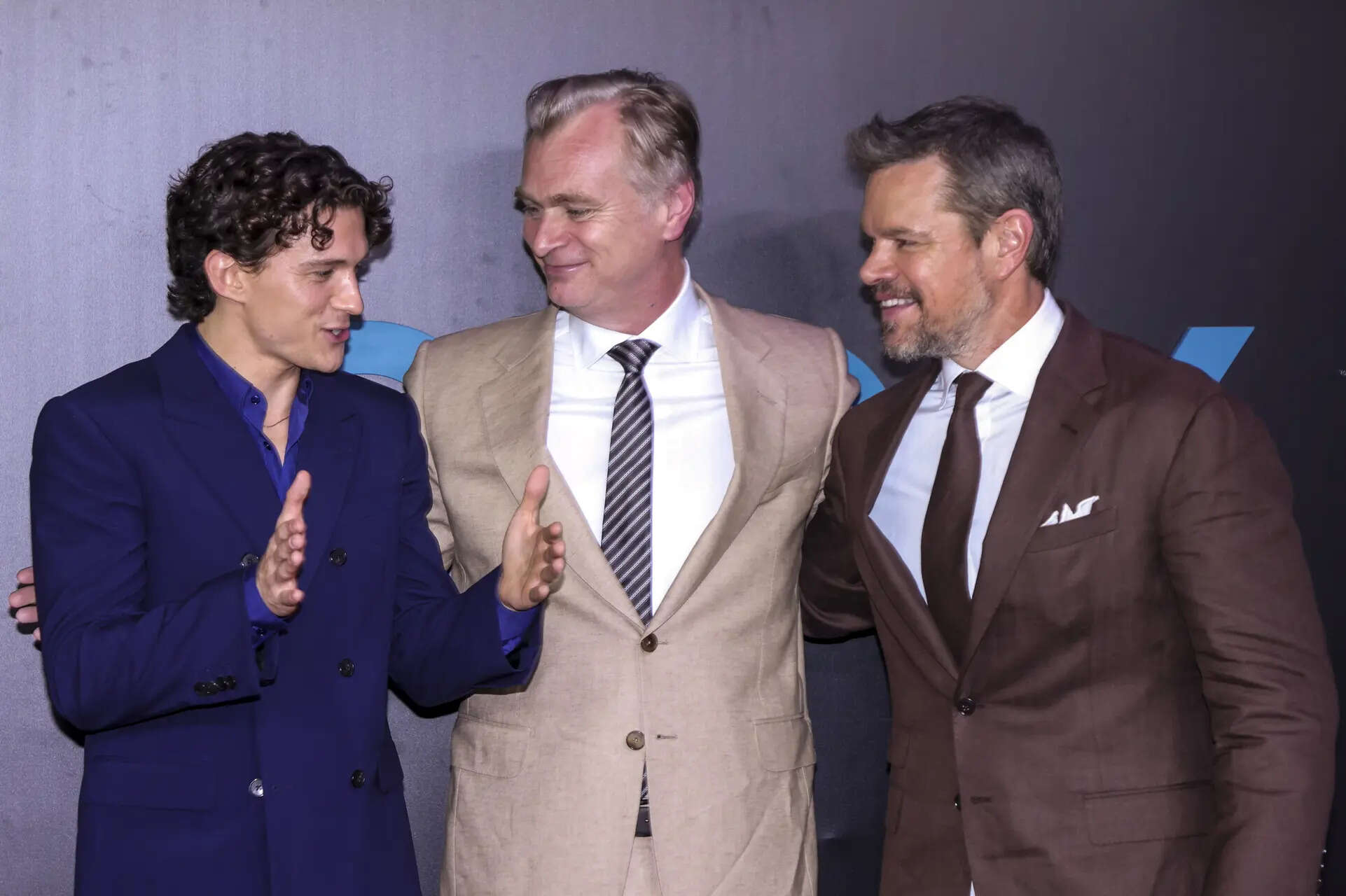
Martel isn’t wrong, though, about the impact of Homer’s works, which have stood the test of space, time and language. And almost everyone who has watched the movie—classicists who teach Homer by day, conservatives who think Achilles looked like Brad Pitt and liberals who are raging about the only trans character being killed off in the first scene—agrees on one thing: this is Nolan’s Odyssey, not Homer’s.
Now, if you have not read any of the thousands of versions of Homer’s work that exist, here’s a brief recap of the Nolan version.
Hollywood has spent billions trying to get Matt Damon home, so Nolan sticks to a tried-and-tested formula that has worked since Saving Private Ryan.
To be doubly safe, he decides to retell the story of the Greek man who came up with the wildest tale ever rather than simply telling his wife that he wanted to hang out with his friends instead of coming home to deal with her and their loser son.
The wife is played by Catwoman, who, instead of indulging in cat burglary, has taken up arts and crafts. The son is played by Peter Parker, who hasn’t developed his Spidey senses and keeps getting swatted around by everyone in high school. Batman, on the other hand, after dodging the draft, is rather keen on marrying Catwoman and inheriting Jason Bourne’s empire. The Punisher, whose wife happens to be Black Panther’s ex, is still fuming about his better half leaving him to be with Paris. And finally, the guy who fixed John Wick’s car has grown too old to punch nepo kids who try to take things that don’t belong to them.
With apologies to both Homer and Nolan for that recap, it doesn’t begin to answer the question posed in the headline. Betteridge’s Law of Headlines states that any headline ending in a question mark can be answered with a “No”, but the answer here is a little more complicated.
If you subscribe to Musk’s school of thought, the movie is yet another Hollywood attempt to subvert Americans using the Trojan horse of wokeism—even after it emerged that, despite all the fake news—most of it spread on the hellhole formerly known as Twitter—Elliot Page wasn’t playing Achilles.
For the record, Musk has so far endorsed claims that Nolan would be “deemed racist” if he cast a white woman as the “most beautiful woman in the world”; that he had “desecrated” Homer so he could win awards; and that Musk would produce a “historically accurate” AI version that honoured Homer.
The last claim drew a sharp rebuke from Nolan, who dismissed the idea that AI could replace human beings and their creativity, calling it a “technology that has been so successfully adopted by Wall Street and by investors and tech companies” but which “the public has so thoroughly rejected”.
The complaint about historical inaccuracy is quite preposterous because it is rather like demanding a historically accurate film about Adam and Eve being cast out of heaven or Isaac Newton being hit on the head with an apple.
As film critic Alonso Duralde pointed out on a podcast: “There probably wasn’t actually a Helen of Troy…. And if there were, the ancient world was a lot more mixed than we think from all the Italian sword-and-sandal epics we were given in the ’50s and ’60s. You had people from Africa, Asia and Europe. They had boats, y’all!”
Did that mean Helen of Troy was black in the modern sense of the term? Probably not. She isn’t a real figure, but a literary construct shaped over millennia of oral poetry, myth-making and retelling. Also, much to the surprise of a lot of folks complaining about coloured characters, the world of Homer wasn’t organised according to modern racial taxonomy.
The epics are set in the eastern Mediterranean, not in East Texas. The Aegean, Anatolia, the Levant and Egypt were connected through trade, migration, warfare and intermarriage for centuries before Homer’s poems were even composed. Ports, not borders, defined the ancient Mediterranean. Life wasn’t a Michael Jackson song. Perhaps Musk’s view of Helen’s ethnicity, like those of other MAGA crybabies, is driven by Troy, which came out in 2004 and had the German actress Diane Kruger play Helen.
Race-watchers were rather disappointed with Eurylochus, Odysseus’s right-hand man, being played by British-Indian actor Himesh Patel, though, as one X user pointed out, he looked the most “Greek” of all the men with his helmet on.
But there are other aspects of the movie that make it feel more like a tribute to 2024 America—when wokeness and DEI madness were at their peak before Trump’s return—than to Homer’s epic.
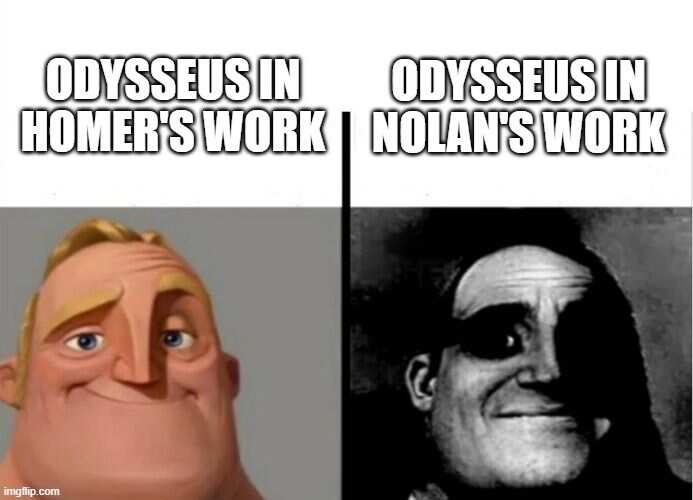
For starters, Nolan takes a protagonist whom Homer describes as polytropos , meaning a man of many turns, a many-sided man or a man of many devices: a warrior, king, storyteller, thief, liar, husband, survivor and adulterer. He is a master of adaptability and cunning, with a hubris that angers even the gods. Homer’s poem is fascinated by Odysseus’s self-preserving cruelty, but Nolan instead turns him into a traumatised veteran who sees everything as a personal failure. In the Homeric epic, Odysseus was delighted with his Trojan horse idea, not tormented by destroying his enemy's city.
For this author, the scene that truly showed the departure from Homeric themes was the Cyclops scene. In the book, Odysseus and 12 men enter the cave of the Cyclops Polyphemus and, after sampling his cheese, the men want to leave, but the hubristic Odysseus refuses because he wants a “guest-gift”. However, Polyphemus dismisses Zeus’s law and proceeds to eat his guests. Odysseus outwits him with some ethanol blending—some exceptionally strong wine—and, when asked his name, says it is Outis, which translates as “Nobody” or “No one”.
As the Cyclops sleeps, Odysseus and his men blind him and, when the neighbours come to investigate the commotion, he tells them that “Nobody” is killing him. The neighbours think no human is harming him, but once Odysseus escapes, he makes his most hubristic mistake by taunting Polyphemus and telling him his real name and the name of his kingdom. This allows Polyphemus to pray properly to his father, Poseidon, the god of the sea, who unleashes the hell that follows Odysseus and his men.
Nolan said he couldn’t make the “Nobody” pun work, but removing it also removed the most pivotal moment from the epic, completely changing Odysseus from a man who is polytropos into a one-dimensional, morally inflexible and guilt-plagued character with the degree of freedom of a microbe. To put that in context for Indian readers, that’s like taking the character of Karna and removing the Parashurama curse, or removing Yudhishthira’s Ashwatthama hata iti moment.
There are other minor modern-day Americanisations. None of the pagan gods causes any havoc, apart from a subdued Athena who appears from time to time. Calypso goes from captor to therapist. Circe the Sorceress, instead of becoming Odysseus’s lover and adviser, becomes a moral judge of his soldiers’ character. But perhaps the most politically coded aspect of the entire plot is the fear of the Sea People. Throughout the movie, people have an abiding fear of unknown invaders called the Sea People who come and rage, a leitmotif that is non-existent in Homer’s work but appears to criticise the conservative fear of open borders and unchecked immigration. By the end, Odysseus admits to Penelope that the Greeks are the “Sea People” and that their ransacking of Troy has thrown the world into disarray and fear.
But that’s the beauty of storytelling, of which cinema is just the latest iteration. Stories will always mean different things to different people. The same goes for Nolan’s movie.
For classicists, it’s a chance to see someone attempt to show the world what they deal with every day, bringing their entire life’s work to the fore. For people fed up with AI slop, it’s a triumph of human talent. For cinema-goers, it’s the culmination of the “We Are Screwed” trilogy with Tenet, Oppenheimer and The Odyssey. For MAGA, it’s another reason to be angry because the world is somehow slightly different from what they perceive in their heads.
And for the rest of us, it’s a beautiful reminder that, no matter what happens and no matter how much technology comes in, some tales are forever, whether told by troglodytes around fires or by Christopher Nolan in 70mm IMAX. Stories are what make us human. And no matter what happens or who makes which movies, Homer’s classics will remain the civilisational grammar of the West, which has seen much better days than its current watered-down version.