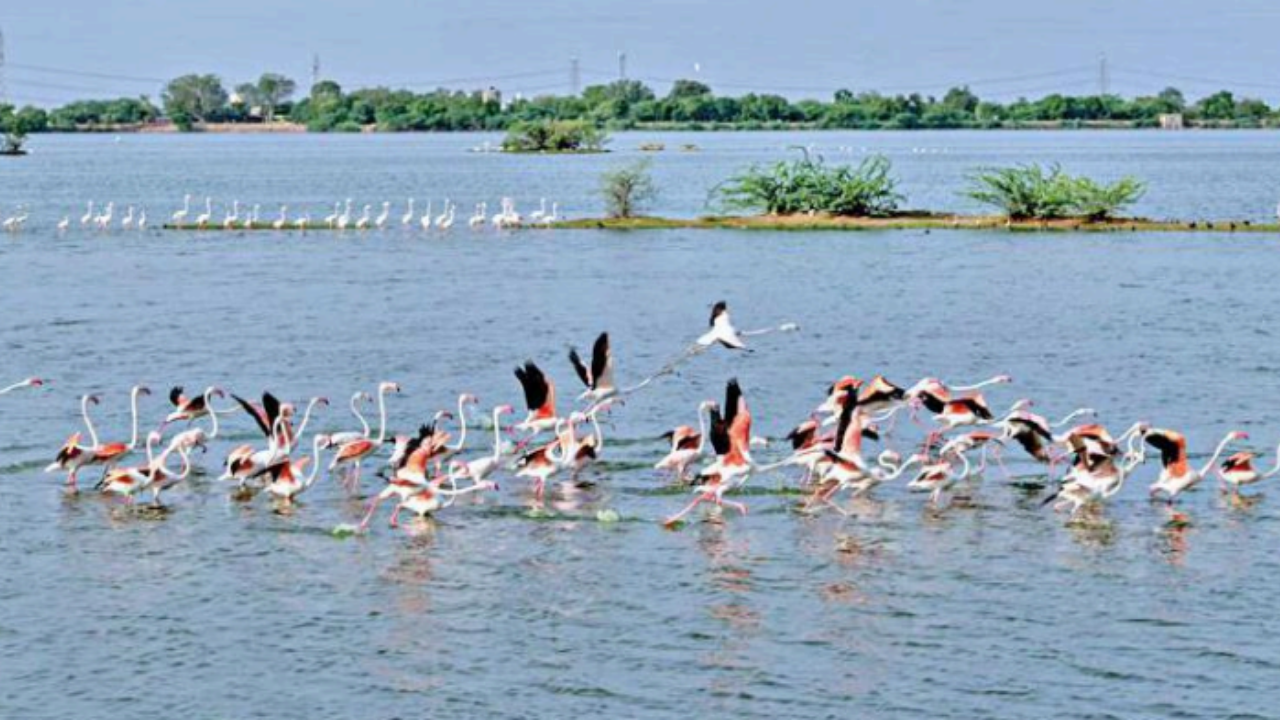
JAIPUR: The Chandlai Lake at Shivdaspura near here is marred by illegal pumping of water by villagers to irrigate their nearby agricultural farms.
This, coupled with indiscriminate fishing, threatens the movement of migratory birds in the winter season. The inland water body, spread over 6sqkm, used to attract birds from Central Europe, Central Asia and China for five months in a year. The figure has now dwindled and the birds’ stay too has come down to two-three months.
A group of environmentalists has written to the department of environment that the lake should be declared ‘Important Birding Area (IBA)’ and ‘Protected Site’ to preserve and conserve. Rohit Gangwal, managing trustee of RAKSHA said, “The indiscriminate exploitation of the lake is posing a danger to the historically well-documented birding site. The illegal fishing activities are leaving no food for the birds, forcing them to starve and leave for other avenues. Institutional measures like IBA and Protected Site only can ensure that the area can be preserved.”
The highest number of birds counted was 1.5 lakh (303 species) while the current count is less than 40,000 (123 species). The lake thrives on rainwater and polluted water flow from the Dravyawati River which is taking a toll on the flora and fauna. The lake is in records since 1872.
Since the population has increased manifold with agriculture as key economic activity, the villagers illegally pump out water during the winter season or for Rabi season. “Earlier they used to carry water in the traditional manner from the catchment area but now with access to water pumping machines they are literally shrinking the lake,” said Sahil Singhal of People for Animals. Reports say that the catchment area of the lake is 3,000 hectares which is marred by mass encroachments. More than 10 species of birds such as northern shoveler, common pochard, redshank, common greenshank, tufted duck, common redshank are being sighted along with bar headed geeses (2,000) and pelicans (1,200) which are in majority. Other than shrinking the lake, another tragedy for birds is removal of trees from the lake and the catchment area which serves as resting place for them.