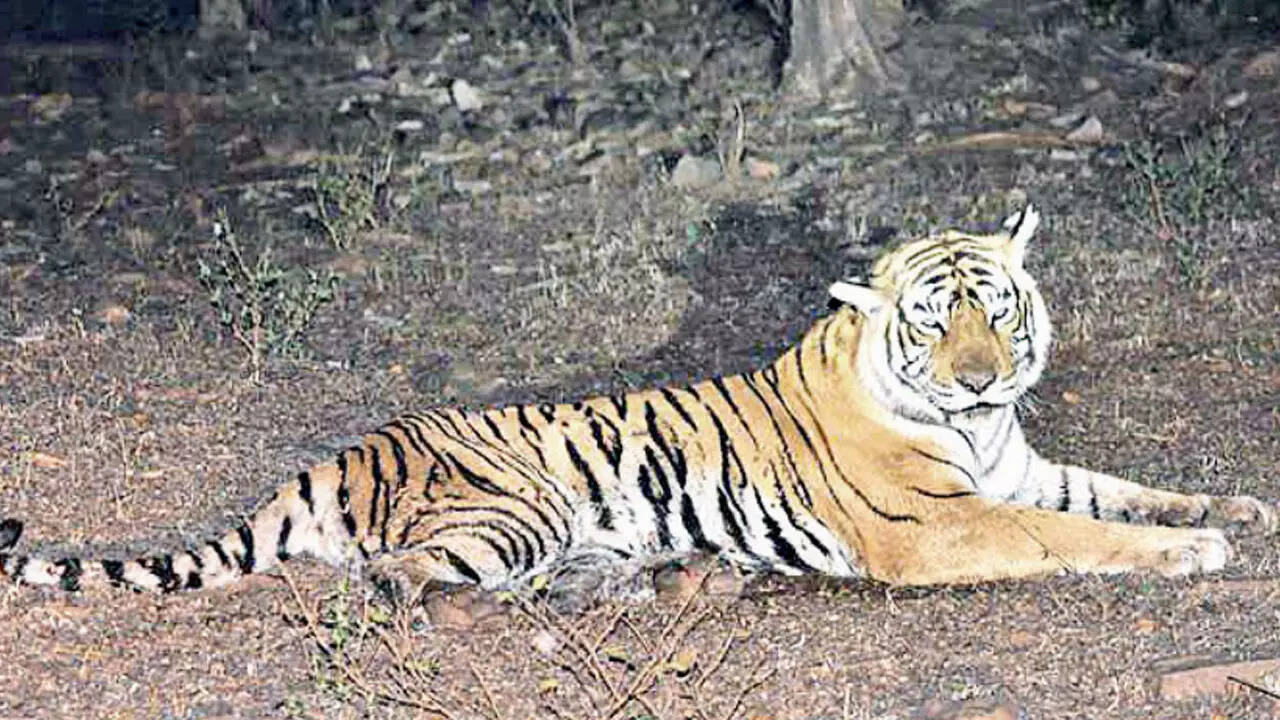
JAIPUR: With reports of 13 big cats officially missing from Ranthambore Tiger reserve (RTR) in the past three years, the National Tiger Conservation Authority (NTCA) has constituted a committee comprising DIG, NTCA Shivpal Singh and wildlife crime control bureau, joint director, HV Girishato, to probe into the matter.
The apex tiger conservation body of the country swung into action after recent data from the state forest department revealed that there is no evidence of 13 tigers in RTR over the past three years — January 2019 to January 2022.
Confirming the development, a senior official said, “A committee has been constituted by the NTCA to carry out an investigation on missing tigers.”
Rajsamand MP Diya Kumari, who had earlier written to then Union environment minister Prakash Javadekar demanding a high-level inquiry said, “The committee constituted earlier could not go to Ranthambore National Park owing to Covid. The committee has been reconstituted again. Its order is likely to come out anytime. I am sure the committee will get to the bottom of the matter as regards to missing tigers.”
Dharmendra Khandal, a conservation biologist who flagged the missing tiger issue said it’s an acceptable fact that every year on an average, 2-3 tigers will go missing and it’s difficult to keep the records. However, in Ranthambore, a detailed investigation is required why tigers are going missing from a particular area, which falls between Shayampura and Bheed. “The problem was not addressed till date by the forest department. An entire big cat family of six went missing from a particular area is a serious issue. There should be a proper investigation.”
However, the park managers claimed it’s easier said than done as RTR is facing several challenges including ‘tiger abundance’. More cases are coming to the fore in recent times as reserve is bursting at its seams and tigers, which are inherently peripatetic, have started dispersing as they need large inviolate tracts to search for prey, rest, loaf, breed and rear and train their cubs. Also, in the overpopulated park, many big cats died in fights over territories and females.
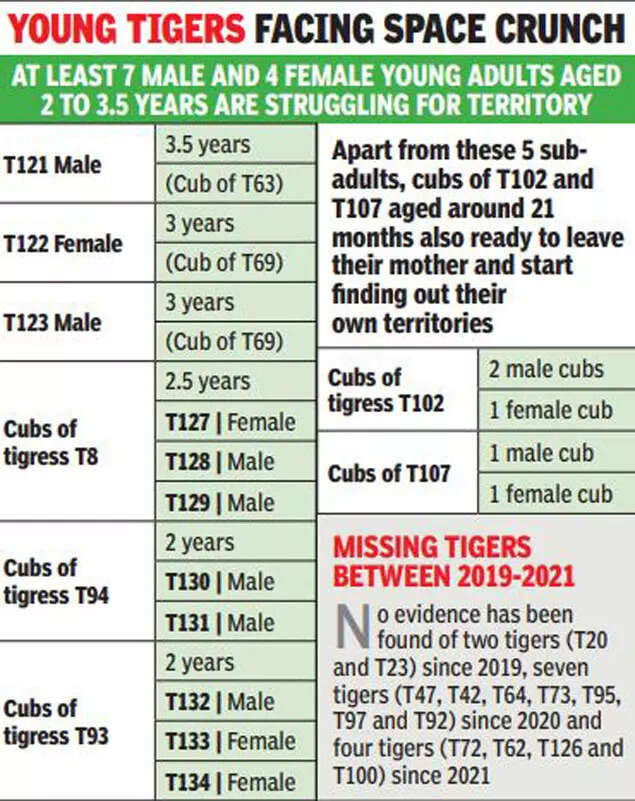
Sources said tigers in Ranthambore are living in 700-750 sqkm area and the situation is expected to get grimmer as seven male and four young females aged between 2 and 3.5 years are struggling to find their own territory. Similarly, five sub adults’ cubs which are 21 months old will soon separate from their mother.
An official said, “At present, the total population of big cats is the highest since 1973, when Ranthambore Tiger Reserve (RTR) was established. A research carried out by the Wildlife Institute of India (WII) between 2006 and 2014 stated that the carrying capacity of the Ranthambore National Park and Sawai Man Singh Sanctuary is not more than 40 adult tigers. At present, there are 53 adult tigers and between 2019 and 2021, a total of 44 cubs have been born at the park. As reserve have over 10 tigers per 100 sqkm, territorial fights are leading to the exit of the weaker ones.”
A senior forest official said serious measures including development of habitat surrounding the RTR area is required to address the issue. A source said, “In past too, an inquiry followed by a study was conducted by the NTCA and the Wildlife Institute of India (WII) in Ranthambore. The situation remains the same as there was no habitat improvement work. Cramped for space, the tigers will continue to look for new homes.”