The start of the rainy season for many parts of Japan on Thursday ushered in several weeks of rain, high humidity and hot weather – conditions that could create problems for people wary about the spread of the new coronavirus.
Health experts are warning that people wearing face masks to combat the virus could be at a higher risk of getting heatstroke in humid weather, and a reluctance to leave doors and windows open on rainy days could make it harder to ventilate homes during the rainy season.
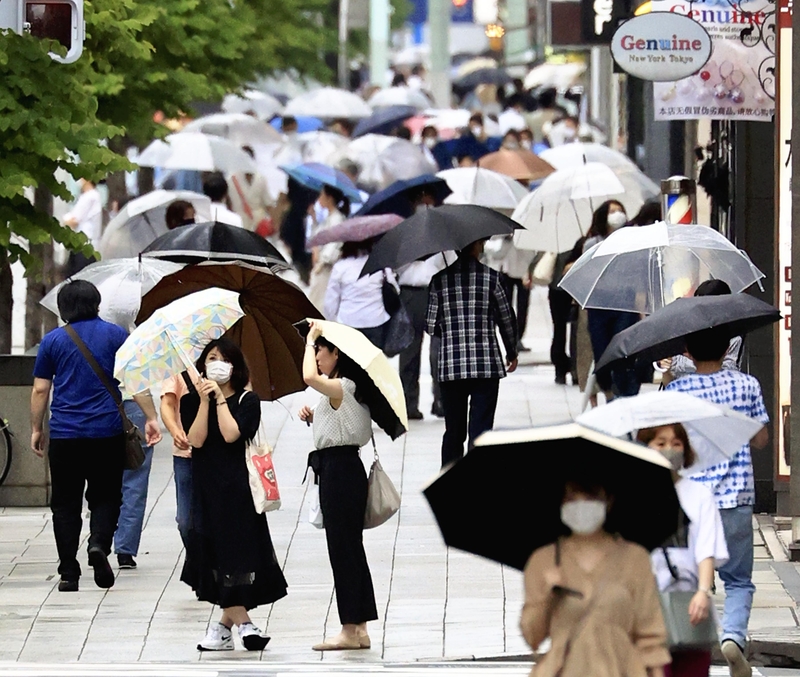
The Japan Meteorological Agency announced Thursday that the rainy season has started in regions including Kanto-Koshin, Hokuriku and southern Tohoku. Mask-wearing workers carrying umbrellas weaved their way through an office district in central Tokyo after rain began falling at about 1:50 p.m.
"I thought it was hard enough wearing a mask during the recent hot spell, but in this sweaty weather it's just too much," 34-year-old company employee said as she walked near JR Tokyo Station on Thursday evening.
Since the state of emergency declared to combat the coronavirus was fully lifted on May 25, commuter trains have largely returned to their previous levels of congestion. "I don't want to ride the trains now as it is, because it's very clammy inside. And I don't want to stand near the doors when it rains…," she said.
According to the agency, the amount of rainfall in western Japan during this year's rainy season is likely the same as a typical year or slightly higher. Other regions are forecast to receive about the same amount of rain as an average year.
Experts are warning people to be careful of heatstroke at this time of year.
"People are at risk of heatstroke even during the rainy season, and this risk increases when they wear a mask," said Hideki Taniguchi, a doctor at Saiseikai Yokohamashi Tobu Hospital in Yokohama and a senior member of an association formed by doctors working to prevent heatstroke.
According to Taniguchi, the body more easily retains heat during the rainy season because the high humidity makes it hard for sweat to evaporate. In addition, if a person has more difficulty breathing because they are wearing a mask, they must use more muscles to breathe and the temperature of their whole body – not just the area around the face – could rise.
Taniguchi, 54, recommends people take off their masks when a safe distance can be maintained from others. "Use an air conditioner when you are inside, and keep an especially close watch on children and elderly people," Taniguchi said.
As a precaution to prevent heatstroke, the Environment Ministry and the Health, Labor and Welfare Ministry also recommend taking off masks outside when a distance of at least two meters from other people can be maintained.
A meteorological agency official said: "There have been some changes in people's living environment this year, such as wearing masks now. I urge them to take preventative steps and be very careful about heatstroke."
Read more from The Japan News at https://japannews.yomiuri.co.jp/