
Recent torrential rain disasters have caused a total of about 59.39 billion yen worth of damage to the agriculture, forestry and fisheries industries in eight prefectures -- the seven prefectures of Kyushu and Yamaguchi Prefecture -- as of Monday on an interim report basis, according to data compiled by the prefectural governments.
Damage in Kumamoto Prefecture accounts for more than 60% of the total, amounting to about 38.72 yen billlion.
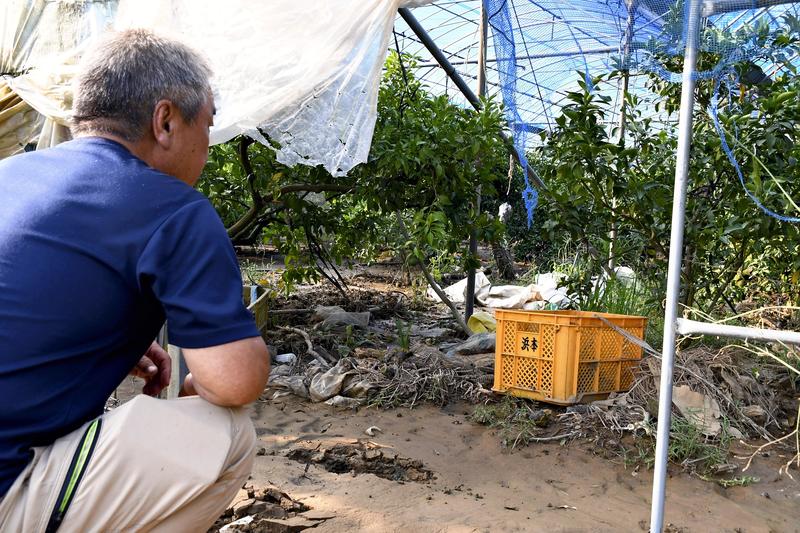
Agricultural products in which Kumamoto Prefecture leads the nation production volume, such as tobacco leaves and dekopon citrus fruits, suffered serious damage.
It is likely that the cost of the damage will further balloon.
Last year the total planting area of tobacco leaves in Kumamoto Prefecture was 98,000 ares and sales were about 5.8 billion yen. Both figures were the highest in the nation. The area in the prefecture's Kuma region was about 46,000 ares.
The damage to tobacco leaves caused by the rain and flood disasters in the prefecture is estimated to be worth about 328 million yen.
"It is likely that it will take several years until the farmland can return to normal conditions," said Yoshihide Nakayama, a director of the prefecture's tobacco leaf farmers' union. "As many of the farmers are elderly, they may lose motivation to reconstruct their businesses."
In the town of Ashikita, Kumamoto Prefecture, one of the largest citrus fruit production sites in the nation, damage to dekopon was especially serious. About 380 farming households mainly grow dekopon on 34,000 ares of farmland.
According to the prefectural government and other sources, the harvest volume of the Shiranui brand of dekopon in 2018 was 22,344 tons. The figure was the largest in the nation and accounted for about 40% of nationwide harvests.
Though the prefectural government and local entities of the JA group have conducted research on the damage, there have been difficulties partly because some roads to reach the farmland are unusable. Thus, all details of the damage are not yet known.
"We want to assist farming households that have experienced damage, so that the farmers can continue their agricultural businesses," said an official of the town government's agriculture, forestry and fisheries division.
As of Monday in Kumamoto Prefecture, a total of about 24.1 billion yen worth of damage occurred in agriculture, including cases in which mud flowed into rice paddies and other farmland. Forestry-related businesses suffered about 14.4 billion yen worth of damage, including cases in which mountain slopes collapsed.
Damage to agriculture, forestry and fisheries industries in other prefectures have so far come to 6.08 billion yen in Fukuoka Prefecture, 3.62 billion yen in Oita Prefecture and 3.43 billion yen in Miyazaki Prefecture.
Read more from The Japan News at https://japannews.yomiuri.co.jp/