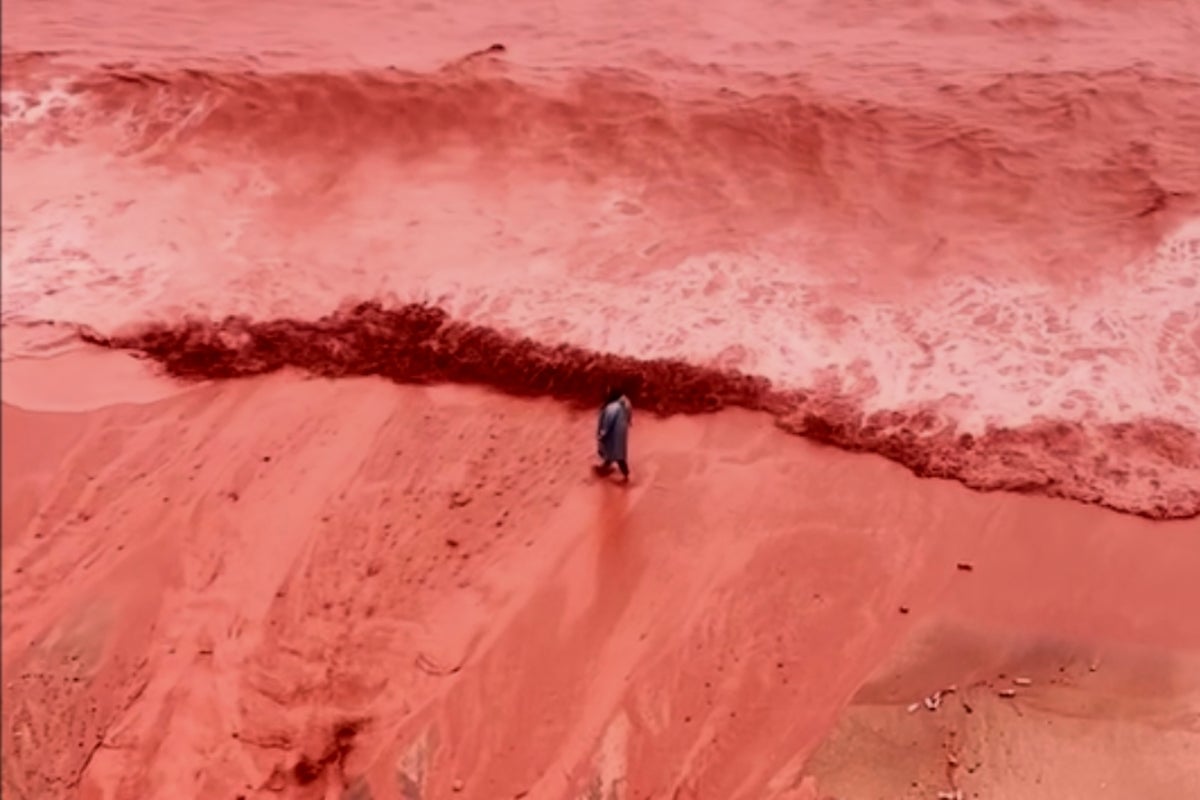
A dramatic natural spectacle unfolded on Iran's Hormuz Island this week, as heavy rainfall transformed the coastline of its renowned Red Beach.
Streams of vivid red soil, washed down from the island's iron oxide-rich cliffs, poured into the Persian Gulf, dyeing the normally blue waters a striking crimson.
The island's distinctive Red Beach is famed for its intensely coloured sand and cliffs, a result of high concentrations of iron oxide.
Beginning on Tuesday, the recent downpours triggered a captivating display, with the flowing red earth creating a stark, beautiful contrast against the sea.
This unique geological event consistently draws in tourists, photographers, and significant social media interest.
Beyond its visual appeal, the red soil – locally known as gelak – is exported in limited quantities and used in the production of cosmetics, pigments and some traditional products.
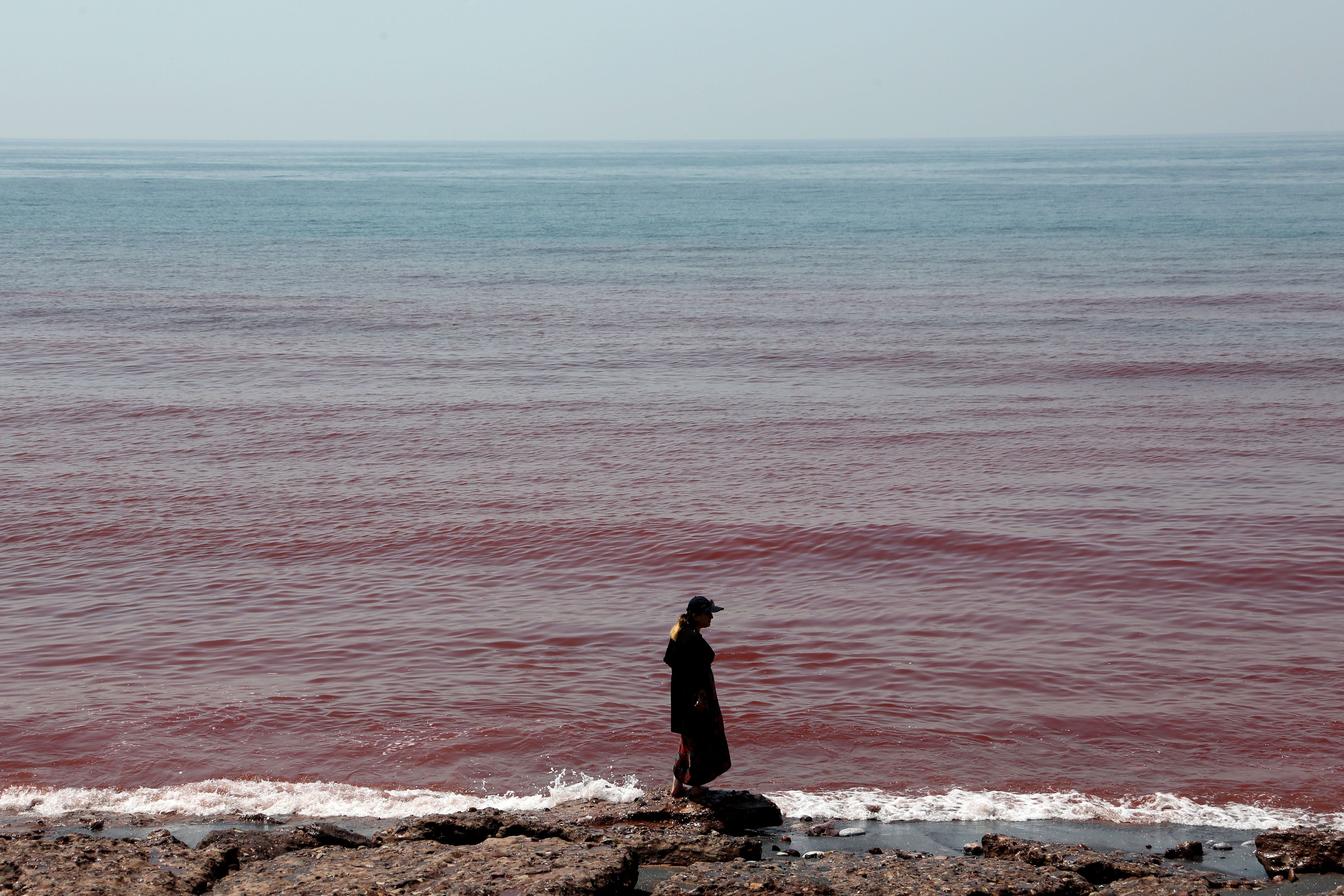
Hormuz Island lies in the Strait of Hormuz, where the Persian Gulf meets the Gulf of Oman, about 1,080 kilometres (670 miles) south of Iran’s capital, Tehran.
Rainfall is relatively rare on the arid island, and happens mainly during the winter and early spring.
The island has become a popular destination with visitors drawn to its unusual landscapes.
"The island is a salt dome, a teardrop-shaped mound of rock salt, gypsum, anhydrite, and other evaporites that has risen upward through overlying layers of rock,” Nasa’s Earth Observatory explained in a statement earlier this year.
“Rock salt or halite is weak and buoyant, so it loses its brittleness and flows more like a liquid when under high pressure."
The island’s soil is so rich in minerals it is used as a local spice, playing an important role in the region’s food culture. The red soil is used in the preparation of a special local bread in Hormuz called “tomshi”.
Scientists warn against using the soil in cuisines due to its heavy metal content.
Budget train company launches London to Scotland service with £33 tickets
Dubai travellers hit by Christmas chaos after flights delayed and cancelled
Warning as EU entry-exit system causing ‘three-hour waits’ at airports
Congestion warning as festive traffic set to peak on Friday with 24.4m car trips