With the spread of a new type of pneumonia caused by the coronavirus -- first confirmed in the city of Wuhan in China's central province of Hubei -- railway companies have begun stepping up relevant measures, especially in the wake of a person confirmed infected with the virus being found to have traveled via Shinkansen trains.
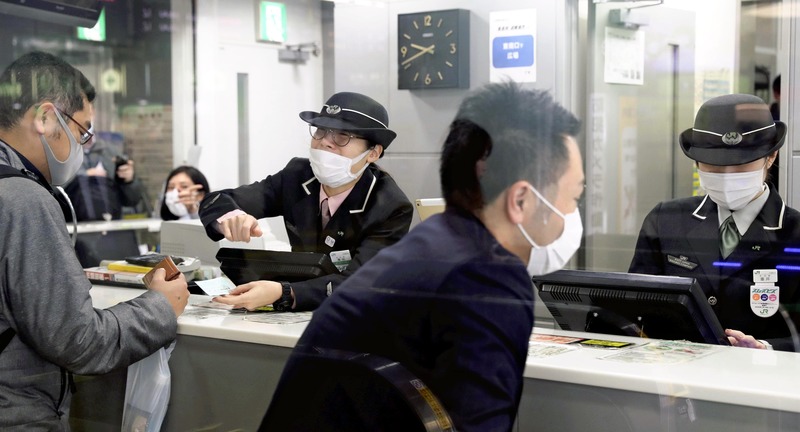
There is an increased risk of being exposed to close contact with those infected in the tight confines of enclosed rail cars. JR companies had already allowed their staffers, including station employees and train crew members who directly serve customers and passengers, to wear masks amid the potential spread of the new type of pneumonia.
West Japan Railway Co. (JR West) on Thursday raised its caution level for its staff, issuing a "corporate directive" to wear masks.
Five JR companies operating shinkansen trains have set up a task force to collect information from public health centers and related organizations. Central Japan Railway Co. (JR Tokai) on Friday provided antiseptic solution in place for passengers at all Shinkansen stations and major stations along its regular train lines.
Relevant measures also have been taken at private railway companies in the Tokyo metropolitan area.
Tokyo Metro Co. advised its station employees to wear masks, while Odakyu Electric Railway Co. urged its workers to wash their hands and gargle.
However, an employee of a Tokyo private railway company said it is not practical to require all passengers to wear masks or use sanitizer.
"I have no idea what kind of measures would be effective on a railway used by many people," the employee said.
The railway business law stipulates that railways can refuse to allow those with issues such as infectious diseases to board, and passengers can be fined if they use trains while concealing an infection.
JR companies also make it a rule of operation that patients of designated infectious diseases and other illnesses use their services only via chartered trains.
However, said a Land, Infrastructure, Transport and Tourism Ministry official: "As far as I know, there were no infectious disease patient-related cases to which the law or such regulations were applied. If a passenger is found to have been infected with a disease, we will deal with the case based on the rules of operation and other factors, but I don't think there were any such cases."
Read more from The Japan News at https://japannews.yomiuri.co.jp/