Raffles' Ark Redrawn: Natural history drawings from the collection of Sir Thomas Stamford Raffles
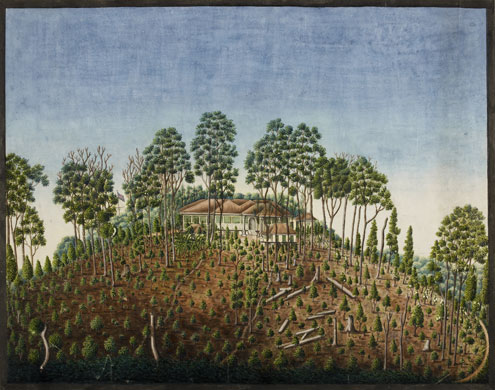
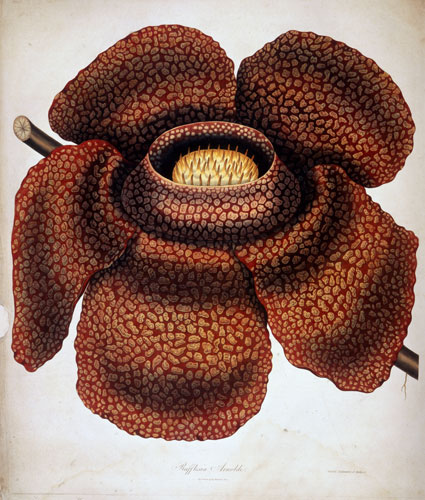
Sir Thomas Stamford Raffles in an 1824 engraving. Raffles began as an East India Company trader, conquered Java, founded Singapore, and was a voracious wildlife enthusiast. He commissioned many illustrations of rare and undiscovered plants and animals from Sumatra and the surrounding regionPhotograph: Michael Nicholson/CorbisFront view of the Raffles country house at Pematang Balam, near Bencoolen (now Bengkulu), Sumatra. The area also had an East India Company garrison. Thought to be by a Chinese artist, 1824Photograph: WD 2975 Rafflesia arnoldii/British Library BoardRafflesia arnoldii, an extraordinary parasitical plant endemic to Sumatra, discovered by a Malay servant but attributed to Joseph Arnold and Raffles, who commissioned this print made by the Weddell firm of botanical engravers in 1826Photograph: The British Library Board
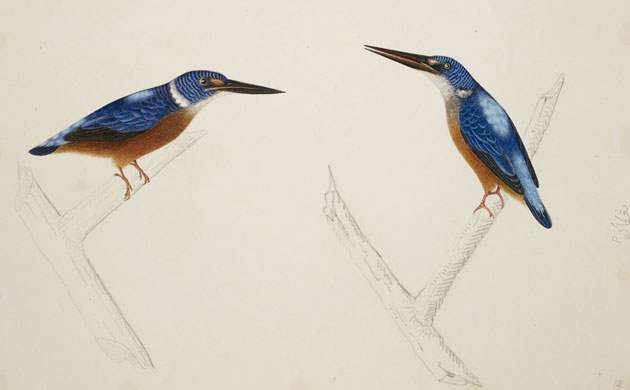
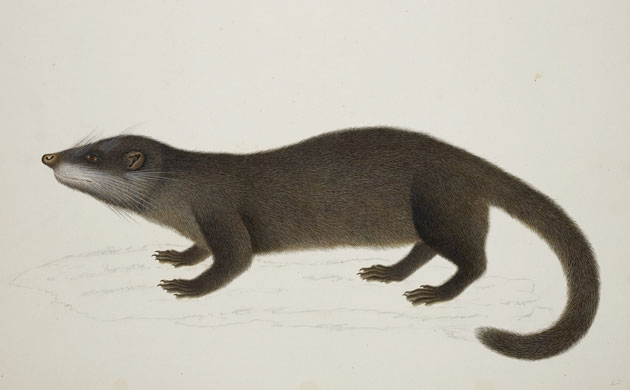
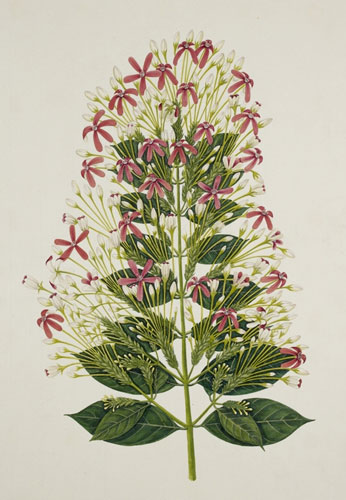
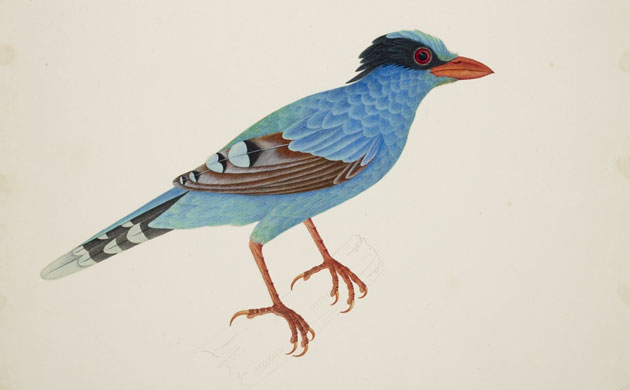
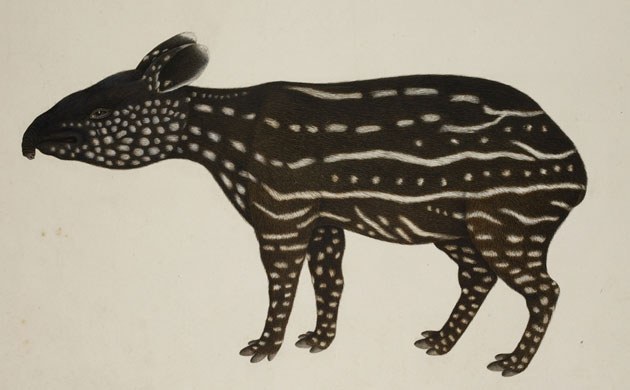
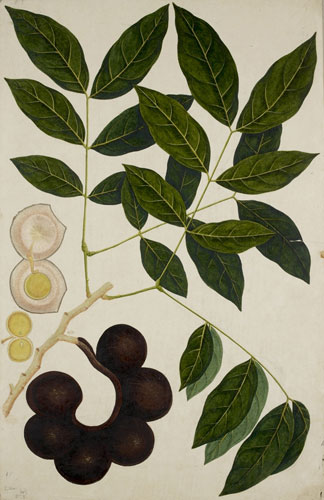
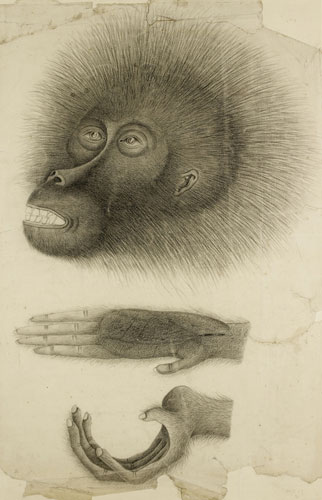
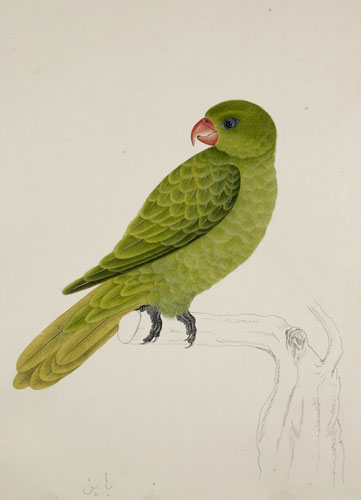
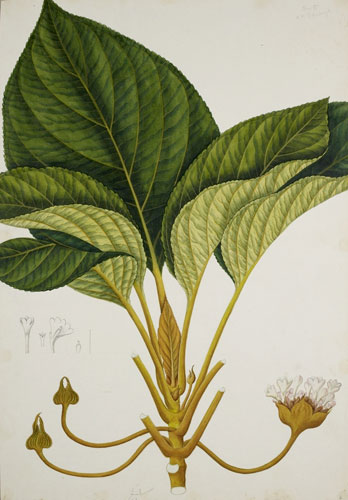
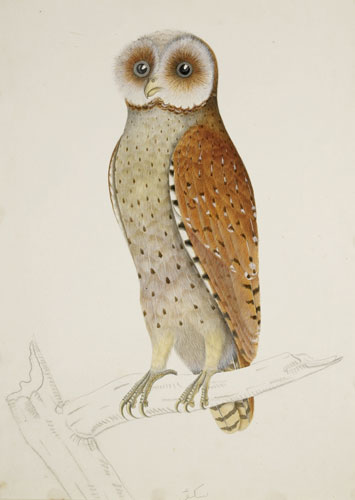
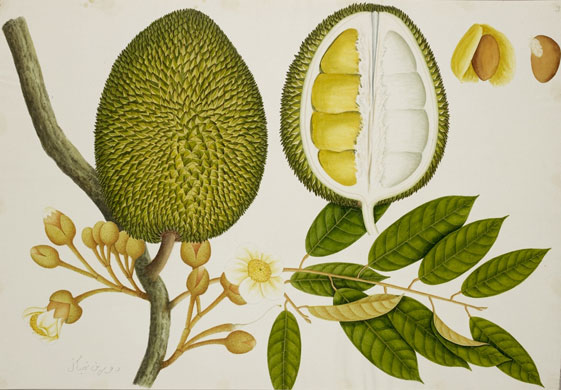
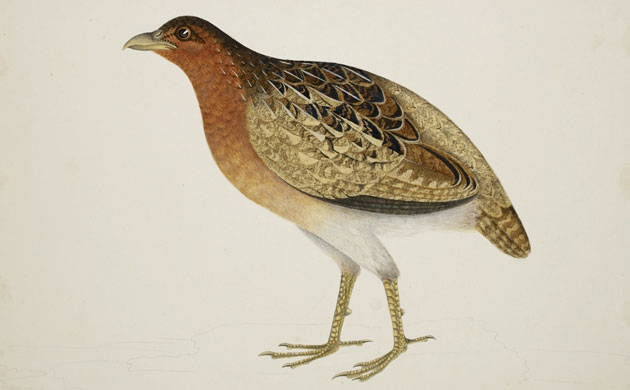
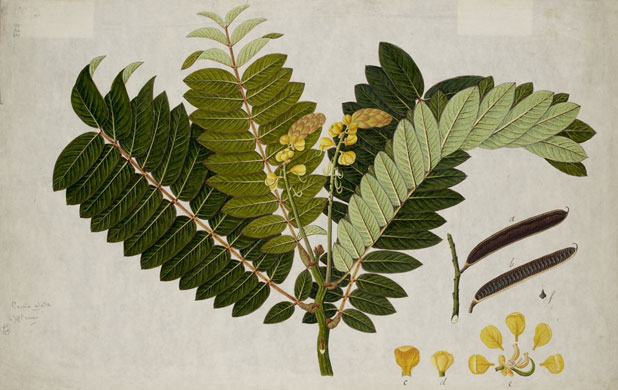
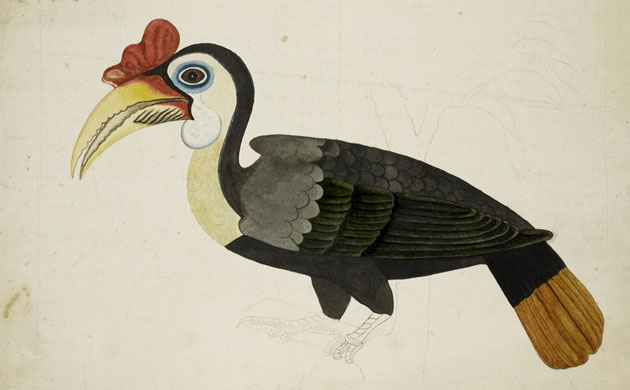
Blue-eared kingfisher: by French artist J Briois, 1821. These tiny 17cm birds dart along waterways throughout north-east and western India, Burma, Indo-China to Sumatra, Sri Lanka and JavaPhotograph: The British Library BoardOtter civet: Some doubt is cast over the identity of this creature, as the otter civet usually has a shorter tail. Illustrated in 1822 by J BrioisPhotograph: The British Library BoardRangoon creeper: Also known as the drunken sailor, this large, woody climber came from Burma and has attractive scented flowers. The artist is thought to be A KowPhotograph: The British Library BoardGreen magpie by J Briois: This large 24cm magpie is noisy but shy, inhabiting the Himalaya and southern China to south-east Asia. In Sumatra it lives between altitudes of 700-2,100m in dense forest, and is more often heard than seenPhotograph: The British Library BoardAsian tapir: Due to hunting and deforestation, this species is now isolated populations in forests of Burma, Thailand, Malaysia and Sumatra. Raffles tried to describe this creature before his rival William Farquhar in 1821, but both were beaten by a French publication. Illustrated by J BrioisPhotograph: The British Library BoardJiring tree: 25m tall, the tree's starch-rich seeds have a bad smell, but can be eaten after two or three days of boiling. More useful, however, are the pods, offering a purple dye for silk, while the bark is handy for chest pains and skin complaints. Illustrated in 1820 by a Chinese artistPhotograph: The British Library BoardBornean orang-utan: This drawing by a Chinese artist was inspired by one of a pair given to Raffles in 1811 by the Sultan of Pontianak in western Borneo. Raffles's scribe Abdullah wrote that the male ape was 'very tame and wore trousers, a coat and hat given him by Mr Raffles' and behaved 'almost like that of a human being'Photograph: The British Library BoardBlue-backed or Müller's parrot: Possibly brought to Sumatra as a cage bird from more eastern islands, Raffles kept one as a pet which regularly 'attended at table'. Illustration by J BrioisPhotograph: The British Library BoardAsam batu: This herb from across the Sumatran region thrives in damp habitats. The herb's sour leaves have been used as flavouring and for post-natal fever. Illustrated by A KowPhotograph: The British Library BoardOriental bay owl: Strictly nocturnal, this 33cm-long bird illustrated by J Briois lives across various far eastern islands. In 1821 American naturalist Thomas Horsfield discovered its local, rather onomatopeoic name to be the wowo-wiwi. He also reported that 'the natives alleged that it had no dread to alight on the tiger's back'. A fierce hunter indeedPhotograph: The British Library BoardDurian: A large tree native to Borneo but extensively cultivated in Malaysia and Indonesia for its fruit, which is known to smell of onions, drains and coal gas. Illustrated in 1822 by A KowPhotograph: The British Library BoardLong-billed partridge: This is a female, the males being generally greyer. Raffles commissioned J Briois to paint this from a Sumatran specimenPhotograph: The British Library BoardRingworm cassia: A herb also known, rather poetically, as seven golden candlesticks, it can grow up to 2m and is used to treat skin diseases, including ringworm. The winged pods can be eaten raw or steamed. Illustrated by a Chinese artistPhotograph: The British Library BoardSunda wrinkled hornbill (male): 70cm in length, the hornbill is native to Malaysia, Sumatra and Borneo and lives on oil-rich fruit. The female seals herself up in a cement nest made of droppings and food remains. This illustration from 1815 was by an unknown Chinese artistPhotograph: The British Library Board
Sign up to read this article
Read news from 100's of titles, curated specifically for you.