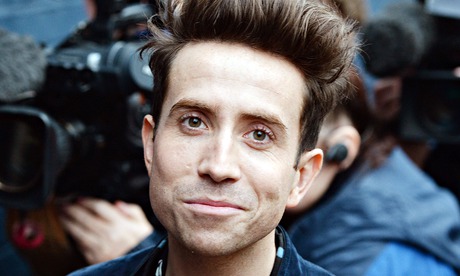
Nick Grimshaw (Weekdays, 6.30am, Radio 1) was musing on air the other day that his friends think he’s being sarcastic when he’s actually being enthusiastic. I know what the friends mean. Radio 1 has such a Stalinist insistence on positivity about the music it plays – everything is awesome, from Sia to Slaves, from Enter Shikari all the way to Ella Eyre – and seems to encourage such kissy-kissy “mutual respect” between presenters that the average morning listener, hunting for their car keys or a matching sock, is inclined to mutter, “Get a room, for goodness sake.”
When Fearne Cotton recently took her leave from Radio 1’s Live Lounge, the slot in which the likes of Jake Bugg and Paolo Nutini do their carefully rehearsed stuff, to be replaced by Clara Amfo (Weekdays, 10am, Radio 1), it was marked like the passing of David Letterman. The whole station sounded overcome. Since DJs are, in my experience, the most competitive and least forgiving of God’s creatures, I find this hard to swallow. Grimshaw’s doing a respectable job in his morning slot but, as recent audience figures show, he can no more make the teenagers of today reach for the radio than editors can make them reach for a newspaper.
Now that last night’s American TV is also available in bite-sized YouTube pieces every morning, with Justin Bieber joining James Corden in Carpool Karaoke, and Will Smith beatboxing with Jimmy Fallon – all these in recent weeks – the competition for their attention is fiercer than ever. Spotify has raised its game in streaming by offering to match your early morning mood, and iTunes is responding. Meanwhile, the boss of Radio 1 says, “We are predicting the future by inventing it ourselves,” which would have sounded hubristic coming from Steve Jobs.
Natural Histories (Tuesday, 11am, Radio 4), the station’s 25-part partnership with the Natural History Museum, gets underway with Brett Westwood’s story of our special relationship with our close cousins the primates. It’s a story that takes in everything from David Attenborough’s visit to the lowland gorillas through the movie phenomenon King Kong to the story of Happy Jerry, who hitched a ride on a slave ship and was smoking a pipe and drinking warm port by the time he got to London. Jerry was celebrated by all the quality press until he blotted his copybook on a visit to the palace. Of course, with primates it is, as Westwood observes, more a question of what they think when they look at us than what we think when we look at them.
In Music Of The American Civil War (Tuesday, 10pm, Radio 2) the great Kris Kristofferson presents a guide to the conflict that probably generated, inspired and propagated more music than any other. The programme is illustrated by tunes from the likes of the Band, Dolly Parton and the Decemberists.
Clive Anderson finds that China’s Football Revolution (Friday, 11am, Radio 4) is more about consumption than participation. Thousands of matches are screened every week in China and the government has made the national team a priority but corruption in the game is endemic and the playing base is still very low. One of the reasons is that Chinese parents value book learning above exercise. Another is the air pollution that means training sessions are frequently called off for health reasons. A coach who formerly worked for Liverpool FC and is now based in China says they have to go back to basics: “We’re teaching children how to run.”