FORT LAUDERDALE, Fla. _ Segregationist Napoleon Bonaparte Broward _ the man the Florida county is named after _ is no longer welcome in the Broward County Courthouse.
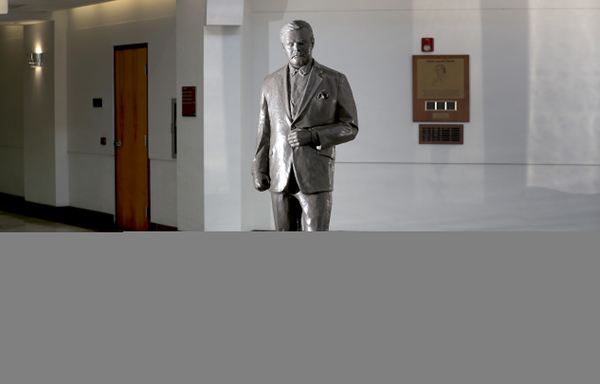
A statue of Broward will be removed from the courthouse soon, county leaders said Tuesday, the latest casualty of a nationwide debate about whether it's proper to commemorate people who advocated slavery.
Could the county's name be changed next? Not likely, says county Mayor Barbara Sharief.
"I don't even want to go down that road," she said.
Napoleon Bonaparte Broward was governor from 1905 to 1908 and credited for pushing the draining of the Everglades, which helped spur development in South Florida. He also was a segregationist whose comments from a century ago drew new scrutiny.
A document that Broward wrote during his term in office called on Congress "to purchase territory, either domestic or foreign, and provide means to purchase the property of the negroes at a reasonable price and to transport them to the territory purchased by the United States."
The proposal for a new black nation didn't seem altruistic. Broward said whites wouldn't live in the new nation, and blacks wouldn't return to live in the United States.
He also said: "The white people have no time to make excuses for the shortcomings of the negro."
Defense lawyer Bill Gelin, who runs JAABlog, a courthouse news and gossip website, published last month excerpts of Broward's writing with a call for relocating the statue. He found Broward's statements in collection of documents and speeches published by the University of Florida in 2011.
Since the statue controversy arose, people have had strong feelings on both sides on whether it should be banished.
Opponents of moving the statue said it was another politically correct attempt by liberals to sanitize history.
Attorney Michael Styles said Tuesday that the decision sounded like a back-room deal that did not give anyone the opportunity to put Gov. Broward's views and legacy in their historical perspective.
"There should have been public input," Styles said.
Chief Assistant Public Defender Gordon Weekes said moving the statue was the right thing to do.
"The best place for it is probably a museum, with a historical note as to his contributions to our state as well as his beliefs," Weekes said.
Gelin said the decision sends the right message.
"A lot of people across the country feel the scales of justice are tilted against black people," Gelin said. "To force them to parade past a monument to an outspoken, post-Reconstruction racist on the way to those very same criminal courts seems insensitive at best and possibly unjust."
Sharief said she discussed the statue issue with county administrators, Chief Administrative Judge Jack Tuter, Public Defender Howard Finkelstein, members of the TJ Reddick Bar Association and community members.
"It was a legitimate concern for those who work in the courthouse and who visit the courthouse every day," Sharief said. "We felt like out of respect for their concern, we would go ahead and remove it."
Broward County Commissioner Mark Bogen said based on what he's heard of Broward's writings, he also supports the statue's removal.
"You honor those who have served our country and done good for our country and you don't honor those who have not. It's that simple," Bogen said. "How do you teach your children to be fair, impartial and treat everyone equally when you are honoring people who have demonstrated the opposite."
The statue was gifted to the county by Skip Wellever, who made it. The county accepted it in 1983 and it sat in storage for 10 years before being placed in the courthouse, Sharief said. It is treated like other works of art in county buildings and doesn't require commission approval to have removed, she said.
Sharief said the statue will be placed in storage. She said she wasn't sure what would happen after that.
"We will not be replacing it with anything," Sharief said. "It will be removed fairly soon."