While State Bank of India (SBI) and a string of public-sector insurers race to cash in decades-old National Stock Exchange (NSE) holdings at hefty profits, some of India’s most closely watched individual investors are doing the opposite, not selling a single share in the IPO, which is entirely an offer for sale.
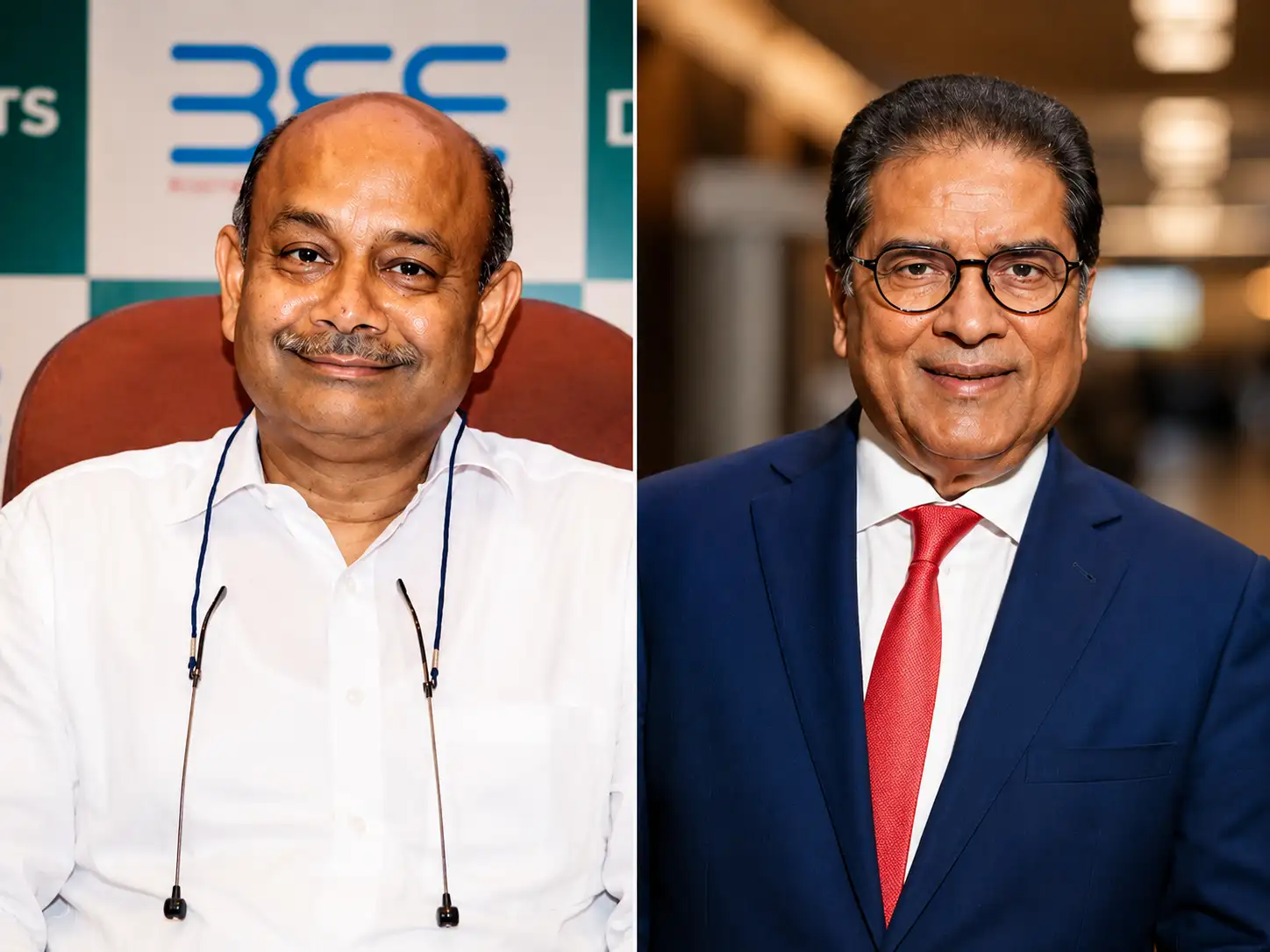
Topping that list is Radhakishan Damani, whose roughly 3.9 crore NSE shares (39,084,400 shares, or a 1.58% stake) are sitting out the exchange’s blockbuster initial public offering. At current unlisted market prices, the holding is worth close to Rs 8,032 crore, by far the largest individual stake among shareholders choosing not to sell.
That estimate is based on NSE’s last unlisted market trade of Rs 2,055 per share before its IPO papers were filed, valuing Damani’s stake alone at more than what several institutions exiting the exchange are expected to realise.
He isn’t alone. Sunil Kant Munjal, founder of the Hero Group, holds 1.02 crore shares, or a 0.41% stake, worth around Rs 2,040 crore. Infosys co-founder S. Gopalakrishnan owns 94.29 lakh shares, representing a 0.38% stake worth Rs 1,886 crore. Ignatius Navil Noronha, CEO and MD of Dmart, holds 30 lakh shares worth around Rs 600 crore.
Also Read | From Rs 2 crore to Rs 5,000 crore! How NSE IPO is a jackpot for SBI with 256,775% profit
Among the other names explicitly named alongside Damani as sitting out the offering are smallcap stock picker Dolly Khanna, veteran value investors Raamdeo Agrawal and Motilal Oswal. Khanna holds 15,16,250 shares (a 0.06% stake) worth about Rs 311 crore at NSE's last unlisted trade, while Agrawal and Oswal each hold 8,00,000 shares, a 0.03% stake apiece, worth roughly Rs 164 crore each.
The single biggest name sitting out of all, however, isn't a person but an institution. Life Insurance Corporation of India (LIC), NSE's largest shareholder with a stake of almost 11%, is not participating in the offer for sale at all. LIC was among the very first institutions to subscribe to NSE's shares back in 1992 and will retain its position intact through the listing.
That list of holdouts stands in sharp contrast to a parallel rush among other long-time shareholders to monetise their stakes. SBI alone is selling 2.47 crore shares for a windfall pegged at an almost 2,568-fold, or 256,775%, profit on its original investment. Public insurers New India Assurance and National Insurance, which bought in at just 32 paise a share, are tracking returns of up to 6,422 times, Stock Holding Corporation of India is eyeing a 4,467-fold gain, and overseas investors Temasek Holdings (selling via its investment vehicle Aranda Investments) and Morgan Stanley are positioned for roughly 33-fold and 31-fold returns, respectively.
All of this is unfolding around what is shaping up to be India's largest-ever initial public offering. The proposed Rs 30,000 crore issue is structured entirely as an offer for sale of about 148.9 million shares, nearly 6% of NSE's paid-up capital, from a host of existing institutional shareholders and funds, eclipsing the Rs 27,000 crore record set by Hyundai Motor India's 2024 listing. Reliance Industries Ltd.'s Jio is reportedly planning an even larger IPO, but has yet to file its papers. Because regulations bar a stock exchange from listing on itself, NSE's shares will list only on rival BSE.
Using an indicative price of Rs 2,000 a share, the issue would value NSE at around Rs 5 lakh crore, or $52 billion, a price-to-earnings ratio of 49 and a price-to-book ratio of 15, based on a projected FY26 earnings per share of Rs 41 and book value of Rs 130 as of March 31, 2026, against a FY26 net worth of Rs 32,114 crore and an equity base of Rs 247.5 crore (face value Re 1).
Also Read | NSE IPO: 10 key things investors need to know about India’s largest IPO in history
Despite commanding by far the dominant share of India's exchange business, NSE at that price would actually be valued cheaper than its smaller rival BSE, which trades at Rs 4,000 a share for a price-to-earnings ratio of over 66 (on an EPS of Rs 61) and a price-to-book ratio of 24 (on a net worth of Rs 6,673 crore), giving BSE a market capitalisation of Rs 1,63,000 crore.
According to the Draft Red Herring Prospectus (DRHP), up to 50% of the IPO will be set aside for qualified institutional buyers, not less than 15% for non-institutional bidders, and 35% for retail investors.