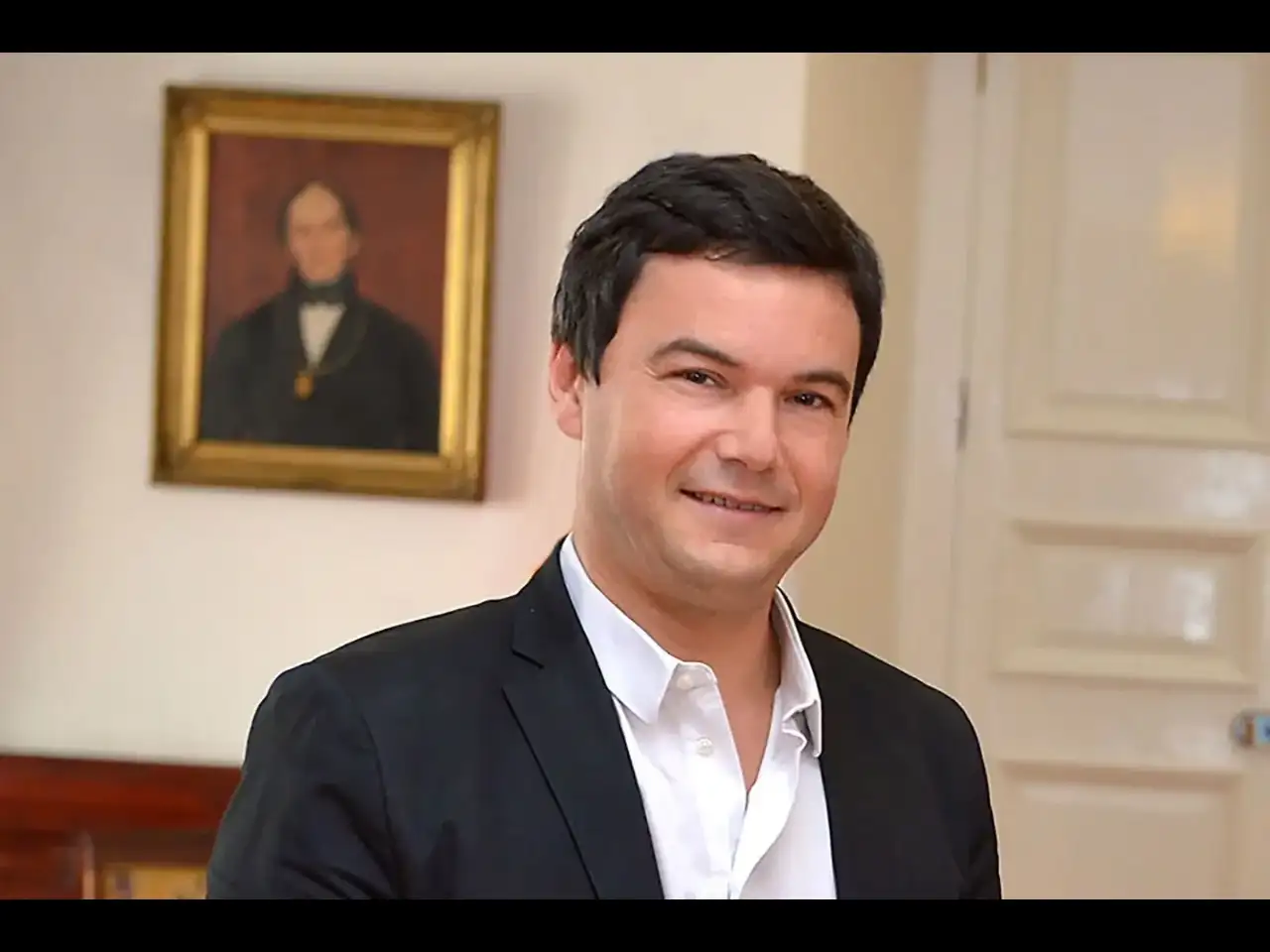
Quote of the day: Thomas Piketty is widely known for his powerful reflections on wealth, inequality, and how modern economies shape human life. His quotes are not just academic lines, but deep observations about how money, power, and opportunity move across societies over time.
Thomas Piketty shook the global economics world when his 700-page bestseller Capital in the Twenty-First Century became an international phenomenon in 2014. The book climbed Amazon bestseller charts and triggered fierce debates across the United States and Europe about capitalism, wealth inequality, taxation, and democracy.
Piketty used more than two centuries of tax records, income data, and historical research to argue that modern capitalism naturally pushes wealth toward the richest families. His central formula, “r > g” — meaning the return on capital exceeds economic growth — became one of the most discussed economic ideas of the decade.
His ideas often focus on how numbers and data reveal hidden truths about inequality. Through simple yet sharp language, he explains that economic systems are never neutral. They are shaped by history, politics, and human decisions that affect generations differently.
Because of this, his most famous quotes are widely shared in economics, politics, and education. They help people think more clearly about fairness, justice, and the long-term effects of wealth distribution in society today.
Quote of the day today:
“Refusing to deal with numbers rarely serves the interests of the least well-off.” —
Thomas Piketty(Capital in the Twenty-First Century)
Quote of the Day by Thomas Piketty
The quote of the day reflects a simple but powerful idea. Numbers shape society more than most people realize. When data is ignored, inequality grows quietly in the background. Real understanding begins when facts are faced without hesitation or comfort.
Piketty argued that inherited wealth grows faster than wages and salaries when economic growth slows and investment returns remain high. According to his research, this allows rich families to accumulate assets across generations while ordinary workers struggle with stagnant incomes, rising living costs, housing pressure, and weaker purchasing power.
He warned that if this trend continues unchecked, wealth concentration could reach levels incompatible with democracy and social stability. The economist challenged the famous “Kuznets Curve,” which had claimed inequality naturally falls as economies mature. Instead, Piketty showed data suggesting global inequality is once again rising toward levels seen in the 19th century.
It reminds us that wealth is not evenly shared in modern systems. Some accumulate steadily through time, while others depend only on wages. This gap is not sudden. It builds slowly and becomes visible only when we study it closely.
The deeper message of the quote of the day is awareness. Societies improve only when they observe reality with honesty. Clear thinking, simple language, and open data are the first steps toward fair economic understanding and better public decisions.
Meaning of the Quote of the Day
The meaning of the quote of the day is rooted in a simple truth. Societies often ignore numbers, but numbers never stop shaping reality. When data is avoided, inequality grows quietly and steadily. The quote reminds us that truth does not depend on belief, it depends on observation.
It also means that wealth is not only about effort. It is also about systems, history, and structure. Some people accumulate assets over time, while others depend only on income. This difference creates long-term imbalance that cannot be seen without careful study.
What made Piketty’s work stand out was not just the economics but the storytelling. He blended financial history with literature, using writers like Jane Austen and Honoré de Balzac to explain how societies historically rewarded inherited wealth over hard work.
Piketty argued that the relatively equal middle-class decades after World War II were not the normal state of capitalism but a temporary result of war, strong labor unions, rapid industrial growth, and high taxation. His research forced millions of readers to rethink how money, opportunity, class, and power operate in the modern global economy.
At its core, the meaning of the quote of the day is awareness and responsibility. It tells us that understanding facts is not optional. When people see reality clearly, they make better choices for fairness, balance, and long-term social stability.
About Thomas Piketty
Thomas Piketty is a French economist known for his deep study of wealth, inequality, and long-term economic patterns. He became globally famous for his research on how capital grows and concentrates over time in modern societies. His work focuses on understanding how economic systems shape opportunity, fairness, and social structure.
He is best known for his influential book Capital in the Twenty-First Century, where he analyzed centuries of data on income and wealth. His central idea is that when returns on capital grow faster than the overall economy, inequality tends to increase. This insight brought him into major global debates about taxation, democracy, and economic justice.
Beyond theory, Piketty’s work is widely discussed in policy and academic circles because it connects numbers with real social outcomes. He argues that economic inequality is not just a market result but also a political choice shaped by laws, institutions, and history.
Early life and academic journey of Thomas Piketty
Thomas Piketty was born in France and developed an early interest in mathematics, history, and social systems. This combination shaped his thinking about how societies distribute wealth and opportunity. He studied at some of France’s top academic institutions and quickly moved into economics research, focusing on long-term data rather than short-term trends.
From the beginning of his career, he was drawn to big questions about inequality and fairness. Instead of relying only on theory, he worked extensively with historical records of income and wealth. This approach helped him build a reputation as a researcher who connects economic models with real-world history in a clear and structured way.
Work, ideas, and global recognition
Piketty’s most influential work came with
Capital in the Twenty-First Century, where he examined how wealth concentrates over generations. His research suggested that when capital grows faster than economic output, inequality tends to rise unless it is balanced through policy. This idea sparked worldwide debate among economists, policymakers, and scholars.
The book also drew massive political attention because of Piketty’s bold policy proposals. He supported sharply higher taxes on extreme wealth and proposed an 80% tax rate on very high incomes in the United States.
He argued such policies would reduce excessive executive pay without damaging economic growth. His ideas angered conservative economists and free-market supporters, many of whom labeled him a neo-Marxist thinker. Yet progressive economists, labor groups, and younger voters embraced his warnings about billionaire wealth, declining middle-class security, and the growing divide between capital owners and workers.
His success comes not only from academic writing but also from making complex economic ideas understandable to the public. He became a global voice in discussions about taxation, democracy, and wealth distribution. Today, he is widely recognized as one of the most important economists studying inequality in the modern era.
Famous quotes by Thomas Piketty
- “Refusing to deal with numbers rarely serves the interests of the least well-off.”
- “The history of the distribution of wealth has always been deeply political, and it cannot be reduced to purely economic mechanisms.”
- “Social scientific research is and always will be tentative and imperfect, but it can still improve democratic debate.”
- “The dynamics of wealth distribution reveal powerful forces pushing toward both equality and inequality.”
- “In all human societies, health and education have an intrinsic value and define human progress.”
- “The distribution of wealth is too important an issue to be left to economists alone.”
The quotes of Thomas Piketty leave a lasting message about awareness and responsibility. They remind us that inequality is not random, but shaped by long-term systems that can be studied, understood, and questioned with clarity.
His ideas encourage a deeper way of thinking about society, where numbers are not ignored but used to reveal hidden truths. This understanding helps people move beyond assumptions and look at reality with more honesty and balance.
In the end, his message is simple but powerful: a fair society begins with clear thinking, open data, and the willingness to see how wealth and opportunity are truly distributed.