There are some encounters that seem to divide life into a before and an after. A person enters your world, and suddenly, experiences that once felt ordinary become charged with meaning: a conversation becomes unforgettable, a glance becomes a memory, and the possibility of love makes the future feel different. For Spanish poet Luis Cernuda, this intensity was not merely romantic sentiment. It was tied to a much larger question: what does it actually mean to have lived?
Cernuda’s poetry repeatedly returned to the tension between what human beings desire and what reality allows them to have. His life, marked by love, artistic ambition, political upheaval and decades of exile, gave that tension an unusually personal force. One of his most striking declarations appears in Los placeres prohibidos ( Forbidden Pleasures ), later incorporated into his lifelong poetic project La realidad y el deseo ( Reality and Desire ).
Quote of the day by Luis Cernuda: “If I do not know you, I have not lived;
If I die without knowing you, I do not die, because I have not lived.”
Who was Luis Cernuda?
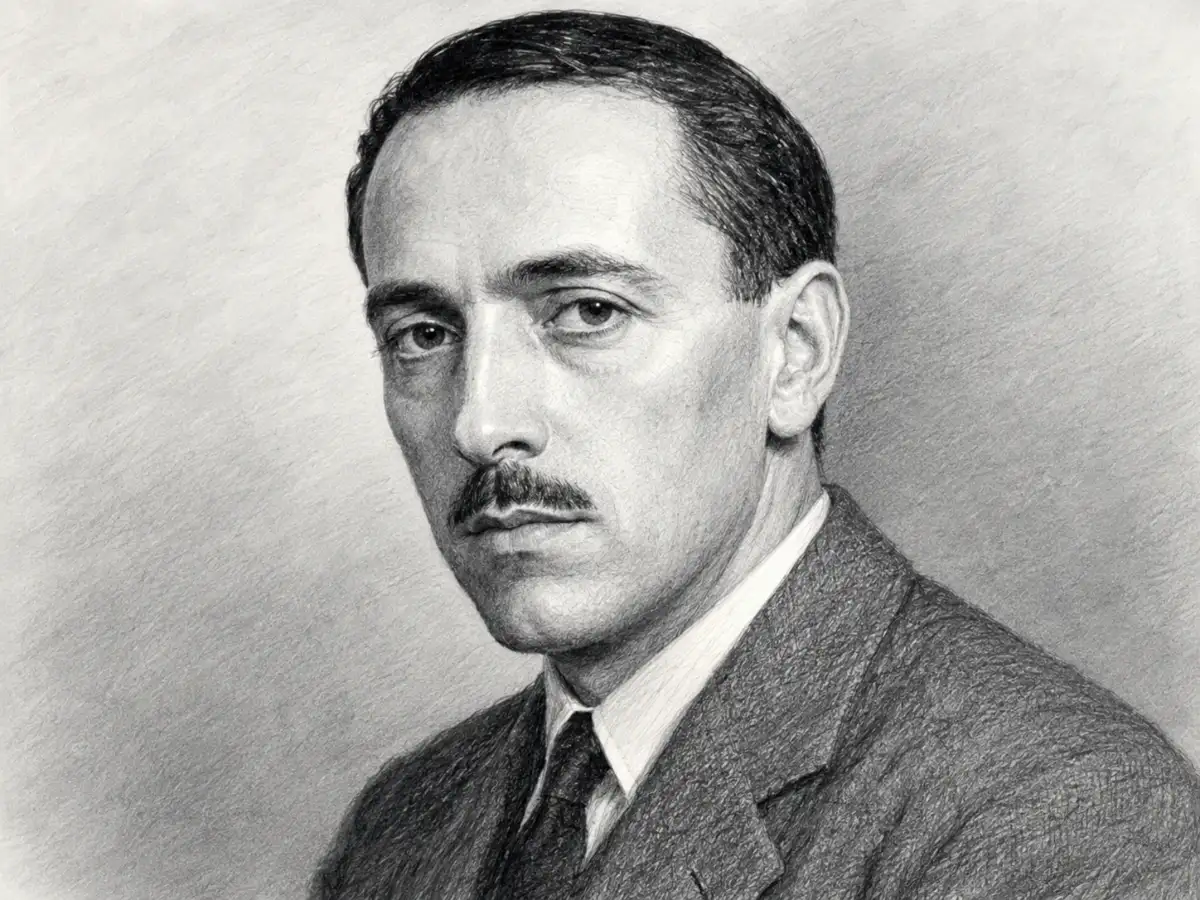
Luis Cernuda was born in Seville on September 21, 1902, and became one of the major Spanish poets associated with the Generation of '27, the influential group of writers and artists that included figures such as Federico García Lorca, Pedro Salinas and Vicente Aleixandre. He studied law at the University of Seville, where Pedro Salinas was one of his professors and introduced him to modern French poetry.
His first collection, Perfil del aire ( Profile of the Air ), appeared in 1927. His early work gradually moved away from more traditional poetic forms toward a highly personal style influenced by Romanticism, Surrealism and writers including André Gide and Friedrich Hölderlin. His poetry became increasingly concerned with desire, solitude, sexuality, memory and the painful distance between dreams and the world as it actually exists.
That conflict eventually gave his collected poetry its defining title: La realidad y el deseo , literally, Reality and Desire.
A poet who wrote openly about forbidden desire
Cernuda's poetry became particularly important because he wrote about homosexual desire with unusual directness at a time when doing so openly could carry serious social consequences.
His 1931 collection Los placeres prohibidos was a landmark in his development. Rather than treating desire as something that had to remain hidden, Cernuda made it part of the emotional and intellectual centre of his poetry.
The result was poetry that could be intensely intimate without being merely confessional. Love, for Cernuda, was simultaneously personal and existential. The beloved could represent freedom, beauty and the possibility of becoming more fully oneself.
Exile changed the meaning of his poetry
Cernuda's life was also transformed by the Spanish Civil War. He supported the Republican cause and participated in the cultural and intellectual activity surrounding the Republic. In 1938, he left Spain for what was initially supposed to be a temporary lecture trip to Britain. Instead, it became the beginning of a lifelong exile.
He taught in Britain, including at the University of Glasgow and Cambridge, before moving to the United States in 1947. He taught at Mount Holyoke College and later settled permanently in Mexico in 1952. He never returned permanently to Spain.
Meaning of the quote
The power of the passage comes from its deliberately extreme logic. Cernuda does not say that knowing another person makes life better. He goes further: without that encounter, he suggests, life itself has not truly happened.
The word “know” is crucial. In the context of Cernuda's poetry, it can be understood as something much deeper than intellectual knowledge. It evokes intimacy, recognition and desire, the experience of reaching another person and, through that person, discovering something about yourself.
There is also a striking reversal in the second line. Death normally marks the end of life. Cernuda turns the idea upside down: if he dies without having experienced this profound encounter, then death is almost irrelevant because he considers such an existence incomplete from the beginning.
It is therefore both a love declaration and a statement about what makes existence meaningful. The beloved becomes evidence that the poet has not merely existed, but actually experienced life.
More quotes by Luis Cernuda
“It is not love that dies, it is ourselves.”
“If man could say what he loves, if man could lift his love to the sky like a cloud in the light.”
“Childhood ended and I fell into the world.”
“I don't know men. I spent years looking for them and fleeing from them without remedy.”