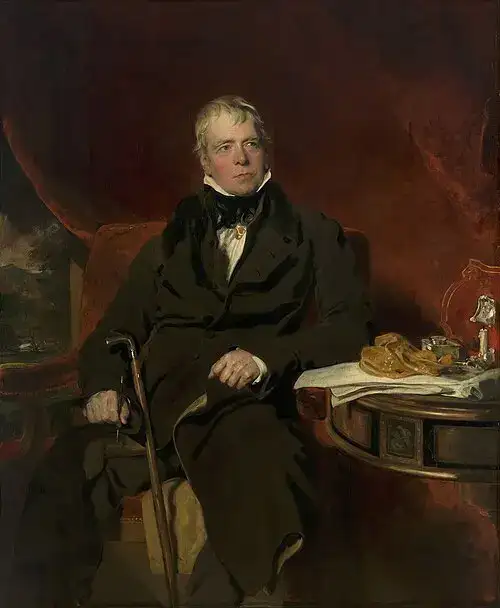
Quote of the Day: A meaningful Quote of the Day often offers more than a passing moment of inspiration—it becomes a quiet guide for reflection, resilience, and understanding. Some quotes endure across generations because they capture universal emotions in just a few words. Among the most memorable literary voices to express the complexities of love and hope was Sir Walter Scott, whose writings helped shape modern historical fiction and romantic literature.
His words, “Love will subsist on wonderfully little hope but not altogether without it,” remain a deeply human reminder that even in uncertainty, hope sustains affection, connection, and emotional endurance. The quote reflects the fragile but powerful relationship between love and optimism, suggesting that while love can survive hardship and distance, it still needs some measure of hope to remain alive. As a Quote of the Day, it offers timeless wisdom about emotional perseverance and the quiet strength that hope provides in human relationships.
Quote of the Day Today
The Quote of the Day today by Sir Walter Scott is: “Love will subsist on wonderfully little hope but not altogether without it.”
This thoughtful observation speaks to the enduring nature of love and the essential role hope plays in keeping it alive. Love, Scott suggests, can withstand disappointment, separation, and uncertainty, surviving on even the smallest signs of possibility. Yet without hope altogether, even the strongest emotions may begin to fade. The quote resonates deeply because it captures a truth many people understand through personal experience—that hope, however fragile, often becomes the thread that keeps love intact.
Quote of the Day Today May 12: Early Life of Sir Walter Scott
Sir Walter Scott was born on August 15, 1771, in Edinburgh, Scotland. He was the son of a lawyer, while his mother was the daughter of a physician. From an early age, Scott developed a deep fascination with stories, especially tales told by elderly relatives about the Scottish Borders and the struggles of Scotland’s past.
As a child, he became an eager reader of poetry, history, drama, and fairy tales. His remarkable memory allowed him to recite long passages of literature, astonishing visitors and family alike. These early experiences nurtured not only his love of storytelling but also his lifelong appreciation for Scotland’s landscapes, traditions, and history.
Scott was educated at the high school in Edinburgh and later attended grammar school in Kelso. In 1786, he began legal training under his father, preparing for a career in law. Although he practiced law, his true passion remained literature. During this time, he immersed himself in reading works in Italian, Spanish, French, German, and Latin, broadening his literary horizons.
After experiencing a deeply felt disappointment in love during his youth, Scott married Charlotte Carpenter in 1797. Their marriage remained happy until her death in 1826, as per information sourced from Britannica.
Quote of the Day: Literary Beginnings and Rise as a Poet
In the mid-1790s, Scott became fascinated by German Romanticism, Gothic fiction, and Scottish border ballads. His first published work, The Chase, and William and Helen (1796), was a translation of two German ballads. This was followed by a translation of Goethe’s Götz von Berlichingen in 1799, as per information sourced from Britannica.
His major breakthrough came with Minstrelsy of the Scottish Border (1802–03), a collection of Scottish ballads that introduced his name to a wider audience. He soon followed this success with narrative poems such as The Lay of the Last Minstrel (1805), Marmion (1808), and The Lady of the Lake (1810), which became one of his most celebrated poetic works.
Scott’s poetry captivated readers with its vivid storytelling, romantic themes, and powerful evocations of Scottish landscapes. For a time, he became one of the most admired poets in Britain.
Inventing the Historical Novel
As literary tastes began to shift, Scott turned toward fiction. In 1814, he published Waverley, a novel set during the Jacobite rebellion of 1745. The book was an immediate success and is often regarded as the birth of the modern historical novel.
Scott published his novels anonymously at first, but readers quickly recognized the brilliance behind the works. He followed Waverley with an extraordinary series of historical novels, including Guy Mannering, Rob Roy, Old Mortality, and The Heart of Midlothian.
Among his most enduring achievements was Ivanhoe (1819), set in medieval England, which remains one of his most widely read books. Through his novels, Scott combined historical research with vivid characters, regional dialogue, and compelling plots, creating a literary form that influenced writers across Europe and America.
His ability to blend romance, history, and realism transformed storytelling and established him as one of the greatest literary figures of the Romantic era, as per information sourced from Britannica.
Personal Struggles and Unwavering Determination
Despite his literary fame, Scott faced significant financial difficulties. Complex financial arrangements involving his publishing ventures led to devastating debt after a major financial collapse in 1825.
Rather than declaring bankruptcy, Scott chose to repay his enormous debts through relentless writing. He worked tirelessly, producing books at remarkable speed to restore his financial standing. His dedication to responsibility and personal honour earned widespread admiration.
Unfortunately, the strain of this work took a toll on his health. In 1831, his condition deteriorated sharply. He traveled abroad in hopes of recovery, but his health continued to decline. Sir Walter Scott died on September 21, 1832, at his beloved home, Abbotsford, in Scotland.
Quote of the Day Meaning
The meaning of Sir Walter Scott’s Quote of the Day lies in its profound understanding of love and emotional resilience. “Love will subsist on wonderfully little hope but not altogether without it.” The quote suggests that love is remarkably strong. It can endure uncertainty, survive distance, and withstand disappointment. Even the smallest possibility—a kind word, a memory, or a distant promise—can keep love alive.
At the same time, Scott reminds us that hope is essential. Without even a glimmer of belief in a better outcome, love may struggle to survive. Hope gives love direction, purpose, and emotional endurance. This message extends beyond romantic relationships. It applies to friendships, family bonds, and even faith in oneself. Life often asks people to continue despite uncertainty, trusting in outcomes they cannot yet see. Scott’s words remind readers that hope, however small, can sustain the heart through difficult seasons.
As a Quote of the Day, it encourages patience, emotional courage, and trust in the quiet power of hope.
Legacy and Lasting Influence
Sir Walter Scott is widely regarded as both the inventor and greatest practitioner of the historical novel. His influence reshaped literature, inspiring generations of writers to blend historical events with imaginative storytelling.
His innovative use of regional speech, richly detailed settings, and morally complex characters gave readers a new way to experience history through fiction. Scott was also recognized for his literary achievements during his lifetime. His reputation remains secure not only because of his storytelling talent but because of the emotional depth and humanity found throughout his work.
Today, his books continue to be read, studied, and admired, and his words still offer timeless insights into love, honour, courage, and resilience.
Iconic Quotes by Sir Walter Scott
Beyond today’s Quote of the Day, Sir Walter Scott left behind many memorable lines that continue to resonate:
“Revenge, the sweetest morsel to the mouth that ever was cooked in hell.”
“All men who have turned out worth anything have had the chief hand in their own education.”
“Oh, what a tangled web we weave...when first we practice to deceive.”
“Love rules the court, the camp, the grove, and men below, and the saints above, for love is heaven, and heaven is love. ”
“For he that does good, having the unlimited power to do evil, deserves praise not only for the good which he performs, but for the evil which he forbears.”
“Cats are a mysterious kind of folk.”
As a Quote of the Day, Sir Walter Scott’s reflection on love and hope remains deeply relevant. It reminds readers that while life may test affection with uncertainty, even the smallest spark of hope can keep the heart alive. His words continue to inspire not only because they are beautifully written, but because they speak to enduring truths about what it means to love, to endure, and to believe.