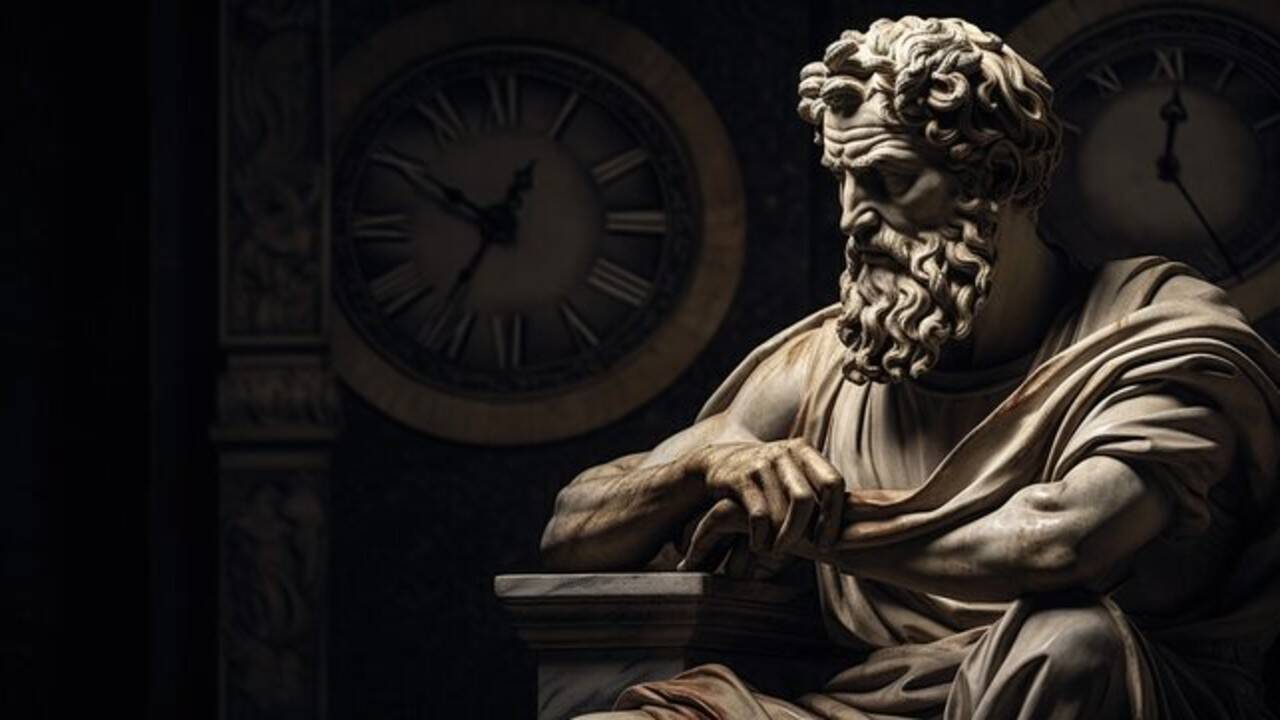
Lucius Annaeus Seneca knew more about uncertainty than most philosophers who wrote about courage. Born in Roman Spain around the beginning of the first century AD, he became a statesman, playwright and one of the leading Stoic thinkers of his age, serving as adviser to the emperor Nero before falling from political favour and eventually being ordered to take his own life. His writings rarely offered comfortable optimism because they were shaped by exile, political intrigue and the constant unpredictability of power. When Seneca wrote that many things appear difficult because people hesitate to face them, he was speaking from experience rather than theory.
Get breaking news anytime, anywhere. Download the TOI app now!
The line, drawn from one of his Letters to Lucilius , is frequently treated as motivational advice about being brave. It says something more precise. Seneca was not claiming that life's challenges are imaginary or that determination alone solves every problem. His argument was that fear has a remarkable ability to distort judgement. Before an action begins, the mind has already rehearsed failure, imagined embarrassment, exaggerated consequences and transformed an uncertain task into something that feels almost impossible. The obstacle grows larger before reality has had any opportunity to test it.
Fear has a habit of rewriting reality
The Romans admired courage, though Stoic philosophers understood that courage did not mean feeling no fear. It meant refusing to let fear become the only voice making decisions. Seneca repeatedly warned that people suffer more in anticipation than they do in reality, a theme that runs through much of his work. Anxiety, he argued, creates a second burden by adding imagined disasters to the genuine difficulties already present.
Modern psychology has given names to many of the mental habits Seneca observed nearly two thousand years ago. People overestimate unlikely dangers, assume the worst possible outcome is the most probable one and postpone uncomfortable decisions in the hope that the problem will somehow become easier tomorrow. In many cases, delay produces the opposite result. A neglected health concern grows more serious because a doctor was never consulted. A financial problem becomes harder to solve because important conversations were postponed. An apology feels increasingly awkward because silence has lasted for months instead of days. Time rarely reduces these difficulties on its own.
That is the insight hidden within Seneca's sentence. The challenge itself changes very little during those early moments of hesitation. What changes rapidly is the story people tell themselves about it. The longer action is postponed, the more intimidating the task begins to appear.
Lessons from history and everyday life
History repeatedly illustrates the cost of hesitation. During outbreaks of disease, cities that delayed responding frequently paid a heavier price than those that acted while the threat still appeared manageable. Explorers who prepared carefully before setting sail accepted genuine risks, though endless debate on the shoreline never carried anyone across an ocean. Scientific discoveries, legal reforms and technological breakthroughs have usually depended on individuals willing to pursue ideas that others dismissed as unrealistic or too difficult to attempt.
The same pattern appears on a much smaller scale. Learning to drive feels overwhelming before the first lesson, while speaking a foreign language seems impossible until someone begins using unfamiliar words aloud. Writing the opening page of a book, making the first phone call after deciding to change careers or returning to university after many years away all share something in common. The hardest part frequently arrives before the work itself begins because imagination has already expanded the challenge far beyond its actual size.
Seneca would not have been surprised by this. Stoicism encouraged people to examine impressions before accepting them as truth. A frightening possibility deserved consideration, though it also deserved scrutiny. Was the danger real, or had the mind enlarged it through speculation? That habit of questioning first impressions remains one of Stoicism's most enduring contributions to practical philosophy.
Why Seneca's advice still endures
The world has changed dramatically since Seneca wrote to his friend Lucilius, though human hesitation has changed very little. Technology has accelerated communication, shortened attention spans and increased the number of decisions people make each day, though it has not eliminated the tendency to imagine difficulties before confronting them. The same mind that once feared addressing the Roman Senate can now fear sending an email, changing professions or beginning a conversation that has been avoided for years.
Perhaps that explains why Seneca's observation continues to resonate. It does not promise that courage removes hardship or that every risk ends in success. Instead, it asks readers to look carefully at the obstacles standing before them and consider whether part of their size comes from the challenge itself, or from the fear that has been quietly enlarging it all along. Sometimes the first act of courage is simply seeing the problem as it really is.