People often promise loyalty, honesty, discipline, or love through words. A friend says they will always be there. A company claims employees are its biggest strength. Leaders speak about values and integrity. But over time, many people discover a difficult truth: actions usually reveal far more than words ever can.
That idea sits at the heart of one of the most enduring observations associated with René Descartes, the philosopher who spent his life questioning how humans understand truth, reality, and certainty.
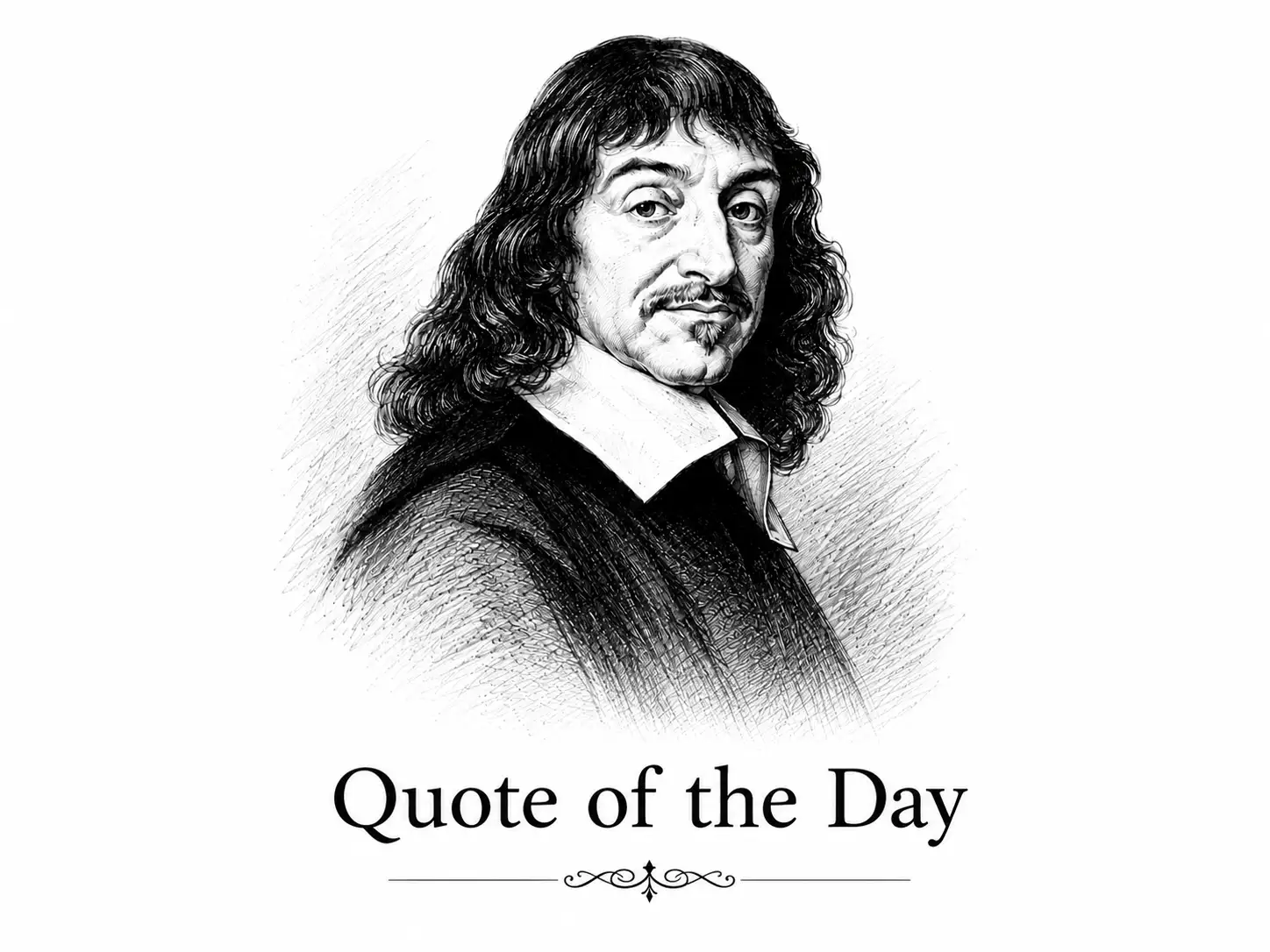
Quote of the Day by René Descartes: ‘To know what people really think, pay attention to what they do, rather than what they say’
What the quote is actually suggesting
Quoted by Goodreads, Descartes’ quote is ultimately about learning to judge reality through evidence instead of appearances. People can say many things for social approval, convenience, fear, or self-interest. Words are easy. Actions usually require effort, sacrifice, consistency, and intention. That is why behavior often exposes priorities more honestly than speech.
Someone may constantly talk about caring for family but rarely make time for them. A manager may praise teamwork while repeatedly taking credit for others’ work. A friend may promise support but disappear during difficult moments.
The quote encourages people to pay attention to patterns rather than promises.
It is also a reminder about self-awareness. Many individuals believe they value health, growth, or discipline, yet their daily habits may reveal something completely different. In that sense, actions do not just expose others; they expose us too.
In modern life, where social media allows people to carefully craft public images, the gap between words and actions can sometimes become even larger. Descartes’ observation remains powerful because it cuts through performance and focuses on reality.
René Descartes: The thinker behind the idea
Born in 1596, René Descartes became one of the most influential thinkers in modern history. He was not only a philosopher but also a groundbreaking mathematician and scientific thinker whose ideas helped shape the modern world.
Descartes developed the foundations of analytic geometry, a breakthrough that connected algebra and geometry in ways that later transformed mathematics and science. In physics and natural philosophy, he proposed a new vision of the universe governed by universal laws rather than mystery alone.
But Descartes became most famous for his philosophical method of doubt. Instead of blindly accepting ideas, he believed people should question assumptions and search carefully for what could truly be known with certainty.
His major works, including Discourse on the Method and Meditations on First Philosophy, explored knowledge, the human mind, reality, and existence itself.
Over centuries, Descartes has been praised as a visionary thinker who reshaped philosophy, mathematics, and science. At the same time, critics debated his ideas intensely, especially his views on skepticism and the relationship between mind and body.
Even today, his influence remains deeply woven into modern intellectual thought.
René Descartes’s thinking and philosophy behind the quote
Descartes believed truth should not be accepted simply because authority, tradition, or popular opinion says so. His philosophy focused on careful observation, rational thinking, and testing assumptions.
That mindset strongly connects to this quote. For Descartes, human understanding required moving beyond surface-level claims and examining what could actually be observed and verified. Actions provide evidence. Words alone do not.
His broader philosophy often centered on separating illusion from reality. That same thinking appears here in a very practical human context: understanding people.
The quote also reflects Descartes’ rational and analytical approach to life. Rather than judging intentions through emotion alone, he suggests examining consistent behavior over time.
Why this idea still matters today
In today’s world, people are surrounded by constant communication, motivational speeches, corporate branding, political promises, curated social media identities, and carefully managed public images.
Because of that, many individuals judge trust through behavior rather than language.
The quote applies everywhere: relationships, friendships, workplaces, leadership, parenting, and even personal growth. Employees look at how companies treat workers during difficult times, not just what appears in mission statements. Children learn more from what parents do than what they preach. Friendships are often tested through actions during moments of crisis.
The idea also matters for mental clarity. Paying attention to actions helps people avoid manipulation, empty promises, and unrealistic expectations. More importantly, the quote encourages integrity. It quietly asks people a difficult question: Do your actions reflect the person you claim to be?