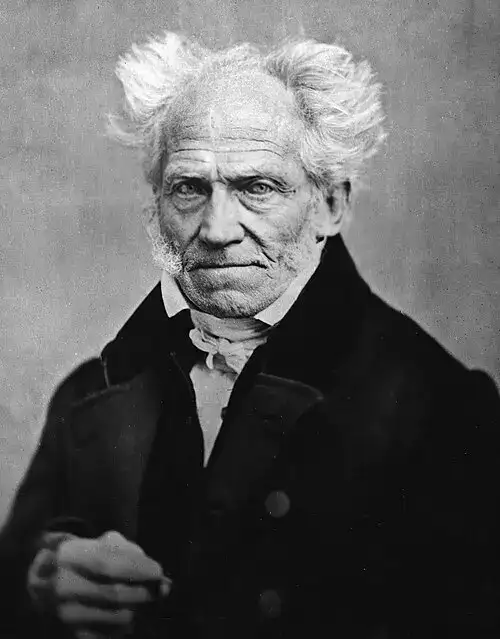
Quote of the Day: A memorable Quote of the Day often survives generations because it speaks to emotions and struggles that never truly disappear. Some quotes inspire ambition, some encourage courage, while others quietly reveal difficult truths about life and human nature. Few thinkers explored those difficult truths more deeply than Arthur Schopenhauer, the German philosopher widely known for his reflections on suffering, desire, and the restless nature of human existence. His writings were often intense, deeply philosophical, and sometimes unsettling, yet they continue to resonate because they examine realities many people experience but rarely express openly.
The importance of a Quote of the Day lies in its ability to provoke reflection. A single sentence can influence perspective, encourage restraint, or help people better understand their own emotions. Schopenhauer’s observations remain relevant because modern life, despite technological advancement and material progress, still revolves around expectations, disappointments, ambitions, and the pursuit of happiness. His words challenge readers to reconsider whether endless expectations truly lead to fulfillment or whether they instead create dissatisfaction and emotional unrest.
Quote of the Day Today May 13
The Quote of the Day today by Arthur Schopenhauer is:
“The safest way of not being very miserable is not to expect to be very happy.”
The quote reflects Schopenhauer’s deeply philosophical view of life and human psychology. Unlike thinkers who focused primarily on optimism and progress, Schopenhauer believed that human beings often suffer because of endless desires and unrealistic expectations. According to him, happiness is fleeting, while disappointment is frequent. By lowering excessive expectations, he argued, people may protect themselves from deep emotional pain and frustration.
Quote of the Day: Early Life and Education of Arthur Schopenhauer
Arthur Schopenhauer was born on February 22, 1788, in Danzig, Prussia, now known as Gdańsk, Poland. He was the son of Heinrich Floris Schopenhauer, a wealthy merchant, and Johanna Schopenhauer, who later became a respected novelist and essayist. His upbringing exposed him to both intellectual culture and commercial discipline from an early age.
When Danzig came under Prussian sovereignty in 1793, the family relocated to Hamburg. Schopenhauer received a private education and attended a business school, where he encountered Enlightenment thought as well as religious attitudes that emphasized human suffering and moral seriousness. These early influences later shaped many of his philosophical ideas.
In 1803, he traveled extensively across Europe with his parents, visiting Belgium, England, France, Switzerland, and Austria. These experiences broadened his worldview and introduced him to different cultures and intellectual traditions.
The sudden death of his father in 1805 dramatically altered his life. His mother moved to Weimar, where she became connected to major literary figures including Johann Wolfgang von Goethe and Christoph Martin Wieland. Schopenhauer remained in Hamburg for a period before eventually pursuing academic studies.
In 1809, he enrolled at the University of Göttingen as a medical student. However, his interests soon shifted toward philosophy and the humanities. He became deeply engaged with the works of Plato and Immanuel Kant, whose ideas strongly influenced his later philosophy. From 1811 to 1813, he studied at the University of Berlin and later completed his doctoral dissertation, On the Fourfold Root of the Principle of Sufficient Reason, earning a doctorate from the University of Jena.
Quote of the Day Today May 13: Philosophical Formation and Intellectual Influences
During his years in Weimar, Schopenhauer developed a close intellectual association with Goethe. The two discussed philosophy, science, and aesthetics, and Schopenhauer later wrote On Vision and Colours, supporting Goethe’s theories against Isaac Newton’s views on colour.
Another major influence came through Friedrich Majer, who introduced Schopenhauer to Indian philosophy, particularly the Vedānta tradition and the Upaniṣads. Schopenhauer later regarded the philosophical teachings of India, along with Plato and Kant, as foundational to his own intellectual system.
These influences eventually shaped his major philosophical work, The World as Will and Idea, published in 1819. In this work, Schopenhauer argued that the world humans experience is driven by an irrational and endless “will,” a force that constantly pushes individuals toward desire, struggle, and dissatisfaction.
According to Schopenhauer, human life is marked by continual striving. People pursue goals, pleasures, possessions, and ambitions, believing fulfillment lies ahead. Yet once one desire is satisfied, another emerges. This endless cycle, he believed, explains why lasting happiness remains difficult to achieve, as per information sourced from Britannica.
The World as Will and Idea
Schopenhauer’s masterpiece, The World as Will and Idea, became the defining expression of his philosophy. The work examined knowledge, nature, art, ethics, and human suffering through a highly original framework.
He argued that the world people perceive is shaped through human understanding, particularly through space, time, and causality. Yet beneath appearances exists the “will,” an irrational force driving all existence. In human beings, this will appears through endless wants, ambitions, fears, and passions.
For Schopenhauer, suffering is inseparable from desire. Once one objective is achieved, another immediately takes its place. Human life therefore becomes an unending process of longing and frustration.
However, Schopenhauer also believed temporary relief from suffering was possible. Art, music, compassion, and philosophical contemplation allowed people to momentarily escape the tyranny of desire. He especially admired music, which he considered the highest artistic expression because it directly reflected the essence of the will itself.
His philosophical pessimism later influenced existential philosophy, psychology, literature, and even psychoanalysis. Thinkers such as Friedrich Nietzsche and Sigmund Freud engaged with ideas connected to Schopenhauer’s understanding of desire and human behavior.
Academic Struggles and Isolation
Despite the originality of his ideas, Schopenhauer initially struggled to gain recognition. In 1820, he qualified to lecture at the University of Berlin. However, he made the unfortunate decision to schedule his lectures at the same time as the immensely popular philosopher G.W.F. Hegel.
Students overwhelmingly chose Hegel’s lectures instead, and Schopenhauer’s academic career suffered badly as a result. Only his first lecture attracted significant attention, and he gradually abandoned hopes of becoming a successful university professor.
Disappointed by the philosophical establishment, Schopenhauer withdrew increasingly into private intellectual life. He spent years traveling and later settled in Frankfurt, where he lived quietly and devoted himself entirely to reading, writing, and philosophical study.
Though isolated for much of his life, he continued publishing essays and philosophical works. Over time, especially after the publication of Parerga und Paralipomena in 1851, his reputation began to grow significantly, as per information sourced from Britannica.
Quote of the Day Meaning
The meaning behind Schopenhauer’s Quote of the Day lies in his belief that unrealistic expectations often create emotional suffering. He did not argue that happiness is impossible. Instead, he believed that excessive hope and idealized visions of life can lead to greater disappointment when reality fails to match those expectations.
By saying, “The safest way of not being very miserable is not to expect to be very happy,” Schopenhauer suggested that moderation in expectation can protect emotional stability. According to his philosophy, people frequently attach happiness to future achievements, relationships, wealth, or recognition, only to discover that satisfaction remains temporary.
The quote also reflects his broader view that human beings are trapped in cycles of desire. Once one goal is achieved, another immediately emerges, preventing lasting contentment. Reducing exaggerated expectations, therefore, becomes a way of minimizing suffering.
Even in modern society, the quote feels remarkably relevant. In a world shaped by constant comparison, social pressure, and the pursuit of ideal lifestyles, Schopenhauer’s warning about unrealistic expectations continues to resonate. His words encourage emotional realism rather than blind optimism, as per information sourced from Britannica.
Later Years and Growing Recognition
For many years, Schopenhauer believed the intellectual world had unfairly ignored his philosophy. Yet during the final decades of his life, attitudes toward his work began to change. Readers increasingly appreciated the clarity, honesty, and psychological depth of his writing.
Living in Frankfurt during his later years, Schopenhauer adopted a highly disciplined and solitary routine. He devoted himself almost entirely to study and writing, maintaining an austere lifestyle influenced partly by the philosophy of Immanuel Kant.
His essays explored subjects ranging from morality and art to education, noise, human relationships, and practical wisdom. Many readers admired his direct writing style, which differed sharply from the complex and abstract language common among many philosophers of his era.
Schopenhauer died suddenly and peacefully on September 21, 1860, in Frankfurt am Main, Germany, at the age of 72. Although his work was not fully appreciated during much of his lifetime, his influence expanded enormously after his death.
Influence on Philosophy, Literature, and Psychology
Schopenhauer’s ideas reached far beyond academic philosophy. His emphasis on irrational drives, unconscious motivations, and emotional suffering later influenced modern psychology and psychoanalysis, particularly through thinkers connected to Sigmund Freud.
His impact on literature and music was equally significant. Writers and composers such as Richard Wagner, Thomas Mann, and other major European intellectuals engaged deeply with his ideas.
By focusing on individual suffering rather than political systems or abstract social theories, Schopenhauer also helped shape existential thought. His work explored loneliness, desire, compassion, freedom, and the emotional realities of being human.
Though often labeled pessimistic, Schopenhauer’s philosophy also contained ethical depth. He believed compassion formed the basis of morality and argued that recognizing the suffering of others was essential to human decency.
Iconic Quotes by Arthur Schopenhauer
Beyond today’s Quote of the Day, Arthur Schopenhauer produced many observations that continue to influence philosophy, psychology, and modern thought:
“Talent hits a target no one else can hit. Genius hits a target no one else can see.”
“Compassion is the basis of morality.”
“A man can be himself only so long as he is alone; and if he does not love solitude, he will not love freedom; for it is only when he is alone that he is really free.”
“Mostly it is loss which teaches us about the worth of things.”
“Every man takes the limits of his own field of vision for the limits of the world.”
“The assumption that animals are without rights and the illusion that our treatment of them has no moral significance is a positively outrageous example of Western crudity and barbarity. Universal compassion is the only guarantee of morality.”
“It is difficult to find happiness within oneself, but it is impossible to find it anywhere else.”
“The person who writes for fools is always sure of a large audience.”
“Happiness consists in frequent repetition of pleasure."
These quotes reveal the central themes that defined Schopenhauer’s philosophy: self-awareness, solitude, compassion, suffering, and the limitations of human perception.
As a Quote of the Day, Schopenhauer’s reflection on happiness remains powerful because it addresses a timeless human tendency—the belief that fulfillment always lies somewhere ahead. His words do not reject hope entirely, but they encourage balance, realism, and emotional wisdom. More than 150 years after his death, Arthur Schopenhauer remains one of philosophy’s most influential and thought-provoking voices, and his ideas continue to shape discussions about happiness, suffering, and the human condition.