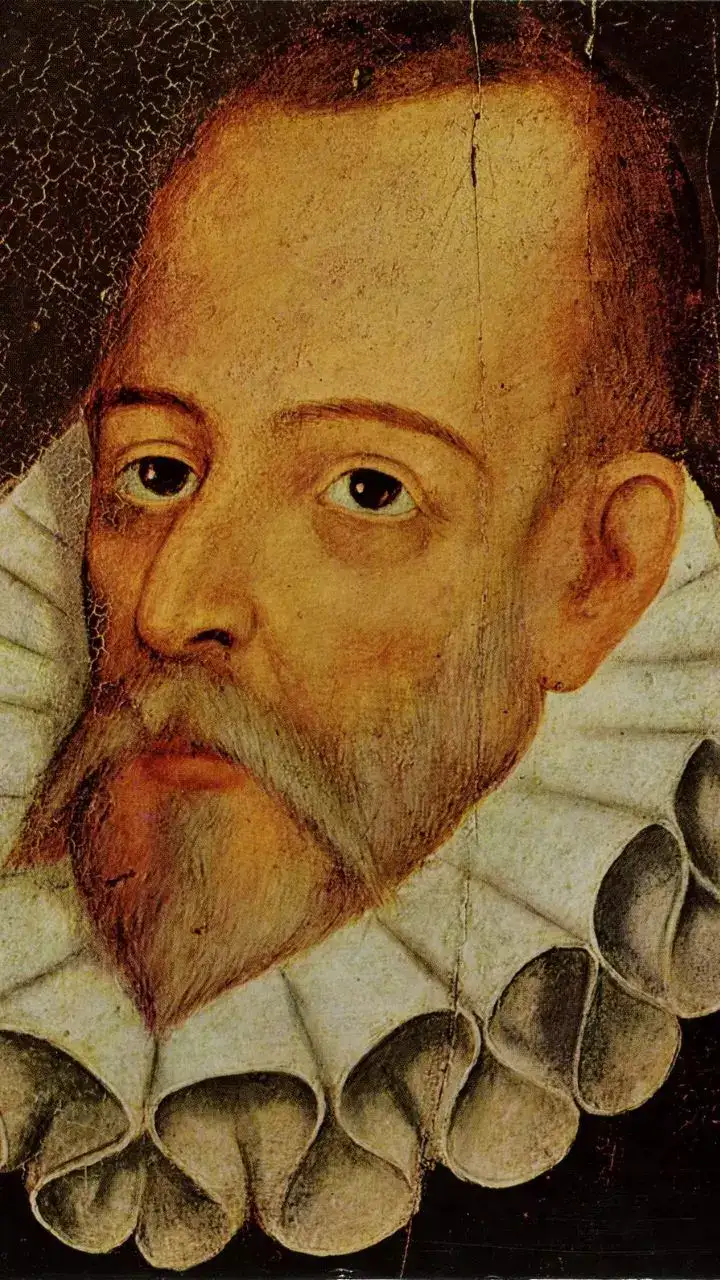
Miguel de Cervantes Quote of the Day: A Spanish soldier lost his hand at Lepanto, spent five years as a slave in Algiers, and still came home to write the funniest, saddest book in Western literature. That man was Miguel de Cervantes Saavedra, and his madness quote from Don Quixote has outlived empires. "When life itself seems lunatic, who knows where madness lies?" he wrote, and four centuries later, people still stop mid-scroll to read it twice.
This isn't decoration for a inspirational poster. It's a working theory of sanity, built by someone who watched the world reward cruelty and call it common sense. Cervantes wasn't being clever for cleverness's sake. He'd buried friends in battle, begged for ransom money in a foreign prison, and returned to a Spain that barely noticed he'd left. So when his knight-errant asks who really decides what counts as madness, the question carries weight most quotes never earn.
Quote of the day by Miguel de Cervantes Saavedra
“When life itself seems lunatic, who knows where madness lies? Perhaps to be too practical is madness. To surrender dreams — this may be madness. Too much sanity may be madness — and maddest of all: to see life as it is, and not as it should be!” ― Miguel de Cervantes Saavedra, Don Quixote
Miguel de Cervantes Quote of the Day: A Soldier Who Knew Real Lunacy
Cervantes didn't theorize about madness from a comfortable desk. He lived through the Battle of Lepanto in 1571, took two gunshot wounds, and lost the use of his left hand permanently. Then came capture by Barbary pirates, five brutal years enslaved in Algiers, and four failed escape attempts that should have gotten him killed. By the time he sat down to write Don Quixote, he'd already seen how arbitrary power, war, and bad luck could shred a person's life without warning.
That history matters because it strips away the idea that his madness quote is just whimsical fiction. A man who survived slavery and battlefield horror, then watched Spain's bureaucracy ignore his pleas for basic recognition, had every right to ask whether the world's so-called sane systems made any sense at all. His own life was proof that the line between order and chaos was thinner than anyone admitted.
Is It Madness to Dream, or Madness to Stop Dreaming?
Here's where Cervantes gets genuinely subversive. Don Quixote isn't praised for matching reality. He's remembered for refusing to let reality crush his sense of purpose, even when windmills weren't giants and inns weren't castles. Cervantes asks whether surrendering dreams might be its own quiet form of madness, perhaps more dangerous than chasing impossible ones.
Think about anyone who's ever talked themselves out of a risk because it seemed "unrealistic." Most regret isn't from failing. It's from never trying because the world insisted on being practical. Cervantes lived among soldiers who followed orders into pointless slaughter, calling it duty. He'd seen where blind practicality actually leads.
Why "Too Much Sanity" Might Be the Real Danger
The line about excessive sanity being madness sounds like a riddle until you watch it play out in real history. Nazi Germany's bureaucrats were, by every clinical measure, perfectly sane. They filed paperwork, followed procedure, and called genocide logistics. Cervantes, writing centuries earlier, already sensed that rigid conformity to a broken system can be far more destructive than one knight's delusions about giants.
This is the deeper warning inside the Don Quixote madness quote. Sanity without conscience becomes complicity. A society obsessed with appearing reasonable can commit unreasonable acts and never notice the contradiction. Cervantes wasn't excusing delusion. He was questioning who gets to define normal, and why we trust that definition so easily.
Seeing Life As It Is vs. As It Should Be: Cervantes' Final Challenge
The quote's last line lands hardest: seeing life only as it is, never as it should be, is the maddest madness of all. That's not pessimism. It's a challenge to keep imagining better, even while living in something worse. Martin Luther King Jr. echoed this centuries later, refusing to accept Jim Crow as simply "how things are." Cervantes got there first, through a broke, broken-handed ex-soldier riding a thin horse.
This is why the line still travels. It doesn't comfort people. It unsettles them into asking better questions about their own compromises, their own surrendered dreams, their own quiet acceptance of things that shouldn't be accepted. That discomfort is the whole point, and it's exactly why Cervantes still matters.