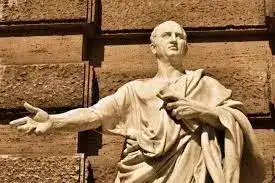
Quote of the Day: Long before modern self-help books, leadership podcasts and motivational quotes filled social media feeds, one Roman thinker was already asking difficult questions about human behavior, wisdom and judgment. Born more than 2,000 years ago, Marcus Tullius Cicero became one of history’s most influential voices on politics, ethics and the power of reason. A lawyer, philosopher, writer and legendary orator, Cicero lived during the dramatic final years of the Roman Republic, a period marked by political chaos, betrayal and civil war. Yet many of his ideas still feel strikingly modern. One particular quote, often shared today in conversations about intelligence, decision-making and personal growth, continues to resonate because of its brutally honest view of how people learn.
Quote of the day today
The quote reflects Cicero’s deep belief that human beings reveal their character through the way they respond to life. Some people think ahead and use logic. Others only learn after making mistakes. And some refuse to learn until circumstances force them to change.
Even centuries later, the line feels relevant in workplaces, relationships, politics and everyday decision-making.
Who was Marcus Tullius Cicero?
Marcus Tullius Cicero was born in 106 BCE in Arpinum, a town in ancient Italy. Unlike many Roman politicians from aristocratic families, Cicero was considered a “new man,” meaning he rose to prominence through talent rather than noble ancestry.
He studied law, rhetoric and philosophy in Rome and Greece before becoming one of the greatest public speakers in Roman history. His courtroom speeches became legendary for their emotional force, logical structure and persuasive power.
Cicero entered politics during one of Rome’s most unstable periods. He served as consul in 63 BCE and became famous for exposing a conspiracy led by the politician Catiline, who was accused of plotting to overthrow the Roman government.
But Cicero’s life was filled with political danger. He often found himself caught between powerful rivals including Julius Caesar, Pompey and Mark Antony. After Caesar’s assassination, Cicero criticized Antony in a series of speeches known as the Philippics . Eventually, he was declared an enemy of the state and executed in 43 BCE.
Though his political career ended violently, his writings survived and shaped Western philosophy, rhetoric and education for centuries.
Quote of the day meaning
Cicero’s quote divides human behavior into four categories, each representing a different level of awareness and understanding.
“The wise are instructed by reason”
This first part praises people who think critically before acting. Wise individuals do not wait for disaster or humiliation to teach them lessons. Instead, they use logic, reflection and foresight to guide decisions.
In modern life, this could describe someone who saves money before a financial crisis, values health before illness appears or studies consequences before making risky choices.
Cicero believed reason separated human beings from animals. To him, rational thinking was one of humanity’s greatest strengths.
“Average minds by experience”
This section recognizes a more common reality: many people only learn after living through something personally. A person may ignore advice about toxic relationships until heartbreak changes them. Others may understand the importance of discipline only after failure or regret.
Experience can still be a valuable teacher, but Cicero suggests it is not as powerful as wisdom guided by reason. Learning after mistakes often comes with emotional or practical costs.
“The stupid by necessity”
Here, the quote becomes sharper and more critical. Cicero describes people who refuse to change unless circumstances force them to. These are individuals who ignore warnings repeatedly until they have no alternative left. They may continue destructive habits until financial ruin, public embarrassment or personal loss leaves them with no choice.
The line reflects Cicero’s frustration with human stubbornness, especially in politics. During the collapse of the Roman Republic, he watched leaders ignore clear dangers until crises became unavoidable.
“The brute by instinct”
The final phrase compares some behavior to animal instinct. A brute acts impulsively without reflection, empathy or understanding.
In today’s world, this might refer to people driven entirely by anger, greed, fear or aggression. Instead of reasoning through situations, they react emotionally and immediately.
Cicero believed civilization depended on people rising above pure instinct through education, ethics and philosophy.
Why Cicero’s quote still resonates today
Part of the quote’s lasting power comes from how accurately it reflects modern life. Even in the digital age, people continue to fall into the same patterns Cicero described centuries ago.
Social media arguments, political polarization and impulsive online behavior often reveal instinct overpowering reason. Meanwhile, conversations about emotional intelligence, mindfulness and critical thinking highlight society’s continued search for wisdom.
The quote also resonates because it feels deeply personal. Most people can recognize moments in their own lives when they learned through logic, painful experience or necessity.
That honesty is what gives the quote emotional weight.
Cicero’s philosophy on wisdom and human nature
Cicero was heavily influenced by Greek philosophy, particularly Stoicism. Stoic thinkers emphasized self-control, rational thinking and moral responsibility.
Although Cicero did not fully belong to one philosophical school, he admired the Stoic belief that reason should govern emotions and actions. Many of his writings explored duty, ethics and the responsibilities of leadership.
His works such as De Officiis (“On Duties”) and Tusculan Disputations examined how individuals should behave during difficult times. Even today, philosophers and historians continue to study his ideas about morality, justice and civic responsibility.
His influence extended far beyond ancient Rome. Thinkers during the Renaissance and Enlightenment frequently referenced Cicero’s writings while shaping ideas about democracy, law and public service.
Why the quote matters in everyday life
Cicero’s words continue to matter because they challenge people to examine how they learn and grow. Do we think carefully before acting? Do we repeat mistakes until life forces change? Or do we react purely from instinct and emotion?
The quote is not just about intelligence. It is about awareness, discipline and personal responsibility.
In a world filled with distractions and constant noise, Cicero’s message remains surprisingly direct: wisdom begins when people learn to think before they act.