There are moments when life seems to move too quickly. A photograph from years ago suddenly appears on your phone, a childhood song plays in a café, or you catch yourself worrying about plans that haven't even happened yet. We live suspended between memories and expectations, rarely standing fully in the present.
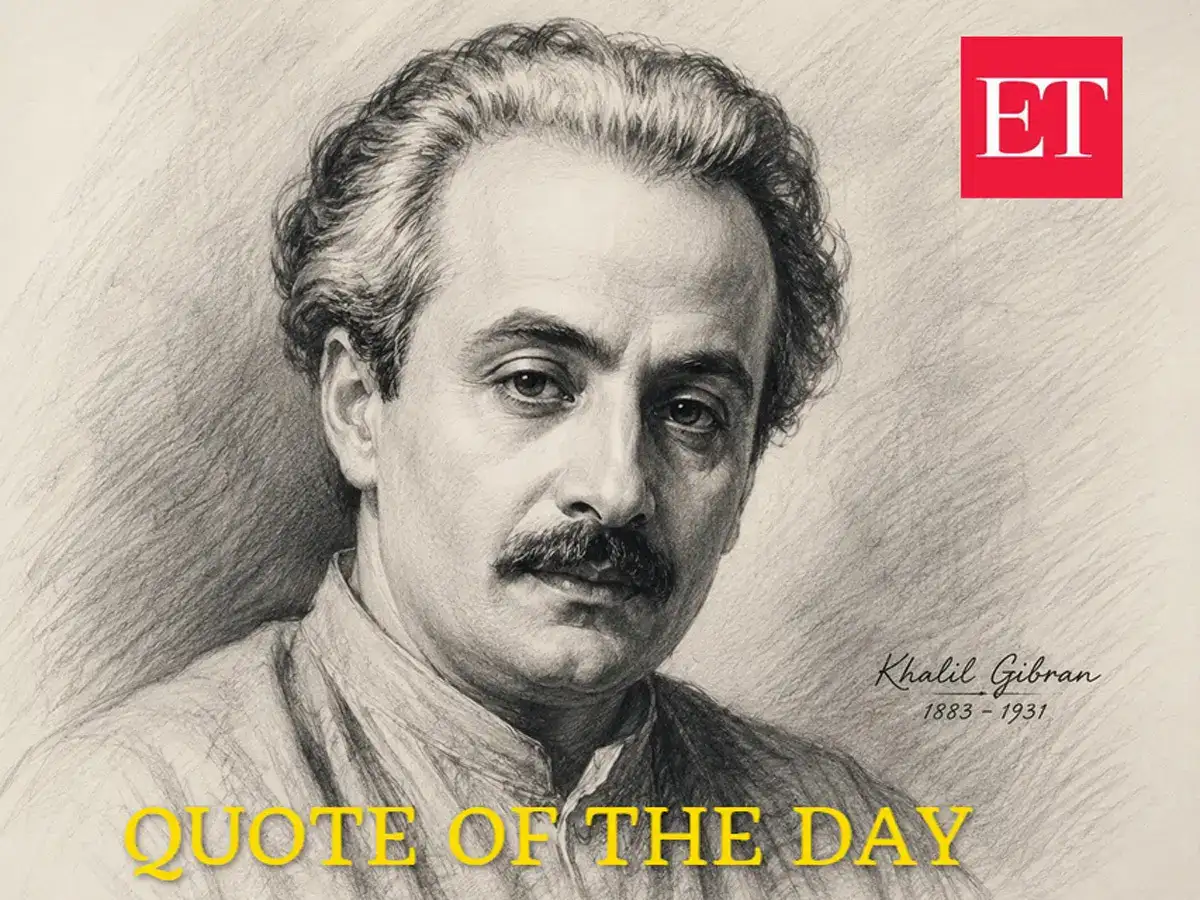
Quote of the day by Khalil Gibran
It is precisely this human habit that the Lebanese-American poet and philosopher Khalil Gibran understood so deeply when he wrote:
“The timeless in you is aware of life's timelessness. And knows that yesterday is but today's memory and tomorrow is today's dream.”
Rather than treating time as a prison, Gibran invites us to see it as a flowing experience where the soul remains untouched by clocks and calendars.
A Reflection on What the Quote Really Means
At first glance, the words sound mystical, but their message is profoundly practical. Yesterday exists only in the stories we tell ourselves. Tomorrow exists only in our imagination. The only reality we can truly inhabit is the present moment.
Gibran suggests that something deeper within us, what he calls "the timeless," understands this truth instinctively. Beneath our anxieties about aging, achievements, regrets, and expectations lies an inner self that is not measured in years.
Think about how memories work. The past is never retrieved exactly as it happened. It is reconstructed through today's emotions and experiences. Likewise, our visions of tomorrow are dreams shaped by hope, fear, and desire. The soul itself remains a witness to both.
This perspective does not ask us to forget the past or stop planning for the future. Instead, it encourages balance. We honor memories without becoming trapped by them, and we pursue dreams without surrendering our peace.
Why Khalil Gibran's Words Matter More Than Ever Today
Modern life rewards constant anticipation. We save for tomorrow, refresh news feeds for updates, and compare our current reality with idealized futures. At the same time, many people remain haunted by old mistakes, relationships, or opportunities that slipped away.
Gibran's insight offers a gentle rebellion against this cycle. Mindfulness movements, mental wellness practices, and even contemporary psychology increasingly emphasize presence as the foundation of happiness. The wisdom that people seek through meditation apps and self-help books echoes what Gibran expressed a century ago: peace begins when we stop treating memories and expectations as our permanent home.
In a world obsessed with speed and productivity, his words remind us that existence is not merely a sequence of deadlines. It is an experience to be lived consciously.
Who was Khalil Gibran?
Khalil Gibran was born in Bsharrī, in present-day Lebanon, and immigrated to the United States with his family in 1895. Educated in Beirut, Boston, and Paris, he became one of the defining voices of modern Arabic literature while also achieving extraordinary popularity in the English-speaking world, as per Britannica and the Poetry Foundation.
His masterpiece, The Prophet, remains among the most beloved books of spiritual and philosophical reflections ever published. His writings blended Eastern mysticism, Christian spirituality, Romantic idealism, and universal themes of love, nature, exile, and human longing.
Although critics sometimes dismissed his work as sentimental, readers across generations found comfort in its sincerity and emotional depth. His influence on both Arabic literary modernism and global spiritual literature remains undeniable.
Perhaps the greatest gift in Gibran's observation is permission. Permission to let memories remain memories instead of burdens. Permission to dream about tomorrow without surrendering today. Permission to understand that beneath changing circumstances, there is something enduring within each person.
The timeless part of us already knows what our anxious minds often forget: life is not lost in yesterday, nor guaranteed in tomorrow. It unfolds, quietly and completely, in the only moment we ever truly possess—this one.