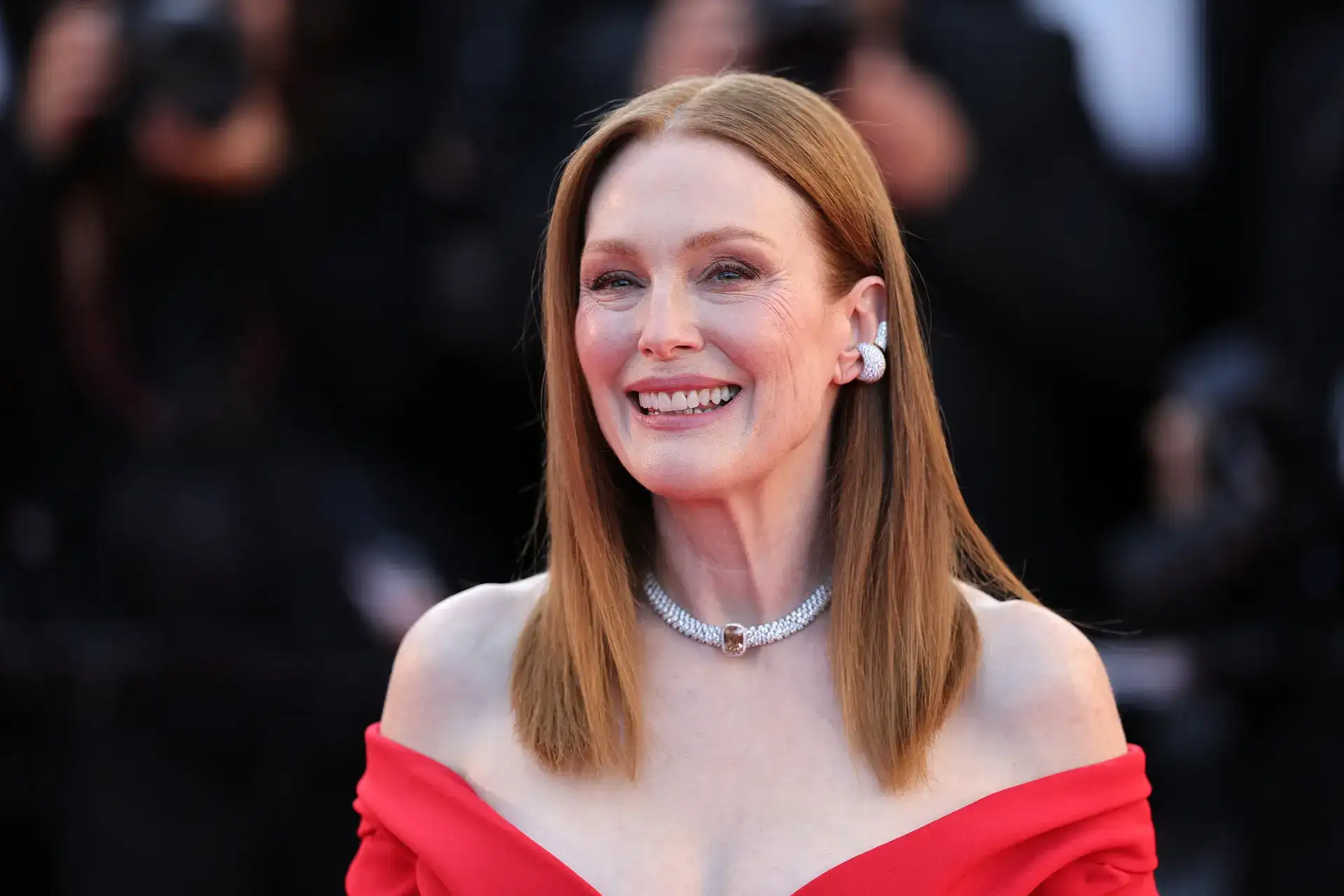
Quote of the day by Julianne Moore focuses on the connection between love and trust. The quote says, “Loving someone is giving them the power to break your heart, but trusting them not to.” It presents love as a choice that requires people to become emotionally open. When people care about someone, they also give that person the ability to affect their emotions. The quote explains why trust matters when people build close relationships. It also shows that emotional vulnerability does not have to mean weakness. Instead, being open with another person can help create connection, understanding and mutual respect.
What Julianne Moore’s quote says about love?
Julianne Moore’s quote looks at love through the idea of emotional risk. When a person loves someone, that person becomes important to them. Their words, actions and choices can affect their emotions. The quote does not suggest that love removes the possibility of pain. Instead, it accepts that emotional pain is part of being close to another person.
The central idea is that people give someone else the power to hurt them when they open their hearts. At the same time, they can decide to trust that person with their feelings. This creates a connection between love, emotional vulnerability and choice.
What the quote means?
The quote can be understood through three main ideas:
- Vulnerability: Opening your heart to another person means allowing them to affect you emotionally. Because they matter to you, their actions can cause happiness, disappointment or pain.
- Choice: Love does not remove every risk. People can choose to accept the risk because they want to build a relationship with another person.
- Trust: Trust means believing that the person who has access to your emotions will respect them and will not deliberately use your vulnerability against you.
The meaning goes beyond romantic relationships. The same idea can apply to friendships and other close relationships where people share personal feelings and depend on one another.
Why trust matters in a relationship?
Trust can help two people feel secure enough to express themselves. Without trust, a person may remain worried about rejection, betrayal or emotional pain. A relationship based on trust can allow people to communicate their feelings without constantly protecting themselves. Trust can also change how people respond to uncertainty. Instead of expecting something to go wrong, they can give the other person the opportunity to show that they can be trusted.
There are several ways trust can affect a relationship:
- It can help both people feel safe enough to be themselves.
- It can reduce constant worry about rejection.
- It can create confidence between two people.
- It can help turn fear into shared emotional strength.
- It can support honest communication.
- It can make emotional openness easier.
Trust does not mean ignoring problems. It also does not mean accepting harmful behavior. Healthy trust works with communication, boundaries and respect.
Life lessons from the quote
The life lessons are:
Love requires courage
Deep emotional connection requires people to lower some of their defenses. A person cannot always control what another person will do. Loving someone therefore involves accepting that uncertainty. Courage in a relationship can mean expressing feelings, admitting fears and allowing another person to understand you. This does not mean that people should ignore warning signs. It means that emotional connection requires some willingness to take a risk.
Trust is a choice
Trust can be influenced by past experiences. Someone who has experienced rejection or betrayal may find it difficult to trust again. The quote suggests that people can choose whether they allow past fears to control their current relationships. Trust develops through actions. A person can show trust while also paying attention to how the other person behaves.
Vulnerability can be a strength
Being vulnerable is sometimes treated as a weakness. The quote presents another way to understand it. When people share their feelings, they accept that the other person now knows something important about them. That can feel uncomfortable, but it can also create a deeper connection. Emotional openness can help people understand one another and communicate more clearly.
Mutual respect matters
Love gives another person access to your emotions. That makes respect important. A person who understands another person's vulnerability should not use it to control, embarrass or hurt them. Mutual respect means both people recognize that their actions can affect each other. It also means they make choices that protect the trust within the relationship.
Quote of the day by Julianne Moore: Wider meaning of emotional vulnerability
The quote can also be viewed as a reminder that relationships involve choices. People cannot guarantee that they will never experience emotional pain. They can, however, decide whom they trust and how they respond to vulnerability.
Real intimacy requires openness. Two people may have different experiences, fears and expectations, but communication can help them understand those differences. The quote therefore connects several ideas: love, trust, courage, emotional vulnerability, choice and mutual respect.
It also suggests that fear should not always determine how people approach relationships. A person can recognize the possibility of pain while still allowing another person to become important.
Who is Julianne Moore?
Julianne Moore was born Julie Anne Smith on December 3, 1960, in Fort Bragg, North Carolina, United States. She is an American actress known for portrayals of women dealing with personal and social issues.
Moore is the eldest of three children. Her American father was a military lawyer and judge. Her Scottish immigrant mother was a homemaker who later became a psychiatric social worker. Moore earned a bachelor’s degree in acting from Boston University in 1983. She moved to New York City after completing her studies.
She adopted the stage name Julianne Moore because variations of her own name were already registered with the Actors’ Equity Association. Julianne was used because it was her first name, while Moore was her father’s middle name.
Early acting career
Moore appeared in plays and television programs before joining the soap opera As the World Turns in 1985. She spent three years on the program and played a psychologist and later her half sister. Her work earned her a Daytime Emmy Award in 1988.
She also appeared in Caryl Churchill’s Serious Money at the New York Shakespeare Festival Public Theater in 1987. In 1988, she played Ophelia in Hamlet at the Guthrie Theater in Minneapolis. She returned to the Public Theater in 1990 for two Churchill one-act plays staged together as Ice Cream with Hot Fudge.
Her film work expanded with The Hand That Rocks the Cradle in 1992. She later appeared in Robert Altman’s Short Cuts in 1993. Altman had seen her in a New York workshop production of Anton Chekhov’s Uncle Vanya. The production was filmed by Louis Malle as Vanya on 42nd Street in 1994. Moore's first starring film role came in Todd Haynes’ Safe in 1995.
Films that brought wider recognition
Moore appeared in The Fugitive in 1993 and later received major billing in The Lost World: Jurassic Park in 1997, where she played a paleontologist. She also appeared in The Myth of Fingerprints, directed by Bart Freundlich. The two married in 2003. Her role as Amber Waves in Boogie Nights brought her an Academy Award nomination for Best Supporting Actress.
She later appeared in The Big Lebowski in 1998 and An Ideal Husband in 1999. Her roles in The End of the Affair and Magnolia, both released in 1999, dealt with adultery and its consequences. The End of the Affair earned her an Oscar nomination for Best Actress.
In 2001, she played FBI agent Clarice Starling in Hannibal, a role first played by Jodie Foster in The Silence of the Lambs. Her performances in Far from Heaven and The Hours in 2002 brought Oscar nominations for Best Actress and Best Supporting Actress.
Major roles in the 2000s and 2010s
Moore appeared in Children of Men in 2006 and Savage Grace in 2007. She later acted in A Single Man in 2009, The Kids Are All Right in 2010 and Crazy, Stupid, Love. in 2011. In 2012, she played Sarah Palin in the HBO film Game Change. The performance earned her an Emmy Award.
Her other films included What Maisie Knew, The English Teacher, Carrie, Non-Stop, The Hunger Games: Mockingjay – Part 1 and The Hunger Games: Mockingjay – Part 2. In Still Alice in 2014, she played a linguistics professor diagnosed with early-onset Alzheimer disease. The role earned her the Academy Award for Best Actress. She also appeared in Seventh Son, Maps to the Stars and Freeheld.
Later films and television work
In 2017, Moore reunited with Todd Haynes for Wonderstruck. She then played a wife and her twin sister in Suburbicon. Her later work included Bel Canto, Gloria Bell and After the Wedding in 2019. In The Glorias in 2020, she played Gloria Steinem.
In 2021, Moore appeared in The Woman in the Window and Dear Evan Hansen. She also provided a voice for Spirit Untamed and starred in the miniseries Lisey’s Story. She reunited with Haynes for May December in 2023, playing a teacher who had an affair with her student. In 2024, she appeared with Tilda Swinton in Pedro Almodóvar’s The Room Next Door, based on Sigrid Nunez’s novel about a dying woman who reconnects with an old friend.
Awards and personal life
Moore received an Academy Award for Best Actress for Still Alice. Her awards also include Emmy Awards in 1988 and 2012 and a Golden Globe Award in 2015. Her listed awards include an Academy Award in 2015 for Actress in a Leading Role, an Emmy Award in 2012 for Outstanding Lead Actress in a Miniseries or a Movie, and a Golden Globe Award in 2013 for Best Actress in a Limited Series or Motion Picture Made for Television. Moore was married to John Gould Rubin from 1986 to 1995. She married Bart Freundlich in 2003 and remains married to him.
Books written by Julianne Moore
Moore also became a children's book author. She wrote Freckleface Strawberry in 2007. The book was based on her experiences with childhood bullying related to her red hair and freckles. She later wrote several sequels. The first book was adapted into a stage musical in 2010. Her other children's books include My Mom Is a Foreigner, but Not to Me, published in 2013.