Quote of the day by J.P. Morgan (John Pierpont Morgan) : Throughout history, societies have wrestled with questions of power, wealth, and social division. As nations grew more industrialized and economic systems became increasingly interconnected, concerns emerged about who truly benefits from prosperity and who bears the burden of inequality. Political thinkers, reformers, and activists have long warned that economic insecurity can make people vulnerable to manipulation, while social divisions can prevent communities from uniting around common interests. These concerns remain relevant today, as debates continue over housing affordability, wealth concentration, political influence, and the role of corporations in shaping public life.
J.P. Morgan's Quote Today on Power, Wealth and Social Division
J.P. Morgan (John Pierpont Morgan) said, " People without homes will not quarrel with their leaders. This is well known among our principle men now engaged in forming an imperialism of capitalism to govern the world. By dividing the people we can get them to expend their energies in fighting over questions of no importance to us except as teachers of the common herd, " as per AZ Quotes.
How Economic Insecurity Can Influence Political Participation
The quote presents a critical view of how power can be maintained within society. He argues that people who lack economic security are less likely to challenge those who govern them. The phrase "people without homes" symbolizes individuals who are struggling financially or living in uncertain conditions. When people are focused on meeting their basic needs, such as housing, food, and employment, they often have less time, energy, and resources to participate in political activism or demand accountability from leaders.
Quote of the Day June 13: J.P. Morgan's Warning About Social Division and Public Distraction
J.P. Morgan's words also suggests that powerful economic and political interests may benefit from keeping ordinary people divided. According to this perspective, when citizens are separated by social, cultural, ideological, or political conflicts, they are more likely to argue with one another than to unite around shared concerns. These divisions can distract attention from larger issues such as economic inequality, concentration of wealth, or the influence of powerful institutions.
Criticism of the "Imperialism of Capitalism"
Another important theme is the criticism of what the quote calls the "imperialism of capitalism." This phrase reflects the belief that economic power can become concentrated in the hands of a small group of influential individuals or organizations. The author implies that these powerful groups may shape public discussions and policies in ways that protect their interests while limiting challenges to their authority.
Key Life Lessons From John Pierpont Morgan's Quote
The quote serves as a warning about the relationship between economic hardship and political power. It encourages readers to think critically about whether public conflicts are addressing the most important issues facing society or whether they are diverting attention from deeper structural problems.
Who Was J.P. Morgan
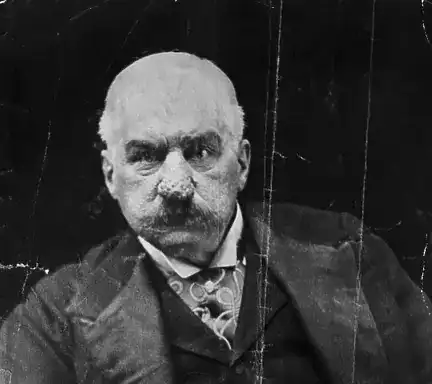
J.P. Morgan (John Pierpont Morgan) was born on April 17, 1837, in Hartford, Connecticut. The son of financier Junius Spencer Morgan, he studied in Boston and at the University of Göttingen. After starting his banking career in 1857, he eventually led J.P. Morgan and Company, one of the world's most powerful banking firms, as per a Britannica report.
John Pierpont Morgan's Railroad and Industrial Expansion
Morgan became a leading force in reorganizing American railroads, helping stabilize major rail lines and expanding his influence across the industry. By 1902, he controlled about 5,000 miles of railroad track.
He also financed major industrial mergers, helping create General Electric in 1891, United States Steel in 1901, the world's first billion-dollar corporation and International Harvester in 1902, as per the Britannica report.
John Pierpont Morgan's Financial Leadership
During the Panic of 1893, Morgan organized a syndicate that supplied the U.S. government with $62 million in gold. He also played a key role in helping prevent a wider financial collapse during the Panic of 1907.
J.P. Morgan's Titanic Connection
Morgan had planned to travel on the Titanic's maiden voyage in 1912 but reportedly canceled because of illness. The ship later sank with heavy loss of life.
John Pierpont Morgan's Legacy
Morgan remained a dominant figure in American capitalism until his death in Rome, Italy, on March 31, 1913. A noted art and book collector, he donated works to the Metropolitan Museum of Art, and his collection later became the Morgan Library & Museum, as per the Britannica report.