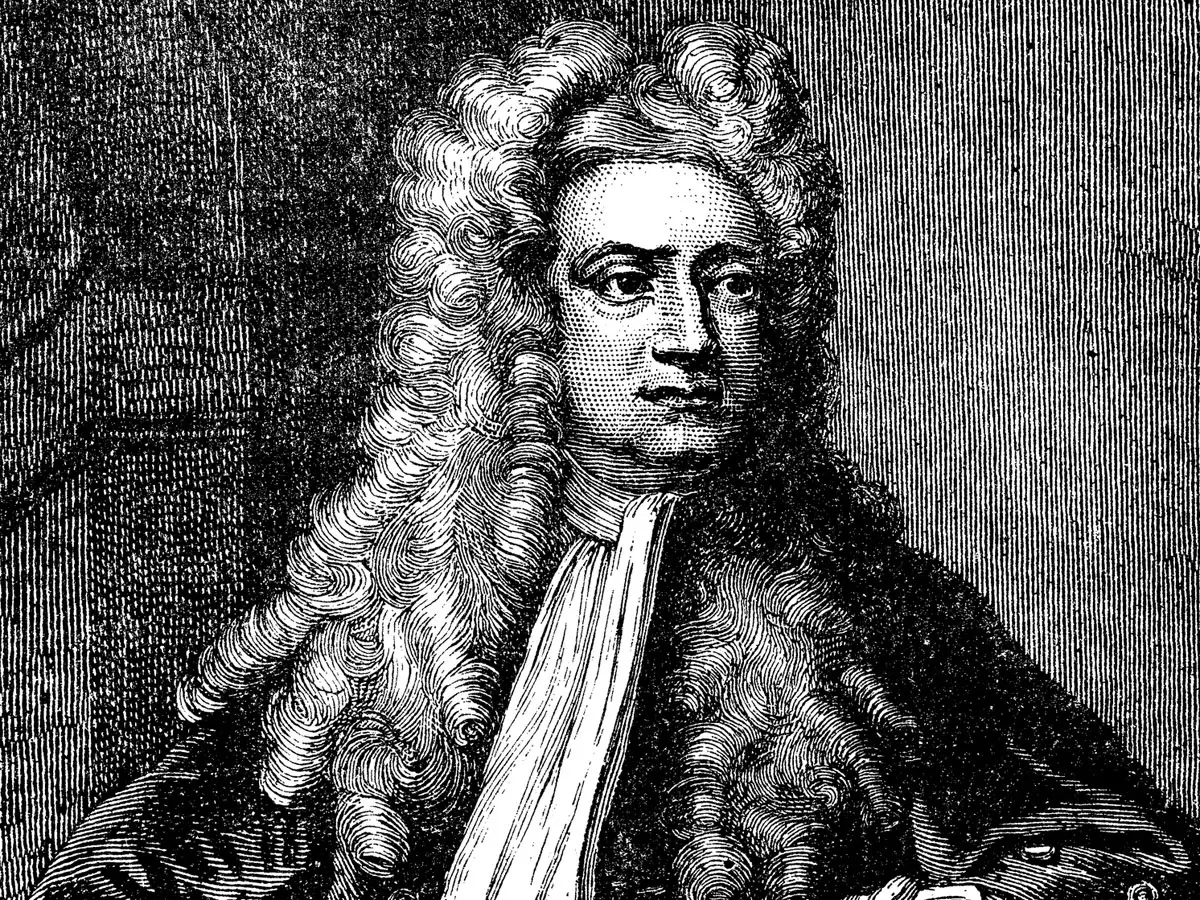
Sir Isaac Newton is remembered as one of history's greatest scientists, whose discoveries transformed our understanding of physics, mathematics, and astronomy. Yet one of his most quoted observations has little to do with science and everything to do with human nature: "I can calculate the motion of heavenly bodies but not the madness of people."
The quote reflects Newton's belief that while the laws governing the universe are predictable and can be explained through mathematics, human behaviour is often driven by emotions, impulses, and irrational decisions that are far more difficult to understand.
Although Newton developed theories that explained gravity and planetary motion with remarkable accuracy, he admitted that people are much harder to predict than planets. The quote is often linked to his financial losses during the South Sea Bubble of 1720, when speculative investing led many, including Newton, to suffer heavy losses.
What the quote means
The message behind the quote is simple: nature follows consistent laws, but human actions do not. Even the brightest minds cannot always anticipate emotions such as greed, fear, anger, or excitement, which frequently influence people's decisions.
The quote serves as a reminder to stay humble, think rationally, and recognise that intelligence alone cannot explain every aspect of human behaviour.
Why the quote remains relevant today
In today's world of viral social media trends, financial market swings, and emotional decision-making, Newton's words continue to resonate. They remind us that while science can explain the physical world with precision, understanding people requires patience, empathy, and experience.
More than three centuries later, Isaac Newton's observation remains one of the most insightful reflections on the contrast between the certainty of science and the unpredictability of human nature.