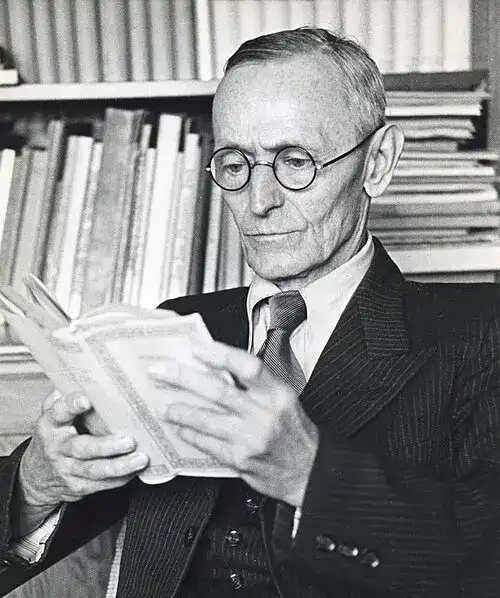
Some quotes remain relevant for decades because they speak uncomfortable truths about human nature. They make people stop and think, and question feelings that otherwise they would justify without too much thought. Few writers could understand the complexity of the human mind as brilliantly as Hermann Hesse. His work explored identity, ego, loneliness and the search for inner peace.
One of his most thought-provoking quotes remains true across generations because it moves the focus away from judging others and instead turns the mirror back on ourselves.
Iconic quote by Hermann Hesse
“If you hate a person, you hate something in him that is part of yourself. What isn't part of ourselves doesn't disturb us.”
The quote feels unsettling at first because it challenges the way people usually understand anger and resentment. Most people believe hatred comes entirely from the actions, personality or behaviour of someone else. But Hesse suggests something much deeper and more uncomfortable — that the traits we react to most strongly in others may reflect hidden insecurities, fears or unresolved parts of ourselves.
That idea became central to much of Hesse’s writing throughout his life. Whether in Steppenwolf, Demian or Siddhartha, his characters were often trapped in internal battles, struggling between the versions of themselves they accepted and the parts they tried to suppress.
The quote remains powerful because it speaks to a deeply human instinct. People often criticize arrogance while secretly craving confidence. They condemn selfishness while quietly protecting their own desires. They resent dishonesty while hiding truths from themselves. Hesse believed that strong emotional reactions are rarely random. Instead, they reveal internal conflicts people may not fully understand yet.
What does the quote teach us about projection and self-awareness?
Hesse’s words explore the psychological idea of projection long before modern self-help culture popularized the concept. Sometimes, people project their own fears, flaws or insecurities onto others because confronting them directly feels too painful.
That is what makes the quote emotionally difficult but also transformative. Instead of asking, “Why is this person bothering me so much?” Hesse encourages people to ask, “What does my reaction reveal about me?”
The lesson is not that every criticism is invalid or that harmful behaviour should be excused. Rather, the quote highlights how emotional triggers often expose unresolved emotions within ourselves. The people who disturb us most can unintentionally reveal insecurities we try to ignore.
In many ways, Hesse spent his entire literary career exploring this tension between the outer self and the hidden inner self. Born in the German town of Calw in 1877, Hesse struggled from an early age with rigid expectations and traditional systems of education. Though considered an intelligent and disciplined student, he found it difficult to conform to strict religious schooling and later described himself as a boy unwilling to let his individuality be broken.
That personal conflict would shape nearly all of his work. His novels repeatedly focused on characters trying to escape social expectations in order to discover their authentic identities.
Author of Siddhartha’s powerful words on hatred, self-awareness and the parts of ourselves we refuse to confront
Decades after his death in 1962, Hesse’s work continues to attract readers because his themes feel timeless. Anxiety, identity crises, emotional isolation and the desire for meaning remain universal struggles. His exploration of self-awareness became especially influential among younger generations during the 1960s and 1970s, when many readers connected with his interest in spirituality, Eastern philosophy and personal freedom, as per information taken from Britannica.
His novel Siddhartha became one of the most widely read spiritual novels in the world because it focused less on religion itself and more on the internal search for peace and understanding. Similarly, Steppenwolf examined the painful split between social conformity and individual truth, a conflict many people still experience today.
Hesse was awarded the Nobel Prize in Literature in 1946, recognition of both his literary brilliance and his psychological insight into the human condition. Yet his most enduring legacy may not be awards or sales figures. It may be his ability to articulate emotions people struggle to admit openly.
Today, his quote about hatred continues spreading online because it speaks to something deeply personal. It reminds people that self-awareness is often uncomfortable, but necessary. Sometimes the strongest emotional reactions are not only about other people. They are reflections of the battles happening quietly within ourselves.