Quote of the day by Friedrich Nietzsche: Interpretation is the way humans understand and assign meaning to information, events, or ideas. It is not just about what is said or seen, but about how the mind processes it based on experience, beliefs, culture, and context. Two people can look at the same situation and come away with completely different understandings because each person filters reality through their own lens. Interpretation shapes everything from news reading to personal relationships, often influencing what we believe to be true. It is not a fixed process; it changes with time, perspective, and influence. This is why meaning is rarely absolute, and why communication can sometimes lead to misunderstanding or debate.
Quote of the Day Today: Friedrich Nietzsche on Interpretation, Power and Truth
Quote of the day by Friedrich Nietzsche, "
All things are subject to interpretation, whichever interpretation prevails at a given time is a function of power and not truth," as per BrainyQuote report.
How Interpretation Shapes Reality in Life
Nietzsche’s quote suggests that truth is not always something fixed, objective, or universally agreed upon. Instead, what people accept as “truth” is often shaped by interpretation, and interpretations themselves are influenced by power. In simple terms, different groups or individuals may understand the same reality in different ways, but the version that becomes widely accepted is usually the one supported by stronger institutions, authority, or influence.
Quote of the Day May 13: Role of Society, Media, and Authority in Defining Truth
The quote highlights how society works in practice: governments, media, cultural leaders, and dominant social groups can shape narratives that become widely believed. Over time, these dominant interpretations start to feel like “truth,” even if other perspectives exist or even contradict them. Nietzsche is not denying that facts exist, but he is questioning how those facts are framed, communicated, and accepted by people.
Quote of the Day by Friedrich Nietzsche: Different Perspectives, Nature of Human Understanding and Questioning Accepted Versions of Reality
This idea encourages skepticism and critical thinking. It asks readers to look beyond surface-level explanations and consider who benefits from a particular version of reality being accepted. For example, historical events, political decisions, or social norms can be interpreted differently depending on perspective, yet one version often becomes dominant.
Nietzsche is reminding us that truth in human society is not just about what is real, but also about who has the power to define and spread that reality.
Who Was Friedrich Nietzsche
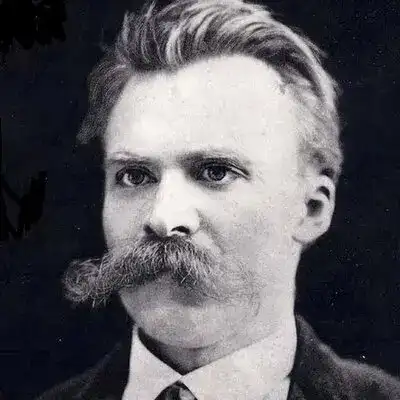
Friedrich Nietzsche (1844–1900) was a German philosopher, classical scholar, and cultural critic whose ideas reshaped modern thought. Born in Röcken, Prussia, into a deeply religious Lutheran family, he initially followed a traditional academic path, excelling in classical studies at Schulpforta and later studying theology and philology at the University of Bonn and Leipzig, as per a Britannica report. His early career quickly stood out, leading to a professorship in Basel at a very young age, even before completing standard academic requirements.
Friedrich Nietzsche: Life, Background, and Philosophical Journey
Nietzsche’s life was marked by fragile health, which worsened after a military illness, forcing him into early retirement in 1879. From then on, he lived mostly in isolation across Switzerland, Italy, and France, producing his most influential works during this period, including Thus Spoke Zarathustra, Beyond Good and Evil, and On the Genealogy of Morals, as per the Britannica report.
Key Ideas of Nietzsche: Will to Power and Perspectivism
His philosophy challenged traditional religion, morality, and Western thinking. He questioned absolute truths, famously declaring “God is dead,” and argued that values are shaped by human interpretation, culture, and power. His ideas on the “will to power,” perspectivism, and the “Übermensch” reshaped philosophical debate.
In his final years, Nietzsche suffered a mental collapse in 1889 and lived the rest of his life in silence under care until his death in 1900, as per the Britannica report. Despite later misuse of his ideas, his work deeply influenced philosophy, psychology, literature, and modern intellectual thought worldwide.
Inspirational Quotes by Friedrich Nietzsche
Here are a few more quotes by Friedrich Nietzsche.
- "The individual has always had to struggle to keep from being overwhelmed by the tribe. If you try it, you will be lonely often, and sometimes frightened. But no price is too high to pay for the privilege of owning yourself," as per BrainyQuote.
- "Whoever fights monsters should see to it that in the process he does not become a monster. And if you gaze long enough into an abyss, the abyss will gaze back into you," as per BrainyQuote.
- "Hope in reality is the worst of all evils because it prolongs the torments of man," as per BrainyQuote.
- "He who would learn to fly one day must first learn to stand and walk and run and climb and dance; one cannot fly into flying," as per BrainyQuote.
- "You have your way. I have my way. As for the right way, the correct way, and the only way, it does not exist," as per BrainyQuote.
- "We hear only those questions for which we are in a position to find answers," as per BrainyQuote.