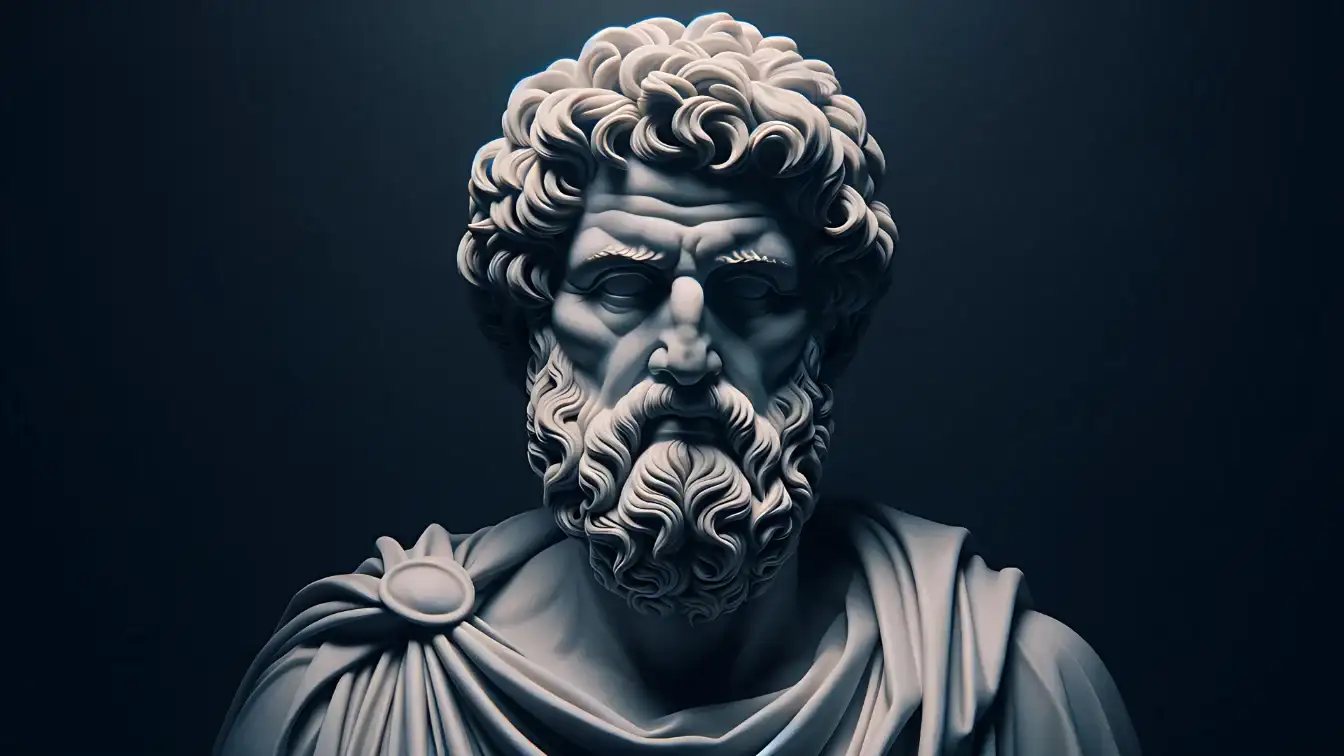
Quote of the Day by Epictetus: Epictetus, one of the most influential philosophers of the Stoic tradition, offers a timeless insight into human nature with his quote, “Circumstances don’t make the man, they only reveal him to himself.” At first glance, it may seem like a simple reflection on life’s ups and downs, but its meaning runs far deeper. Epictetus reminds us that external events do not define who we are; instead, they expose the character that already exists within us. In moments of comfort and stability, people can appear calm, patient, and confident, but it is only when they face adversity, pressure, or unexpected challenges that their true nature is revealed.
This idea is especially relevant in today’s fast-changing and often stressful world. People frequently blame situations, other individuals, or bad luck for their reactions, but Stoic philosophy shifts the focus inward. It encourages self-awareness, responsibility, and emotional strength. Rather than asking why life is difficult, Epictetus encourages us to ask what life’s difficulties reveal about us. Ultimately, his wisdom teaches that growth does not come from avoiding hardship, but from understanding ourselves more deeply through it.
Quote of the Day Today: Epictetus on human behavior, personal growth and overcoming challenges
Quote of the Day by Epictetus: "Circumstances don't make the man, they only reveal him to himself."
Meaning of the Quote of the Day: What Epictetus Quote Really Means?
The quote by Epictetus,“Circumstances don’t make the man, they only reveal him to himself” is that life situations do not create a person’s true character; they simply uncover it. According to this Stoic idea, every individual already carries certain traits within them, such as patience, anger, courage, or fear, but these qualities become visible only when life places them under pressure.
In moments of comfort and ease, people may appear calm, confident, or disciplined, but such conditions do not truly test who they are. It is during difficult experiences like failure, stress, conflict, or loss that a person’s real nature is revealed through their reactions and decisions.
This quote also encourages self-awareness. Instead of blaming circumstances for how we behave, it teaches us to observe our responses and understand ourselves better. In short, life does not change who we are; it reveals who we have always been inside.
Epictetus Biography – Early Life and Struggle to Wisdom
Epictetus was born around 50 CE in Hierapolis, a city in present-day Turkey. He was born into slavery and spent much of his early life as a servant in Rome. Despite his difficult beginnings, he showed a strong interest in learning and philosophy from a young age. His owner eventually allowed him to study Stoic philosophy under the teacher Musonius Rufus, which completely transformed his outlook on life.
Epictetus lived during the time of the Roman Empire and experienced both hardship and eventual freedom. After gaining his freedom, he began teaching philosophy in Rome and later in Nicopolis in Greece. Unlike many wealthy philosophers of his time, Epictetus lived a simple life and focused entirely on teaching wisdom, discipline, and self-control. His teachings were later recorded by his student Arrian in works such as the Discourses and the Enchiridion, which became key texts in Stoic philosophy.
Epictetus Philosophy – Stoicism, Self-Control and Inner Peace
Epictetus believed that people should focus only on what they can control—mainly their thoughts, choices, and reactions, while accepting everything else as outside their control. His philosophy is centered on discipline, inner peace, and emotional strength. He taught that external events are neither good nor bad; what matters is how we respond to them. This idea forms the foundation of Stoicism and encourages people to live with logic, calmness, and self-awareness.
Teachings and Core Ideas
One of Epictetus’ most important teachings is that true freedom comes from mastering oneself, not controlling external events. He emphasized resilience in the face of suffering and believed that challenges are opportunities for growth. His famous idea, “Circumstances don’t make the man, they only reveal him to himself,” reflects this belief that life reveals our true character under pressure.
Epictetus’ teachings continue to influence modern psychology, leadership, and self-help thinking. His Stoic principles are widely studied for mental resilience, emotional control, and personal development. Even today, his ideas help people deal with stress, uncertainty, and life challenges by focusing on inner strength rather than external conditions.
Why challenges reveal true character
Life is full of unpredictable events. Some bring success, while others bring disappointment. According to Stoic philosophy, these events are not good or bad in themselves, what matters is how we respond to them.
A calm situation does not truly test patience. A comfortable life does not test discipline. Only adversity reveals how strong, stable, or self-aware a person truly is. This is why people often behave differently under pressure compared to normal conditions. Epictetus teaches that challenges are not meant to define us, but to reveal what we must understand about ourselves.
Epictetus Wisdom and Modern Psychology – Why His Ideas Still Matter
Epictetus was a central figure in Stoicism, a philosophy that teaches self-control, emotional resilience, and acceptance of what we cannot change. According to Stoics, external circumstances are often outside our control, but our reactions are always within our control. This quote fits perfectly into that belief system. Instead of blaming circumstances for shaping who we are, Epictetus encourages us to take responsibility for our responses. Life does not “make” a person strong or weak, it simply reveals the strength or weakness already present.
Applying this idea in modern life
In today’s world, people face many forms of pressure — academic stress, job competition, financial struggles, and emotional challenges. Social media often hides these struggles, making life appear easier than it actually is for others.
Epictetus’s quote reminds us that struggles are not failures of life, but moments of truth. They show us who we are under pressure and what we need to work on. Instead of avoiding difficulties, Stoic wisdom encourages us to face them with awareness and calmness.
Life lessons from Epictetus’s quote
True character is revealed under pressure
One of the most important lessons is that a person’s real nature is not visible in comfort, but in difficult situations. Stress, failure, and conflict reveal how we truly think and behave.
Challenges are opportunities for growth
Difficult situations are not just problems to escape, but chances to learn about our strengths and weaknesses. Every challenge helps us improve emotional control and resilience.
Emotional control defines maturity
The way we react under pressure shows our level of discipline and emotional strength. Calm responses reflect inner stability, while uncontrolled reactions reveal areas for growth.
Life acts as a mirror
Circumstances do not change who we are; they reflect who we already are. Life situations simply show us the truth about our inner self, helping us understand ourselves better.
Why this Quote is Still Relevant in Today’s World
The quote by Epictetus remains highly relevant today because modern life constantly places people under pressure. In a world shaped by competition, social media comparison, financial stress, and fast-changing expectations, people are often judged by appearances rather than reality. This Stoic idea reminds us that true character is not built by external situations but revealed through how we respond to them.
Today, many individuals present a controlled version of their lives online, but real personality shows during failure, conflict, or emotional difficulty. The quote encourages self-awareness and responsibility, reminding us that we cannot always control circumstances, but we can control our reactions. In stressful situations—whether in work, relationships, or personal challenges—our true patience, resilience, and mindset are exposed. This makes Epictetus’ wisdom timeless, helping people focus less on blaming situations and more on understanding and strengthening their inner character.
Other Inspiring Quotes by Epictetus
Here are few more famous quotes by Epictetus
“Wealth consists not in having great possessions, but in having few wants.” As per Goodreads
“Don't explain your philosophy. Embody it.” As per Goodreads
“Man is not worried by real problems so much as by his imagined anxieties about real problems” As per Goodreads
“There is only one way to happiness and that is to cease worrying about things which are beyond the power or our will. ” As per Goodreads
“It's not what happens to you, but how you react to it that matters.” As per Goodreads