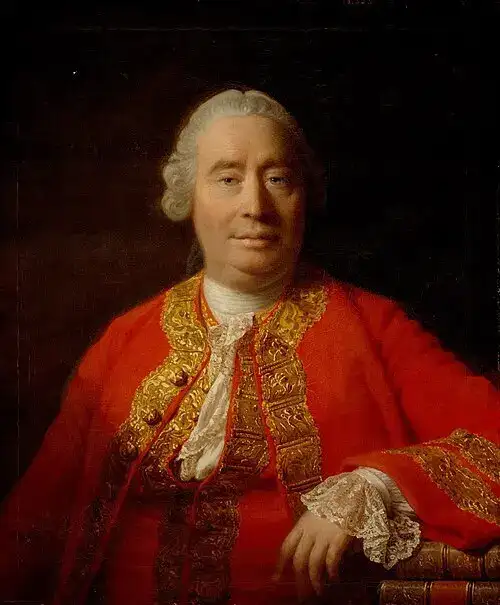
Quote of the Day: Success, failure, heartbreak, uncertainty, and change are all unavoidable parts of life. Some people spend years trying to control every situation around them, only to feel frustrated when reality refuses to cooperate. Others quietly learn how to adjust, survive, and grow through difficult circumstances. Centuries ago, Scottish philosopher David Hume captured that idea in one powerful line that still feels deeply relevant today.
The quote continues to resonate because it speaks to modern anxiety, emotional resilience, and the constant struggle between expectation and reality. In an age where people often feel pressured to control every outcome, Hume’s words offer a calmer and wiser perspective about human happiness.
Inspiring quote by David Hume
“He is happy whose circumstances suit his temper, but he is more excellent who can suit his temper to his circumstance.”
For many readers, the quote feels surprisingly modern despite being written in the 18th century. At first glance, Hume appears to describe two kinds of people. The first is someone lucky enough to live in conditions that naturally match their personality, ambitions, or emotional needs. But Hume argues that an even greater person is someone who can adjust their mindset when life becomes difficult or unpredictable.
That distinction is what gives the quote its lasting emotional power. Most people cannot fully control their circumstances. Careers collapse, relationships change, financial pressure appears unexpectedly, and personal loss can completely alter someone’s world. Hume suggests that true strength does not come from controlling life, but from learning how to respond to it.
The quote also reflects Hume’s larger philosophical ideas about human nature. Unlike many thinkers of his time, he believed emotions, habits, and personal experience shaped people far more than abstract logic alone. Human beings, according to Hume, are emotional creatures trying to navigate an uncertain world. Happiness therefore depends not only on external success, but on emotional flexibility.
What does the quote teach us about resilience and emotional balance?
The reason the quote still connects with modern audiences is because it addresses something almost everyone experiences: disappointment between expectation and reality. Many people believe happiness will arrive only when circumstances become perfect. But life rarely stays stable long enough for perfection to last.
Hume’s words suggest that peace comes from adaptability rather than control. A person who can remain emotionally balanced during hardship often handles life better than someone who only thrives in comfort. That idea has become increasingly important in today’s fast-moving world, where people constantly face career uncertainty, social pressure, mental exhaustion, and unexpected change.
The quote also quietly challenges pride and rigidity. Some individuals refuse to adapt because they believe changing their mindset feels like surrender. But Hume presents adaptation as a form of wisdom, not weakness. Adjusting to reality does not mean abandoning ambition or accepting unhappiness forever. It means understanding that survival sometimes depends on emotional flexibility.
There is also something deeply human in Hume’s observation. People often spend years trying to force the world into matching their desires, only to realise later that inner peace depends more on perspective than circumstances alone. The quote reminds readers that emotional maturity is not about avoiding hardship, but learning how to move through it without losing yourself completely.
Why David Hume’s philosophy still feels relevant centuries later
Born in Edinburgh in 1711, David Hume became one of the most influential thinkers of the Scottish Enlightenment. Known for his writings on skepticism, human nature, morality, and reason, Hume changed the direction of modern philosophy by arguing that human beings are guided as much by emotion and habit as by logic.
His works, including A Treatise of Human Nature and An Enquiry Concerning Human Understanding, explored how people form beliefs, react emotionally, and search for meaning in an uncertain world. His ideas later influenced philosophers such as Immanuel Kant and economists like Adam Smith.
Despite his reputation as a major intellectual figure, Hume’s writing often focused on ordinary human struggles rather than abstract theory alone. He understood fear, doubt, pride, and emotional weakness as natural parts of life. That humanity is one reason his quotes continue circulating online centuries after his death.
Today, Hume’s words about adapting to circumstances feel especially meaningful in a world filled with uncertainty and constant comparison. His quote survives not because it promises an easy life, but because it offers a realistic understanding of how happiness actually works.
Sometimes the strongest people are not the ones who conquer every obstacle. Sometimes they are simply the ones who learn how to live peacefully even when life refuses to go according to plan.