Legendary Australian film director Peter Weir In Dead Poets Society, portrayed John Keating, an unconventional English teacher, to inspire his students to reject obedience and embrace the terrifying freedom of individuality. Carpe diem. Be who you are.
Real life, too, is a stage where we rehearse conformity until it feels like instinct. We prune away inconvenient emotions, perform acceptable versions of ourselves, and bury our true instincts under practiced civility.
The reason is pretty self-explanatory, as schools teach discipline as a virtue, workplaces reward diplomacy, and relationships demand understanding. If you are one of those who are hesitant to express their real version of themselves and to address your inner voice drowned in intrusive thoughts, there comes an influential Jewish American, Bernard Baruch, who has advised US presidents from Woodrow Wilson to Franklin D. Roosevelt.
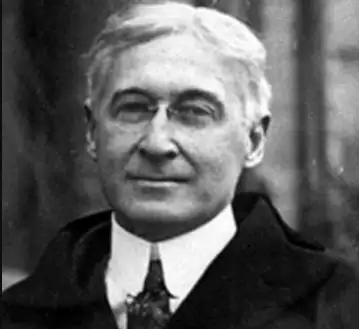
Today's quote of the Day by Bernard M. Baruch: “Be who you are and say what you feel, because those who mind don't matter, and those who matter don't mind.”
Quoted by GoodReads, this is one of the most popular quotes ever written and has survived generations because it speaks to something deeply human and painfully familiar: the exhausting need to be liked by everyone. Bernard M. Baruch’s words do not encourage arrogance or indifference. Instead, they offer a gentler truth: the people who truly care for you will not ask you to shrink yourself in order to earn their acceptance.
In an age where people constantly measure themselves through public opinion, curated identities, and invisible social expectations, the quote feels less like advice and more like permission, permission to stop performing, to speak honestly, and to exist without fear of every passing judgment.
What the quote is actually suggesting
At its core, the quote encourages people to stop living in fear of criticism. Bernard Baruch’s message is not about ignoring others completely or behaving without empathy. Instead, it suggests that people who truly value and care about you will accept your honest thoughts, personality, and emotions.
Many individuals spend too much energy trying to avoid disapproval. They stay silent in conversations, hide their ambitions, or change themselves to fit social expectations. Over time, that pressure can become emotionally exhausting. The quote challenges that mindset by suggesting that authenticity matters more than temporary approval.
The deeper meaning also applies to relationships and personal growth. Real friendships, strong families, and healthy partnerships are usually built on openness. When someone constantly pretends to be someone else, connections become shallow and difficult to maintain.
In professional life too, the quote carries weight. People often hesitate to express ideas because they fear rejection or criticism. But confidence and originality frequently come from individuals willing to speak honestly and stand by their values. Ultimately, the quote is about self-respect. It reminds people that not everyone will agree with them, and that is perfectly normal.
Bernard M. Baruch: The thinker behind the idea
Bernard M. Baruch was an American financier, political advisor, and economic strategist who played a major role in shaping the United States’ wartime industrial planning during the 20th century. Born on August 19, 1870, as the second son of a Jewish immigrant family in Camden, South Carolina, Baruch graduated from the City College of New York in 1889 and began his career on Wall Street, eventually building his own successful brokerage business and becoming a millionaire by 1910.
Baruch later shifted much of his focus toward public service. During World War I, he chaired the War Industries Board, where he helped organize munitions production and industrial mobilization for the U.S. government. He also advised President Woodrow Wilson during the Paris Peace Conference following the war.
In the decades that followed, Baruch became a strong advocate for military and industrial preparedness, advising policymakers and military leaders, including future President Dwight D. Eisenhower. During World War II, he worked on wartime production and strategic resource planning, including synthetic rubber development.
In 1946, he represented the United States at the United Nations Atomic Energy Commission and introduced the Baruch Plan for international control of atomic energy. Over his lifetime, Baruch advised several U.S. presidents and remained an influential voice in American economic and defense policy until his death in 1965.
Bernard M. Baruch’s thinking style behind the quote
Bernard Baruch was known for independent thinking and direct communication. Throughout his life, he operated in environments filled with political pressure, financial risk, and public scrutiny. Whether on Wall Street or advising American presidents during wartime, Baruch understood that leadership often required conviction and honesty.
His quote reflects that practical mindset. Baruch appeared to believe that people cannot make meaningful decisions if they are constantly worried about pleasing everyone around them. His philosophy leaned toward self-confidence, rational thinking, and emotional clarity.
The quote also mirrors the confidence required in finance and politics. In those fields, indecision and fear of criticism can lead to failure. Baruch’s life experience likely reinforced his belief that authenticity and clear judgment matter more than popularity.
Even his habit of speaking openly with people in Lafayette Park showed his comfort with discussion and debate. He valued conversation, ideas, and directness rather than carefully crafted appearances.
Why this idea still matters today
Bernard Baruch’s words continue to resonate strongly in modern life, especially in an era shaped by social media, online criticism, and public validation. Many people today feel pressure to appear perfect, successful, or universally liked.
The quote offers an alternative perspective. It reminds people that seeking approval from everyone is impossible and often unhealthy. Whether in friendships, workplaces, classrooms, or online spaces, authenticity tends to create stronger and more meaningful connections.
The message is especially relevant for younger generations navigating identity, self-esteem, and public opinion in digital spaces. Constant comparison and fear of judgment can damage confidence and mental well-being. Baruch’s advice encourages people to value sincerity over popularity.
It also matters in professional settings. Employees, leaders, and creators often produce their best work when they feel comfortable expressing original ideas rather than simply following trends or expectations.