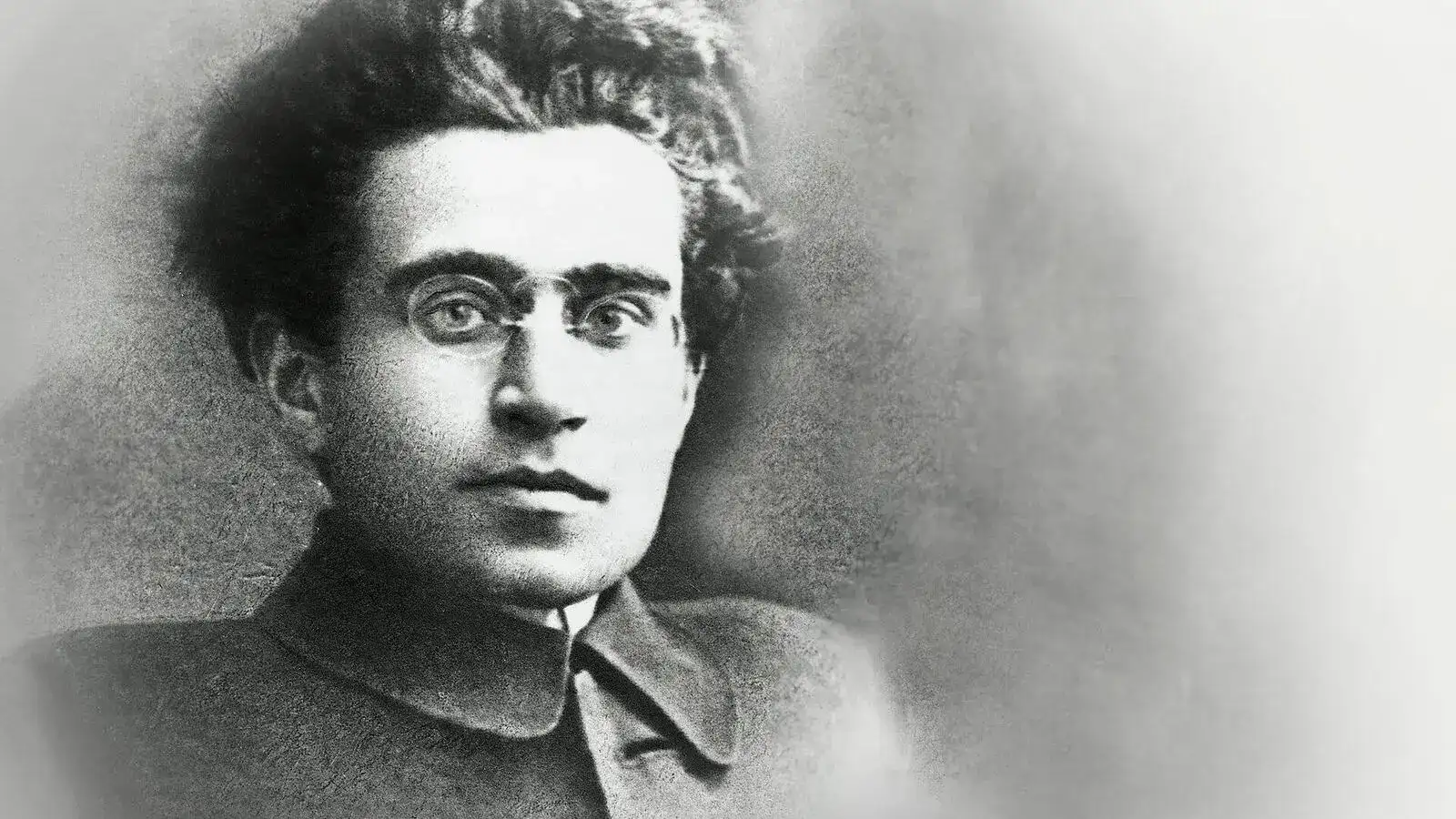
Quote of the day by Antonio Gramsci: He wrote in a prison cell, under a fascist regime, with failing health. Yet Antonio Gramsci's ideas on consent, power, and cultural hegemony remain among the most urgent — and most unsettling — frameworks for understanding why the world stays the way it is.
There is a question that haunts every serious student of history, politics, and human behavior: why do the many so often accept the rule of the few? Antonio Gramsci spent his entire intellectual life wrestling with that question — and what he found is still deeply uncomfortable to confront. His answer was not about guns, jails, or armies. His answer was about consent.
Quote of the day today:
"The strongest and most effective force in guaranteeing the long-term maintenance of power is not violence… but consent in all the forms in which the dominated acquiesce in their own domination." — Antonio Gramsci
Quote of the Day: Antonio Gramsci on power, consent, and domination
Gramsci understood that power is rarely naked. It clothes itself in culture, in common sense, in the stories a society tells about what is natural, inevitable, and just. And when those stories succeed, the dominated do not simply obey — they agree.
Gramsci died in 1937, a prisoner of Mussolini's fascist state, after spending the last eleven years of his life incarcerated. He was thirty-seven when he was arrested. The Fascist prosecutor famously told the court: "We must stop this brain from working for twenty years." They failed.
From his cell, Gramsci wrote over three thousand pages of notes — what the world now knows as the Prison Notebooks — a vast, fragmentary, and dazzlingly original body of work that would reshape political philosophy, cultural studies, and critical theory for generations.
Antonio Gramsci's theory of consent and power did not arrive as a polished manifesto. It arrived as thought in motion, thought refusing to be silenced.
This is Gramsci's most disturbing gift to us: the recognition that oppression is most durable when its victims believe in it.
Quote of the day meaning: What Antonio Gramsci Meant by Hegemony
The concept at the center of Gramsci's revolutionary thought is cultural hegemony. To understand it, forget what the word "hegemony" often means today — simple dominance. For Gramsci, hegemony was something far more sophisticated. It described the process by which a ruling class doesn't just control the state or the economy, but shapes the entire framework through which society understands reality.
Schools, churches, media, literature, language — these become the instruments through which the values of the powerful are made to feel like the values of everyone. Gramsci called this the "ideological apparatus." We might call it the air we breathe without noticing.
Gramsci's insight was that consent manufactured this way is far more stable and efficient than coercion. A policeman on every corner is expensive and fragile. But if people have internalized the belief that the current order is normal, necessary, or even divinely ordained — you need no policeman. Antonio Gramsci's understanding of consent was not cynical. It was surgical.
He saw that the truly powerful do not command. They persuade. And the truly dangerous moment is when the persuasion becomes invisible — when the dominated can no longer tell the difference between their own desires and the desires of those who rule them.
This idea remains electrifying today. Think of the narratives woven into culture: that success is individual, that poverty is a personal failure, that the market is natural, that dissent is ungrateful. Gramsci would recognize all of it. He would say: that is hegemony at work.
Antonio Gramsci's theory of consent and power offers a map to a world still organized around this invisible architecture.
Who Was Antonio Gramsci? The Man Behind the Revolutionary Ideas
Born in 1891 in Sardinia, one of Italy's poorest and most marginalized regions, Gramsci understood dispossession from childhood. He was the fourth of seven children in a struggling family. At the age of four, he was accidentally dropped by a servant — an injury that left him with a hunchback and poor health for the rest of his life. That physical fragility would define the outer contours of his life, but it never touched the ferocity of his mind. He won a scholarship to the University of Turin, where he encountered Marxist thought, socialist politics, and the industrial working class of northern Italy at its most restless and alive.
He co-founded the Italian Communist Party in 1921 and became its leader by 1924. By 1926, Mussolini's regime had him in chains. The Prison Notebooks, written in coded and elliptical language to slip past prison censors, are the record of a mind that refused captivity. They cover philosophy, history, literary theory, linguistics, education, and — above all — the question of how change happens, and why it so often does not.
Gramsci's revolutionary thought was never simply academic. It was forged in the furnace of defeat, of a left that had failed to stop fascism, and his writing is haunted by the need to understand why the workers of Italy had not risen up, but had in many cases welcomed their own subjugation.
Gramsci's Other Revolutionary Ideas
Beyond hegemony, Gramsci gave the world two other concepts that deserve deep attention. The first is the "organic intellectual." Gramsci rejected the idea that intellectuals are a separate class of specially gifted individuals above the fray of social life. Every social group, he argued, produces its own intellectuals — people who give it coherence, self-awareness, and a sense of its own identity.
The traditional intellectual tends to serve the existing order, lending it legitimacy and sophistication. But a truly transformative politics requires organic intellectuals: thinkers who emerge from the dominated classes and articulate their experience, their grievances, their vision from the inside. Gramsci himself was one.
He insisted that the task of the left was not to wait for a spontaneous uprising, but to build a counter-hegemony — to create new common sense, new stories, new frameworks of meaning that could eventually displace the old.
The second idea is the distinction between the "war of maneuver" and the "war of position." The war of maneuver is the direct assault — the revolutionary moment, the storming of the barricades. Gramsci respected it but did not trust it in advanced capitalist societies, where civil institutions were too deeply embedded to fall in a single blow.
The war of position, by contrast, is the long struggle for cultural and intellectual ground. It is patient, generational work: building institutions, shifting discourse, contesting meaning in schools and newspapers and workplaces and political parties. Antonio Gramsci's consent and power framework implies that liberation is not an event. It is a process — and it begins in the mind, in the way people understand their own lives.
Why Antonio Gramsci's Thought on Consent and Power Still Shakes the Present
Gramsci died before he could see his notebooks published or his influence measured. But his ideas moved through the twentieth century like a slow tide, reshaping the new left of the 1960s, the cultural studies movement of the 1970s and 80s, postcolonial theory, feminist critique, and contemporary discussions of media, education, and political messaging.
Theorists like Stuart Hall, Raymond Williams, and bell hooks all drew on Gramsci's grammar of power. His concept of consent and hegemony became the lens through which a generation learned to read culture as politics by other means.
Today, in an era of algorithmic media, manufactured outrage, and the weaponization of "common sense," Antonio Gramsci's revolutionary ideas feel less like history and more like a live wire.
The debate over whose narrative shapes public reality — whose version of normal, whose definition of success, whose picture of the enemy — is precisely the terrain Gramsci mapped ninety years ago from a prison cell in Turi. He understood, with aching clarity, that the most effective chains are the ones people do not recognize as chains at all.
His work is an invitation, perhaps even a demand, to look at the world and ask: which of my certainties did I inherit from those who benefit from my believing them? That question does not have a comfortable answer. But it is, arguably, the most important question of any conscious political life. And Antonio Gramsci — the hunchbacked Sardinian communist who wrote in code while his body failed him — is still, almost a century later, the one who poses it most sharply.