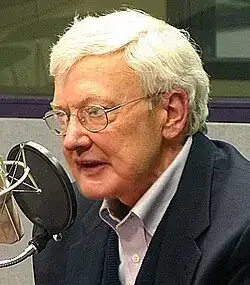
In the world of cinema and storytelling, few names became as respected as Roger Ebert. Beyond his legendary career as a movie critic, Roger Ebert had a rare ability to turn everyday observations into thoughtful reflections about life, struggle, joy, and the human experience.
Quote of the Day
Today’s quote of the day comes from Roger Ebert’s perspective on existence, happiness, and the pressure people often place on themselves to find a deeper purpose in everything.
The quote of the day reads:
“Life always has an unhappy ending, but you can have a lot of fun along the way, and everything doesn't have to be dripping in deep significance.” — Roger Ebert
This simple but powerful statement reflects Ebert’s understanding of life as something that does not need to be constantly analyzed or turned into a search for perfection. His words remind us that while life may have challenges and an inevitable conclusion, the moments we experience along the way are what truly matter.
What Did Roger Ebert Mean by This Quote?
Roger Ebert’s quote challenges the idea that every moment of life must carry a profound lesson or a grand purpose.
Many people spend years searching for answers, trying to understand every setback, disappointment, or unexpected event. While reflection can be valuable, Ebert suggests that not everything needs to become a philosophical puzzle.
Sometimes, a moment can simply be enjoyable. A conversation with a friend, watching a great film, laughing at something unexpected, traveling somewhere new, or appreciating a quiet day can have value without needing a deeper explanation.
Ebert’s message is not that life lacks meaning. Instead, he suggests that meaning can also exist in simple pleasures. Happiness does not always come from discovering some huge purpose. Sometimes it comes from allowing ourselves to experience life as it happens.
Why Did Ebert Believe Joy Was Important?
Roger Ebert spent his career studying stories. As a film critic, he watched thousands of movies and saw countless versions of human experiences unfold on screen.
He understood that stories often contain tragedy, conflict, and difficult endings. Yet audiences continue returning to them because the journey matters. A great story is not valuable only because of how it ends. The emotions, discoveries, relationships, and moments along the way create the experience. Ebert applied a similar idea to real life. The fact that life has struggles or an eventual ending does not erase the beauty found in the middle.
His philosophy encourages people to appreciate the present instead of constantly worrying about whether every moment has a dramatic purpose.
The Life and Legacy of Roger Ebert
Roger Joseph Ebert was born on June 18, 1942, in Urbana, Illinois. He developed an interest in writing early and began working as a journalist while still a teenager. After graduating from the University of Illinois, he joined the Chicago Sun-Times, where he became one of the most influential film critics in history.
In 1975, Ebert became the first film critic to win the Pulitzer Prize for Criticism, a major recognition of his impact on journalism.
Unlike many critics who focused only on technical filmmaking, Ebert had a unique ability to explain movies in a way that connected with everyday audiences. He believed films were not just artistic objects to analyze but experiences that could move, challenge, and entertain people.
His television partnership with Gene Siskel introduced millions of viewers to film criticism through shows such as Siskel & Ebert. Their famous thumbs-up and thumbs-down ratings became part of popular culture.
How Did Roger Ebert Turn Struggles Into Wisdom?
Roger Ebert’s own life included serious challenges. He faced health problems, including thyroid cancer, and later underwent surgeries that affected his ability to speak and eat.
Despite these difficulties, he continued writing and sharing his thoughts with the world. His later years showed the same curiosity and honesty that defined his career.
Rather than focusing only on hardship, Ebert continued to celebrate movies, ideas, conversations, and the experiences that make life meaningful. His memoir, Life Itself, reflected on his journey and showed how deeply he valued the simple joys of being alive.
The Deeper Message Behind the Quote
Ebert’s words offer a reminder that life does not have to be a constant search for answers. There is beauty in ordinary moments. Not every laugh needs a reason. Not every memory needs a lesson. Not every experience needs to transform us.
Sometimes, enjoying the journey is enough. His quote encourages a balanced approach to life: accept the difficult parts, but do not forget to appreciate the happiness available along the way.
Roger Ebert may have spent his life reviewing stories on screen, but his greatest lesson was about the story everyone is living.