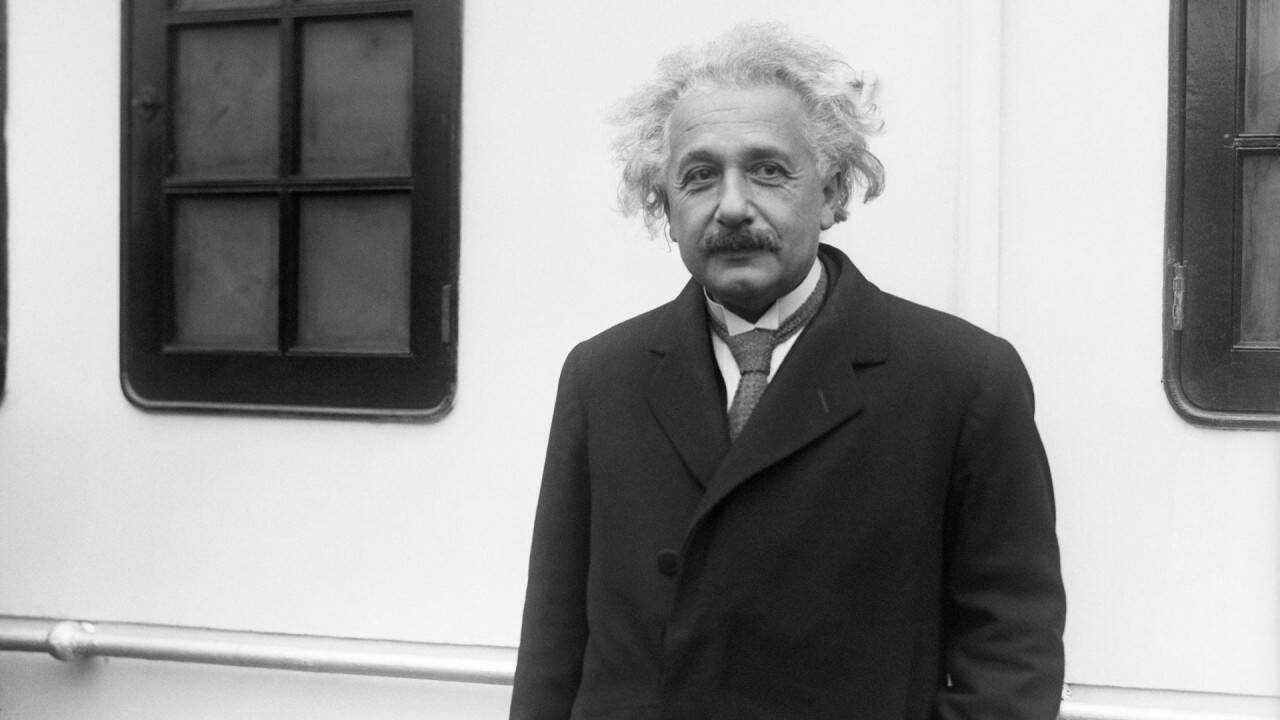
Albert Einstein wrote these words in a letter to his younger son, Eduard, in 1930. The letter came at a difficult time for the family, as Eduard was struggling with his health and his future, and Einstein chose to encourage him with an image that could hardly have been simpler. There were no references to physics, mathematics or the universe — only a bicycle. Nearly a century later, that single comparison has travelled much farther than the letter itself, becoming one of the most widely quoted observations ever associated with the scientist.
Get breaking news anytime, anywhere. Download the TOI app now!
Why a bicycle?
It is easy to overlook how carefully chosen the image is. A bicycle refuses to cooperate with anyone who tries to remain perfectly still. The rider is constantly making small corrections without even realising it; turning the handlebars slightly, shifting body weight, pressing one pedal harder than the other whenever the road begins to slope. None of these movements attracts attention on its own, although together they keep the journey going. Balance, in other words, is never a fixed achievement. It is something renewed every few seconds.
That idea feels surprisingly close to the way life unfolds. Stability is usually imagined as the moment when everything finally settles into place: a secure job, clear plans, healthy relationships and the comforting belief that the difficult years are over. Real life has a habit of interrupting those expectations. Circumstances change, people change and priorities change with them. The people who appear most balanced are rarely those whose lives have remained untouched by uncertainty. More often, they are the ones who have learned how to adjust without losing direction.
The movement we rarely notice
A bicycle covers remarkable distances through movements that seem too ordinary to remember. Nobody recalls every turn of the pedals after a long ride, even though each one mattered. Progress, similarly, hides inside repetition. A musician improves through hours of practice that sound almost identical from one evening to the next. A researcher spends months reading, testing and rewriting before arriving at a single discovery. Parents rarely notice children growing from one day to the next, though an old photograph suddenly reveals how much has changed.
The same is true of personal growth. Looking back, people remember milestones like a graduation, a promotion, a book completed, a difficult year survived. Living through those moments feels very different. Most days seem uneventful, and the effort appears far too small to make a difference. Einstein's bicycle offers a reminder that movement does not need to feel dramatic to matter. The journey is built out of ordinary days rather than extraordinary ones.
Learning through imbalance
Anyone who has learned to ride knows that losing balance is part of the lesson. Every cyclist has wobbled and fallen at some point. Nobody treats those moments as evidence that bicycles cannot be ridden. They are accepted as part of learning, and confidence grows because the rider gets back on rather than because they avoided falling in the first place.
That thought reaches well beyond childhood. Failure is frequently treated as a verdict instead of a stage in the process. A rejected application, a business that never succeeds or an exam that does not go to plan can feel final while they are happening. Looking back years later, many people discover that those setbacks forced them to change direction, acquire new skills or recognise opportunities they would otherwise have ignored. The wobble becomes part of the ride.
Why the quote still speaks to people
Nearly a century has passed since Einstein wrote those words to his son, and the world has changed in ways he could scarcely have imagined. The bicycle, however, continues to make the same quiet point it always has. No journey is completed by standing still, and no rider learns balance without first accepting that a little wobble is part of the ride.