He raised his eyebrow just a fraction. Like, a cuticle width. The thickness of a £5 note. I was eavesdropping on two people in the canteen. One said: “I’m going to tell you what I earn,” then she leaned a little closer, said something low. And then the other raised his eyebrow. What did the eyebrow mean? Was he surprised at how much? Was she worth less? I sipped my tea; burned my tongue, still hurts. “That’s… I thought more,” he said. “Oh,” she replied, and then silence.
What would happen, I wonder, if wages weren’t a secret? In an essay titled “Why Do I Make Less Than My Male Co-Stars?” Jennifer Lawrence discussed the problems with negotiating while female. “When the Sony hack happened and I found out how much less I was being paid than the lucky people with dicks, I didn’t get mad at Sony,” the 25-year-old wrote, alluding to American Hustle and last November’s attack by hackers Guardians of Peace, who published Sony employees emails, and information about executive salaries. “I got mad at myself.”
It revealed that Lawrence was paid seven “points” (7% of the profits), compared to the 9% her male co-stars and director David O Russell received. Of the 17 employees at the company who earn more than $1m a year, we saw, only one is a woman. Michael De Luca, co-president of Columbia Pictures, earned almost $1m more than his counterpart Hannah Minghella. In response to her piece, Lawrence’s co-star Bradley Cooper has promised to share his salary information with his female co-stars in an effort to level Hollywood’s gender pay gap. Also, in an effort to be the hero.
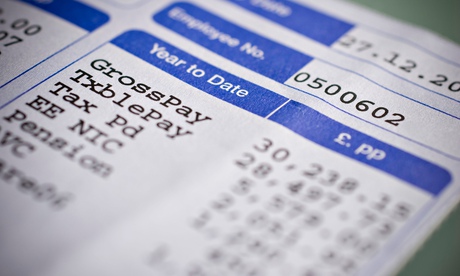
In July ex-Google employee Erica Baker described over a series of tweets how she set up a spreadsheet to share salary information. After around 5% of her US colleagues shared their salaries, Baker claimed the document helped employees to negotiate for bigger and fairer salaries. Which is the point, isn’t it? What we don’t know, we can’t fight against. And while I’d argue I know almost too much about most of my friends – the reason they can no longer eat scallops, how they feel about their stepfathers, their shag/marry/kills for the entire frontbench – it’s still taboo to talk about what we earn. But until we do, we’re walking sort of… blind. I spent a pleasant little while clicking through the BBC’s pay grades, and then their list of executives earning more than £150,000. The transparency is exciting – it feels sort of titillating seeing these names, and then what they’re worth. Because, of course, such figures are usually locked away.
The mayhem if it all came out, across the board, every office, every town, imagine. The egos that would melt, forming jammy puddles of grey that’d stick to your trainers. The marriages that would dissolve, the friendships, the homes. The streets filled with people standing still, shocked as if naked. But naked like after getting out of the sea in Brighton, on a cold day, badly lit.
This is what Hollywood must have looked like last November. The world had already seen these actors’ nipples, seen what they looked like when startled on the loo, seen their faces in the misty heights of passion. But the most private of private things, the figure with which they judge themselves, that they hadn’t seen until now. The complete, the total, the cleansing wonderful mayhem. For all the havoc it would cause, the gains, I’m sure, would be greater.
Take Norway. They have one of the smallest gender pay gaps in the world, due in part to their move in 2002 to make all salaries public. In the UK (26th in the global gender pay gap list), women are still paid 19% less than men (a woman on average earns around 80p for every £1 earned by a man), and of those, non-white women are paid even less.
While few would openly weep for Jennifer Lawrence’s lost millions, the trickle-down in discussions could help end this discrimination, by ensuring all earnings are transparent. Surely the only reason for a company not to practise earning transparency is if their wages just aren’t fair?
As I returned to my desk from the canteen, lisping a little from the tea, I realised I’d never had that conversation. We can be polite, it seems. We can be quiet, we can be coy, or we can be equal. It burns, but it works.
Email Eva at e.wiseman@observer.co.uk or follow her on Twitter @EvaWiseman