Israeli police have said a bus bombing in Jerusalem on Monday that injured 20 people was carried out by a 19-year-old Palestinian, Abd al-Hamid Abu Srour.
Hamas said Abu Srour was one of its members, although it avoided claiming direct responsibility for the attack. He died on Wednesday evening in an Israeli hospital from injuries sustained in the bombing.
Much about the incident remains puzzling, including the muted response of Israeli politicians, officials and media. New questions have emerged, including whether Abu Srour was given the bomb.
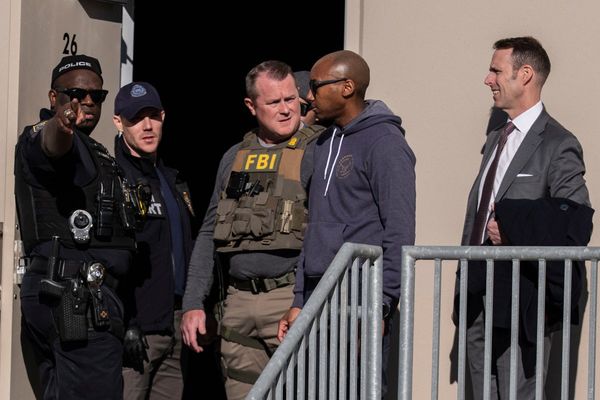
Israel’s security forces announced they had arrested several alleged Hamas members from a cell they said had organised the attack.
Jerusalem police said the arrests had taken place a day or so after the bombing. Those arrested were “Hamas suspects from the Bethlehem area – who are suspected of being involved in planning the attack and executing it. Their questioning is in progress, and their identities are classified,” a statement said.
The bombing has stifled recent optimism among Israeli politicians and security officials that six months of deadly violence between the two sides was declining.
On Thursday it was announced that France would attempt to restart the moribund Middle East peace process at a preparatory conference of foreign ministers in Paris at the end of May.
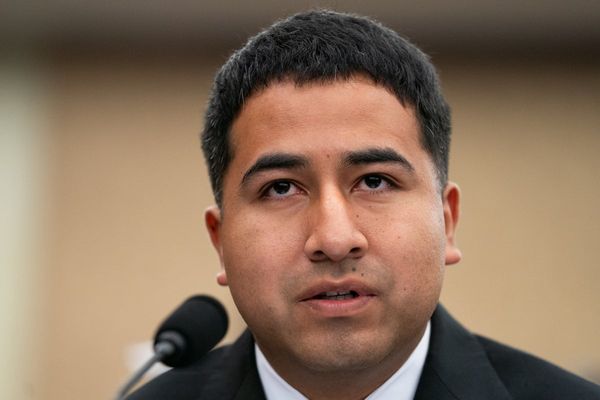
Some Palestinian media reported that Abu Srour’s mother had decided to make his picture public, claiming he had requested a photo be distributed in the event of his death. It emerged that Abu Srour had left ambiguous messages on his Facebook page.
Relatives said the first intimation that something was amiss was when he did not return home on Monday afternoon. “I was in Jordan. His father called to say he was missing,” his uncle Mahmoud said on Thursday. “When I got back on the last bus he still had not returned. In our family we are strict about letting the children not stay out overnight. By the time he had not returned by 3am we were really worried.”

The family contacted the Palestinian security forces to report Abu Srour missing. At 3pm on Tuesday, his father received a call asking him to report to the main Israeli checkpoint into Bethlehem for questioning.
Mahmoud said: “He was taken to the Russian compound in Jerusalem [a security headquarters] and shown a picture of Aboud [the youth’s nickname] walking, and asked: ‘Is this your son?’”
Later, the father was taken to the hospital where his son lay dying, Mahmoud said. “He was so badly injured he couldn’t identify him for sure but felt it was him in his heart.”
There were none of the usual trappings of a dead Hamas activist at one of the family’s homes in Bethlehem, where Mahmoud met journalists and mourners.
Mahmoud described a young man who had finished secondary school last year but wanted to retake two of his exams, and who came from a relatively wealthy and by all accounts highly protective family: according to Mahmoud’s account, the family kept the ID cards of Abu Srour and his cousins to keep them close to home, not least after a cousin was shot and killed by Israeli security forces recently.

“I had offered to pay for him to go to college in Jordan,” the uncle said. “If he didn’t want to do that, I said I would set him up with my son in a clothing shop.”
He said Abu Srour did not know Jerusalem and had no reason – or permit – to be there. Asked who might have given him the bomb, Mahmoud said: “These are questions we don’t know the answer to … He didn’t know Jerusalem either. Maybe someone took him there.”
It appears clear from the family’s account that Israeli police and security forces, despite their public claims to the contrary, have known since Tuesday the probable identity of the bomber.
Images on social media appear to show Abu Srour wearing Hamas-affiliated paraphernalia, but the Islamist movement has not formally claimed the attack – though it hailed him as a “martyr” and called him “one of its sons”, a term used to refer to Hamas members.
Avi Issacharoff, the Times of Israel’s Palestinian affairs columnist, said Hamas appeared to be seeking credit without taking responsibility.
“The hesitant announcement by Hamas highlights the dilemma that has plagued its leadership since the attack took place three days ago: explicitly declare responsibility and glory in the ensuing credit but risk being dragged into a confrontation with Israel, or keep a safe distance away and try to cover up that the bomber was a member of the group,” he wrote.
“Apparently the news of Abu Srour’s death resolved the dilemma. Being able to claim responsibility for a ‘martyr’ is probably worth the risk given the potential points gained in Palestinian public opinion.”
Abu Srour’s uncle was less certain. “These kids are under so much pressure from Israel. They are so angry,” he said. “The policies of the occupation mean that we can’t control them.”