Nobuhisa Sagawa, former commissioner of the National Tax Agency, testified as a sworn witness before the Diet about altered documents related to the approval of a sale of state land to private school operator Moritomo Gakuen.
Sagawa, who was director general of the Finance Ministry's Financial Bureau when the alterations were made, is considered a key figure in the scandal.
However, his testimony fell far short of clarifying what actually happened.
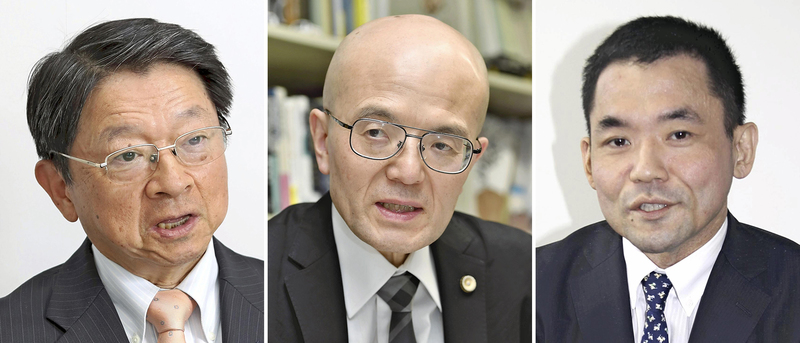
We spoke with three experts about the political and administrative implications of Sagawa's testimony. The following are excerpts from the interviews.
(From The Yomiuri Shimbun, March 28, 2018)
Finance Ministry is losing the public's trust
My impression of Sagawa's testimony was that he refused to comment more often than I had anticipated.
A certain extent of reticence because of the possibility of criminal prosecution cannot be helped, but he would not even comment on areas that were unrelated to criminal prosecution, such as his frame of mind at the time.
I felt that this was out of consideration of the positions of other figures, such as his former subordinates.
Sagawa's attempt to protect something in his testimony can be chalked up as unimpeachable testimony of a bureaucrat. However, no progress was made in getting to the bottom of the matter, and this is unlikely to win the understanding of the public.
While it will be debated whether the alterations were ordered or merely inferred, this distinction is meaningless.
Even if clear orders were not issued, the presence of an atmosphere in which the alterations had to be made is problematic.
The Finance Ministry has maintained its superiority over other ministries and agencies in part because of its power to write budgets, but also because of the minute nature of the work of Finance Ministry bureaucrats.
There is nothing slipshod about this organization and it does not make decisions lightly. Its bureaucrats take great care in their responses to the Diet, which are never ad-libbed.
Sagawa's previous statement that "records of the negotiations were discarded" has been shown to be untrue. In trying to excuse this, he gave an explanation of the rules governing storage of records. But I think this is sophistry.
Because documents related to the process are supposed to accompany responses, it is difficult to believe he was unaware that the records of the negotiations existed.
I hope the bigger picture will become clear through investigations by the authorities and future Diet deliberations.
That the Finance Ministry would alter approval documents, which are what substantiate their decision-making process, is astounding.
The habit of bureaucrats using meticulous language comes from the premise that official documents will be preserved.
Approval documents are meant to demonstrate to the public that the administration has obeyed the law and followed the rules. Bureaucrats have intimate knowledge of the importance of official documents -- altering them is inexcusable.
The scandal involving corruption through "entertainment" that occurred in the Finance Ministry in 1998 was found to have involved only some officials who went off the rails. The current scandal, however, could damage the foundations of democracy.
It is more malicious and deeper rooted than past scandals. The public's trust in the Finance Ministry is in tatters.
It does not stop at the Finance Ministry. Trust in the administration is declining overall due to incidents such as the inappropriate handling of data by the Health, Welfare and Labor Ministry.
Information disclosure and transparency are important, and bureaucrats must treat them as paramount.
We need an environment in which bureaucrats feel they can express themselves freely to the administration in power based on their principles.
To make it easier for bureaucrats to report illegal actions taking place in government offices, a fully functioning system for protecting whistle-blowers is needed.
-- This interview was conducted by Yomiuri Shimbun Staff Writer Saori Kuramoto.
--Yoshihiro Katayama
Professor at the Waseda University Faculty of Political Science and Economics
Katayama worked for the now-defunct Home Affairs Ministry and served two terms as governor of Tottori Prefecture. During the Democratic Party of Japan-led administration, he served as Internal Affairs and Communications Minister from 2010 to 2011. He is 66.
PM's responsibility to provide answers increases
In this matter of national interest, it was hoped Sagawa's testimony would clear up suspicions over how and why the documents were altered. However, things did not become any clearer.
Sagawa was more cautious in his responses than I expected. He apologized for "lacking thoroughness" in his dealings with the Diet when he was head of the Financial Bureau, but either refused to answer questions out of fear of criminal prosecution, or engaged in cryptic and Zen-like exchanges. Many people will find this unacceptable.
In a democracy, the alteration of documents harms the government's responsibility to provide the public with answers and explanations, and thus cannot be allowed. The Finance Ministry needs to investigate the matter to find out the truth, then provide the public with an explanation.
Political reforms implemented since the 1990s, including the introduction of the single-seat constituency system and the 2001 reorganization of central government ministries and agencies, have increased the institutional power of the prime minister.
Some believe the rise in prime ministerial power is due to the character of former Prime Minister Junichiro Koizumi, but this is too one-sided.
Prime Minister Shinzo Abe's administration has seen the creation of the Cabinet Bureau of Personnel Affairs and the National Security Secretariat, which have increased the power of the Cabinet Secretariat.
Now, many important policies are decided by the Prime Minister's Office, and it appears that ministries and agencies are paying more attention to the wishes of the Prime Minister's Office in the policy formation process.
In fact, numerous policy teams that cut across ministries and agencies have been created under the immediate authority of the Prime Minister's Office, which has helped to increase its influence over politics overall.
In the scandal over the land sale to Moritomo Gakuen, it is being debated whether the Finance Ministry surmised the desires of Abe or his wife, Akie Abe. I believe this is because more and more people have become aware of the increased power of the prime minister.
With the prime minister and Cabinet holding greater institutional power, it is important that the prime minister and others involved fulfill their responsibility to carefully provide answers about the process of policy formation.
If, as Abe has repeatedly insisted, he had no involvement, then the people involved should step forward to explain the situation. Their passivity has only served to deepen suspicions they are hiding something.
They should utilize a debate between party leaders. Even outside the Diet, they should be proactive about creating opportunities to explain themselves, such as television interviews and press conferences. Because they have the power, it is important they speak for themselves through the people's perspective.
The Cabinet's approval rate is sinking, and so is people's trust in the prime minister. This will likely affect the debate over revising the Constitution.
Political capital and time have been consumed, unfortunately. I would prefer it if this problem could be separated from the policy issues that are essential to people's lives.
If this political chaos persists, it will only be to Japan's detriment.
-- This interview was conducted by Yomiuri Shimbun Staff Writer Teizo Toyokawa.
--Harukata Takenaka
Professor at the National Graduate Institute for Policy Studies
Takenaka specializes in Japanese politics. He holds a doctorate in political science from Stanford University and has held positions at the Finance Ministry and the Secretarial Headquarters for Administrative Reform of Central Government. He is the author of "Shusho Shihai" (Rule by prime minister) and other books. He is 47.
Limitations of Diet investigations exposed
Sagawa explicitly denied the involvement of Prime Minister Shinzo Abe and others in the alteration scandal. The possibility of perjury gave weight to his testimony and made it sufficiently trustworthy.
Moreover, he clarified that the alteration took place under the framework of "intra-organizational crime" in the Financial Bureau. This can be considered a positive result of his testimony.
Meanwhile, Sagawa's refusal to testify about his awareness of how the alterations took place because of the possibility of criminal prosecution was a proper -- and unavoidable -- exercise of his rights under Diet Testimony Law.
Well then, is it possible Sagawa will actually face criminal prosecution?
To determine whether outside pressure was applied in the sale of state land, the Diet requested documents related to the decision from the Finance Ministry. However, the names of politicians, the prime minister's wife and others had been deleted from the documents.
It is thought that the ministry deleted these portions out of fear of being questioned by opposition party lawmakers. Yet, this made it impossible to confirm the true process of the sale, and thus damaged the essential meaning of the documents.
The act of alteration itself would likely constitute a crime of forgery or falsification of official documents.
The alterations are said to have been carried out by the Kinki Local Finance Bureau on orders from the Financial Bureau.
If the order to perform the alterations was given by Sagawa, who was head of the Financial Bureau at the time, there must have been complicity between Sagawa and the officials who committed the alteration, and Sagawa could be accused of being one of the joint principals in a conspiracy.
In addition, the act of submitting altered documents to the Diet could be seen as criminal use of forged documents.
That said, Sagawa's refusal to testify will not likely have a major impact on any investigation by prosecutors. Whether he will be held criminally responsible depends more on whether testimony on the heart of the matter can be obtained from insiders, including those closer to the rank-and-file workers.
Whose idea was it to alter the documents, and who told the Kinki bureau to carry it out? By what route did the order to alter the documents reach the workers who carried it out?
To uncover the structure of what looks like intra-organizational crime, prosecutors must not rush to conclusions. They should make use of new systems, including plea bargaining, set to be introduced in June.
On the other hand, Sagawa's testimony again highlighted the limitations of investigations by the Diet.
Although Article 41 of the Constitution states, "The Diet shall be the highest organ of state power," the reality is that the Diet is unable to get to the bottom of issues they are investigating, which are being left to the judicial system.
Yet, a criminal trial would only clarify matters to the extent needed to impose criminal penalties, and would not necessarily provide enough information to satisfy the people's right to know.
To embody the purpose of the Constitution, a system of immunity from prosecution needs to be introduced so that when witnesses make statements to the Diet that are not in their favor, their testimonies cannot be used as evidence in a criminal trial.
-- This interview was conducted by Yomiuri Shimbun Staff Writer Kazuki Uchimoto.
--Osamu Watanabe
Professor at Konan Law School
Watanabe specializes in the Criminal Procedure Code. He is the author of "Keiji Saiban wo Kangaeru" (Thinking about criminal trials) and other books. He is 64.
Read more from The Japan News at https://japannews.yomiuri.co.jp/