
Change, as always, stirs debate – and while Formula 1 has been through many regulatory shifts before, the scale of reaction in 2026 has been notably different.
The new rules have pushed several aspects of the sport into unfamiliar territory, prompting strong responses from drivers, fans and stakeholders alike. Opinions remain divided, as ever, but it is clear that some adjustments may be needed. The question is: what should be addressed now, and what can wait?
Our international panel of journalists offer their views.
Restore the ability to push flat-out in qualifying
Roberto Chinchero, Motorsport.com Italy:
There is little doubt that the current Formula 1 regulations are in need of intervention. The new 2026 power units have proven to be engineering masterpieces, yet conceptual shortcomings have emerged that are difficult to reconcile with the very nature of motorsport.
The primary issue – and by far the most significant – concerns qualifying. In the sessions held so far, it has become increasingly clear that drivers are frustrated by being forced to resort to lift-and-coast techniques during what has always been the most performance-critical moment of any race weekend, across every category.

A qualifying lap represents the absolute peak of performance – a unique moment in which there should be no room for management of any kind. Everything must be directed towards pure speed. That is the essence of motorsport.
So the question becomes: how can this issue be addressed in the short term?
There are no miracles in Formula 1, and for that reason the only viable short-term solution is to reduce electrical power deployment during qualifying laps. Whether lap times end up three or four seconds slower is ultimately secondary. What truly matters is restoring the drivers’ ability to push flat-out – an instinct that no regulation should ever take away.
Everything else, for now, is of lesser priority. Energy management strategies will inevitably converge over time, naturally eliminating the frustrating yo-yo effect. At the same time, it is right that all possible ideas are put on the table with a view to 2027.
Qualifying, however, cannot wait.
Move away from that mythical 50/50 split
Fil Cleeren, Motorsport.com Global:
McLaren team principal Andrea Stella pointed out the perils of F1 2026's closing speeds and erratic starts as two major points of concern on the eve of the season, and it seems he was right on the former. Teams appear to have a reasonable handle on the starts, in no small part thanks to a rule tweak from the FIA, without taking away the inherent advantage of manufacturers who opted for a smaller turbo, like Ferrari.
To me, that's a reasonably good example of a course correction without overreacting, and without punishing those who interpreted the rules correctly.
That approach should also be possible with the issue of closing speeds, which reared its ugly head in Japan with Oliver Bearman's crash. It is a bit puzzling that the phenomenon was spoken about so little before Bearman's accident, as all we heard about the initial objective of F1's April meetings was to fix qualifying. To some extent, I believe those two problems can be addressed in one fell swoop, for example by raising the super clip limit from 250kW to 350kW, as Stella suggested back in Bahrain, and reducing the amount of electric energy drivers are allowed to deploy.
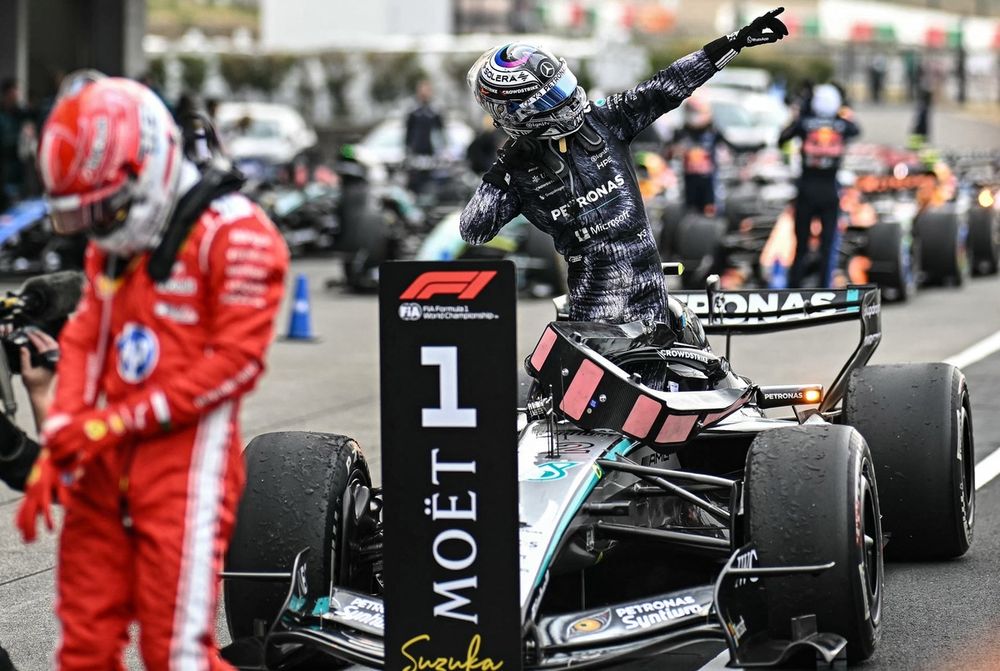
Yes, that means we'll move away from that mythical 50/50 split even more. But honestly, who cares? Cars might be a bit slower on the straights and in overall lap time, but the spectacle will be better and more authentic for it, and safer too. There are probably bigger moves to be made year on year to put more control into the drivers' hands rather than the power unit algorithm, but this would be a start. And one that hopefully can be achieved ahead of Miami.
Safety must come first
Federico Faturos, Motorsport.com Latin America:
Formula 1 must rid itself of the problem of closing speeds and the danger they create – a risk that is no longer hypothetical, but very real.
Driver safety in Formula 1 is almost taken for granted, given the numerous advances made over recent decades in both cars and circuits. That is precisely why the image of Oliver Bearman climbing out of his crashed car, clearly in pain and limping, should serve as a stark wake-up call.
It is clear that much of the spotlight among fans is on the new ways of racing introduced under the 2026 technical regulations – artificial overtaking, super clipping, lift-and-coast, and so on. And let’s not even get started on qualifying. But safety must be the absolute priority when it comes to what F1 needs to change within the current ruleset.
The issue of closing speeds between cars must be addressed as a matter of urgency and made a priority in the April meetings, where the relevant stakeholders will assess potential changes ahead of the return to action in Miami on the first weekend of May.
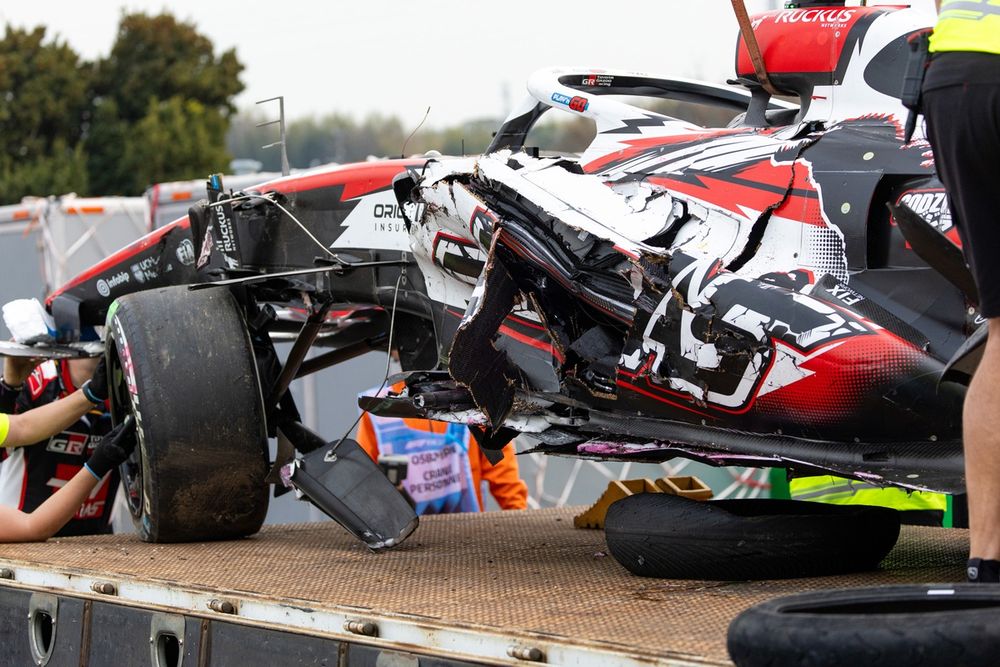
F1 was fortunate in Suzuka in the incident between Bearman and Franco Colapinto, and it may also benefit in this regard from the cancellation of the Saudi Arabian Grand Prix, given the nature of Jeddah’s ultra-fast street circuit, with its immense speeds and limited run-off areas – unlike the one the Haas driver was able to use in Japan.
The FIA and Formula 1 have a range of options on the table to tackle this issue, and in doing so may also be able to move past other problems created by the new regulations, such as those mentioned above. That is why situations in which cars encounter each other on track with a speed differential of 45km/h cannot be allowed to persist.
"We should go more analogue again"
Heiko Stritzke, Motorsport.com Germany:
First and foremost, Formula 1 must recognize that the excitement of a race is not defined by the quantity of overtakes, but by the quality of the racing itself. Artificial aids like DRS or super clipping cannot replicate the tension of a genuine, hard-fought battle.
Look at the recent duel between Christopher Haase and Max Verstappen during the NLS race in March on the Nordschleife. There were only two actual overtakes, but the sustained wheel-to-wheel action was far more phenomenal than any DRS-assisted pass on a straight.
Looking at the technical regulations, we should go more analogue again. One bold step would be reducing the wings to 1990s ChampCar oval kit dimensions. Simultaneously, unleash the power units, setting them to outputs between 1,200hp and 1,500hp.
By maintaining strict fuel-flow restrictions, limits on displacement and cylinder counts can be eliminated. The minimum weight of the engine should be calibrated so that configurations of up to 12 cylinders remain competitive. While a portion of this power could still be derived from a battery, it must be delivered in a way that ensures a natural speed progression on straights.

Furthermore, these cars should be paired with tires capable of withstanding excessive wheelspin from the raw power. This combination of massive power and lower downforce would place a much higher emphasis on pure driver skill.
Optional: to take this driver-focused approach even further, one could consider banning the silent "overtaking killer" nobody ever talked about: the semi-automatic gearbox. Until the late 1980s, many opportunities for overtaking arose from missed shifts. With modern electronics, engines could still be protected from over-revving while returning the physical act of shifting – and the potential for error – to the cockpit.
By focusing on mechanical grip and raw power over aerodynamic dependency, Formula 1 can return to being a true test of a driver’s mettle.
There must be a plan for short, medium and long term
Khaldoun Younes, Motorsport.com Middle East:
Answering a question of this magnitude does not only require broad knowledge of the sporting regulations that govern Formula 1, but also a precise technical understanding of the 2026 regulations, which appear to have opened a Pandora’s box beyond return.
It is expected that the FIA is working behind the scenes, in cooperation with the teams, to come up with a solution, or rather a “basket of solutions”, as part of ongoing efforts to improve the quality of racing.
Accordingly, it may require the collaboration of multiple minds working in harmony to develop a flexible plan that can be implemented in the short, medium, and long term.
Perhaps this is where the real key to the issue lies: the feasibility of implementing changes within a reasonable timeframe for the teams, the championship, and perhaps even the fans.
This is especially important given that teams have been working for a long time to adapt their cars to these regulations. Therefore, any upcoming changes must be applicable without sacrificing resources, which have become increasingly limited under the cost cap regulations.

Several proposals have emerged recently, most of which focus on the electrical component. These include reducing the maximum energy deployment limit (currently set at 9MJ), as well as increasing the share of the internal combustion engine beyond the current 50%.
The prevailing direction appears to center on reducing the significant impact of electrical energy on the overall power unit, at least as a way to eliminate the increasingly evident issue of super clipping.
Notably, a proposal by former engineer Toni Cuquerella has recently gained considerable popularity. The Spaniard, who previously worked with teams such as HRT, Super Aguri, and Sauber, explained in a study he published on social media that certain adjustments to power unit parameters could resolve many of the existing issues.
As for us, all we can do is wait… and see.
Tell us what you think in the comments!