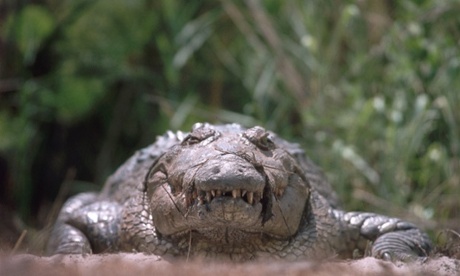
The Queensland government is reviewing its crocodile management policy amid claims that the practice of removing certain animals from the wild is unsustainable.
Since 2013, 111 crocodiles have been removed from the wild under the management plan in order to prevent attacks on people, with five reptiles put down because they were considered a threat to communities on Cape York.
While there has not been a fatal attack by a wild crocodile in the state since 2009, a dog was taken from a boat ramp near Cooktown last week.
But Craig Franklin, a zoology academic at the University of Queensland who has studied crocodiles for 25 years, said there is a lack of understanding about the creatures. He feared that removing them from the wild and putting them in zoos could harm the species and the ecosystems where they live.
“What it comes down to is how transparent is the management program?” Franklin told the ABC. “How successful is that management program in achieving people’s safety and ensuring the conservation of this important species? I’m unclear because there is no data coming back as to the success.”
The previous Queensland government put pilot crocodile management plans in place for the Cairns, Cassowary Coast, Hinchinbrook and Townsville local government areas until 2016.
The new Labor government is currently considering the scope of a review into the plans.
“The priority, as always, is public safety while at the same time balancing this with the conservation of the species,” said a spokeswoman for Queensland’s department of environment and heritage protection.
Franklin said a comprehensive survey would help prove that measures such as crocodile exclusion zones don’t work.
“We know that an estuarine crocodile can swim 60 kilometres in a day, so to make those waterways safe it would be virtually impossible,” he said.
“So my concern with the management plan as it stands is people’s safety and leading people into a false sense of security.”