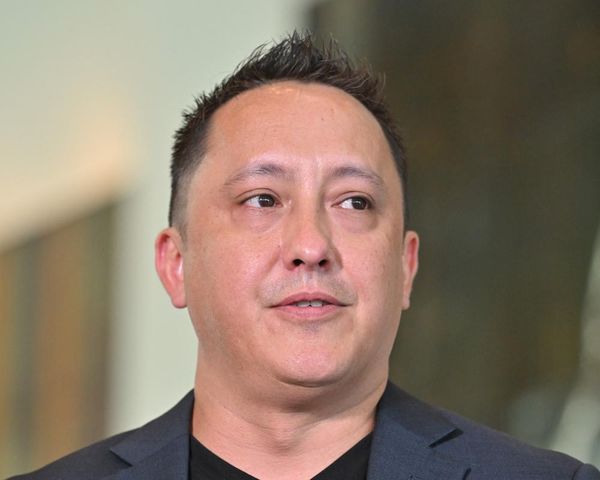
Alan Wilson, the former Queensland judge whose excoriating retirement speech made him the chief justice Tim Carmody’s most significant public critic, has been appointed by the state government to lead a review of controversial bikie laws.
Wilson will chair an independent taskforce examining draconian laws passed during the former government’s crackdown on bikie gangs, including laws that mandate jail time for public gatherings and up to 25 extra years jail for gang crimes.
In a further sign the political tide has turned against the beleaguered chief justice handpicked by the former premier Campbell Newman, Wilson is the third prominent critic of Carmody to be chosen for a key role by the Palaszczuk government in Queensland within weeks.
The former solicitor general Walter Sofronoff, whose call for Carmody to refuse the job steeled Newman’s determination to appoint him last year, was chosen last month to run a commission of inquiry into the deadly Grantham floods.
John Muir, the then appeal court judge who called on Carmody to refuse his appointment because he lacked support from other judges, was chosen last week to chair Racing Queensland in a radical overhaul in the wake of the greyhound cruelty scandal.
The appointment of Wilson, who gave the first insider’s account of the “failed experiment” of Carmody’s divisive leadership of the courts, by the attorney general, Yvette D’Ath, is part of the government’s commitment in office to review legislation it promised in opposition to repeal.
The taskforce will rake over and report on the effects of laws that Carmody openly supported before his elevation to chief justice, drawing criticism that he had aligned himself too closely with the Newman government.
D’Ath said in a statement that Wilson was “widely regarded as one of the state’s finest legal minds and would bring a well-earned reputation for fairness and decency to the role”.
“The government is delighted that a legal figure of Justice Wilson’s calibre will oversee this crucial review,” she said. “This is what should have happened in the first place – a thorough analysis of important legislation designed to protect ordinary Queenslanders from organised crime. Instead the LNP delivered a stunt-driven mish-mash of legislation.”
Wilson will chair a working group composed of lawyers, police, police union officials, the public interest monitor and senior bureaucrats. It will work in tandem with a commission of inquiry into organised crime and report back to the government by the end of the year.
In March Wilson said Carmody had lost “all respect” from most of his colleagues because of his lack of legal ability, his poor work ethic and “hypocrisy” in his private treatment of his colleagues.
Wilson also revealed the judges’ universal condemnation of Carmody’s interference in the appointment of a judge to oversee a potential election challenge when it appeared that the Liberal National party would be taking legal action in a possible attempt to retain government.
Sofronoff cited Carmody’s support for the bikie laws, including his move as chief magistrate to take control of bikie bail decisions from other magistrates after suggestions the new laws were not being applied strictly enough, as a reason he was unsuitable.
Muir criticised Carmody’s decision to appear at the press conference with Newman and the then attorney general, Jarrod Bleijie, announcing his appointment, when he was forced to defend his independence under questioning by journalists. Muir told a 2014 legal function that “ironically, the chief magistrate, when asserting his independence, was engaged in conduct that called it into question”.
The review comes after the anti-association laws aimed at bikies failed to net a single conviction after 19 months. The Vicious Lawless Association Disestablishment Act (Vlad), which adds 15 to 25 years of extra punishment for gang crimes, last week earned its first conviction, a cannabis trafficker with no links to bikies who was spared the extra jail time after cooperating with police.
D’Ath has spoken of concerns about anti-association laws and opposes mandatory sentencing that takes discretion out of judges’ hands.
But the Queensland Council for Civil Liberties has condemned the government for the apparent softening of its stance on the laws upon taking office. It has called for the legislation, which it says creates inequality before the law and an unjust infringement on basic rights, to be scrapped.
Guardian Australia revealed last month that Carmody had a private dinner with Newman at the exclusive all-male Tattersalls club days before he took sick leave citing a back condition. It was the latest in a series of private meetings with LNP figures at key points of his judicial career.
Carmody subsequently announced he had offered to D’Ath to quit to end the dysfunction in his relations with colleagues. But he would only do so in return for “just terms” and the government committing to reforms he has not specified beyond the creation of a judicial commission to oversee judge’s appointments and misconduct complaints.
His calls for “reform” to tackle “festering” issues in the judiciary met a frosty reception by the government, with the deputy premier, Jackie Trad, saying it was up to the government of the day, not judges, to set policy.
Carmody, who subsequently hired an employment lawyer and met with D’Ath to discuss his resignation offer, remains on sick leave.