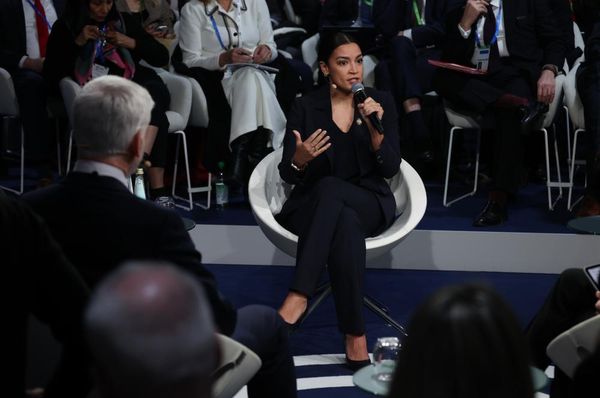
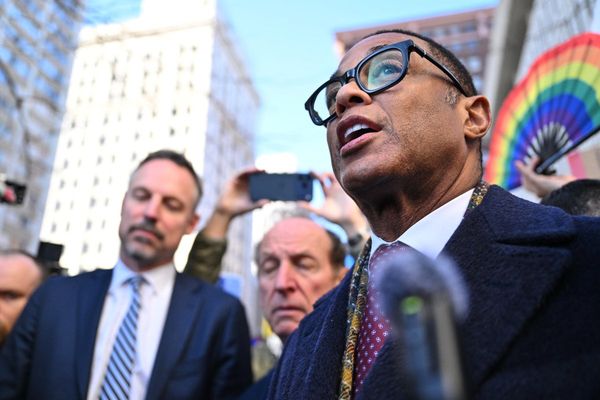
In moving from the Cottesloe to the Olivier, Trevor Nunn's celebrated production has become as broad as it is long: there's too much protracted business and too much italicised acting in the minor roles. What holds it together is Nunn's cumulative psychological insight and the sterling performances from Henry Goodman as Shylock and Derbhle Crotty as Portia.
On the larger stage some of Nunn's ideas look over-extended. Setting many of the Venetian scenes in a dingy, incipiently fascist 30s clip-joint is ingenious, but it's hard to believe that Shylock would venture into such a dive, and Launcelot Gobbo's debate with his conscience seems incredibly laboured when done as a stand-up routine.
Back in Belmont, the film clips illustrating Portia's previous suitors detract from her own acid verbal portraits and the treatment of Arragon as a ho-ho Spaniard, all clicking heels and flamenco, smacks of the racism the production elsewhere seeks to undermine.
Goodman and Crotty, however, remain as brilliant as ever. What Nunn and Goodman bring out is the way Shylock's revenge is directly fed by his daughter's defection: as Solanio points out, "Let good Antonio keep his day or he shall pay for this." Goodman's Shylock is also a mass of enlightening contradiction: singing Yiddish songs with his daughter one moment, then striking her; in the trial scene, raising his knife to Antonio's chest, then being delayed in the action by his own unstilled conscience. This is a Shylock tortured by his own paradoxical impulses.
Crotty's Portia is also astonishing: instead of the heartless legal quibbler, we get someone who comes up with flesh-but-no-blood argument in a moment of improvised desperation and who is appalled both by Christian severity and by Bassanio's symbolic surrender of the ring. As a result the fifth act acquires a disillusioned melancholy in which you feel, for all the characters, that it will never be glad, confident morning again.
Nunn himself emerges as a deeply paradoxical director. His increasing tendency to invest Shakespeare with a mass of novelistic detail clogs the narrative momentum. The plus side is that he brings to Shakespeare a psychological penetration that here makes the last two acts as moving as I have ever known them. His faults, in short, are inextricable from his virtues: maybe you just have to accept them both.
Box office: 0171-452 3000.