
Qualcomm announced its latest bid to break into the PC market on Thursday, announcing two new chips aimed at the low-end and mid-range of the notebook market. It's the latest in the company's years-long quest to expand from phones into computers.
Why it matters: Though smaller than the smartphone market in units, the PC business remains lucrative, and getting even a modest share of it would be a nice boost for Qualcomm and a considerable threat to Intel.
Qualcomm's pitch is a compelling one: Combine the power of the a computer and the always-on connectivity of a cell phone, then throw in all-day-or-more battery life.
The problem is, the computers based on such chips have generally fallen short on both compatibility and performance. It's hard to imagine adding lower-end variants of Qualcomm's existing chips will solve either issue, though perhaps customers will be more forgiving of those tradeoffs in a lower-priced machine.
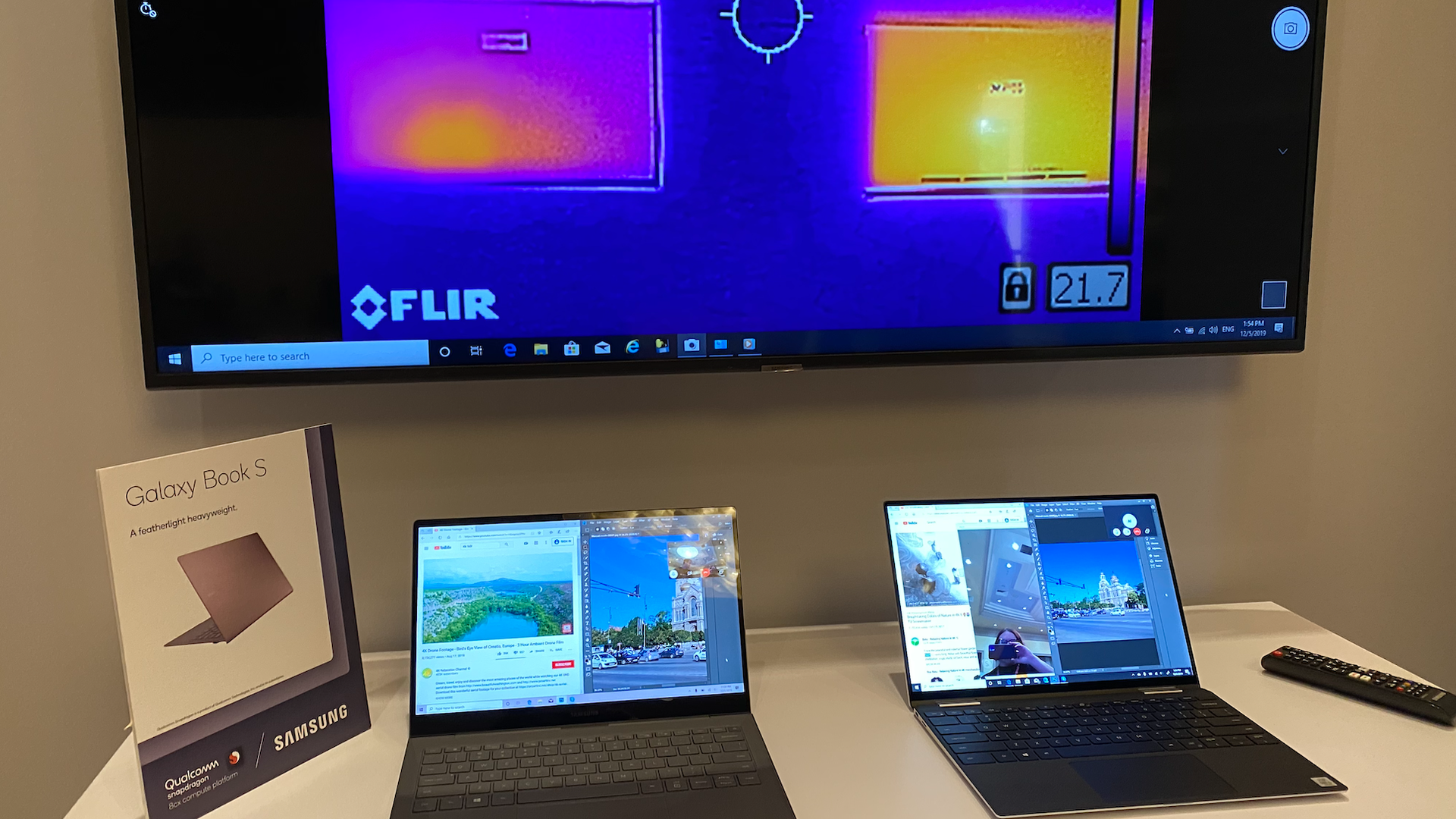
Dueling demos: In a meeting room at the Grand Wailea resort, Qualcomm pointed a thermal camera at Qualcomm- and Intel-powered laptops as they simultaneously ran 4K YouTube, Photoshop and a video conference call, showing visibly just how much hotter the Intel-based machine was running. The added heat, Qualcomm says, would almost certainly translate to lower battery life.
Intel, meanwhile, set up demos of its own at a suite at the nearby Andaz hotel, showing the recently introduced Qualcomm-based Surface Pro X and Intel-based Surface Pro 7 doing a variety of tasks. Intel says the Surface Pro 7 is faster at productivity tasks like converting a PowerPoint to PDF, quicker at creative tasks such as editing photos and offers higher frame rates in games, while the Surface Pro X offered only slightly better battery life.
My thought bubble: If Qualcomm wanted a place in low-end machines, a natural spot would seem to be the Chromebook market, where the company would just need to deliver a good browsing experience. Early Chromebooks ran on a range of processors, though recent models have focused on PC chips from Intel and AMD.
- Qualcomm had said some Chromebooks running last year's high-end smartphone chip would arrive this year, but they have yet to materialize.
Disclosure: Reporting for this article took place at Qualcomm's Snapdragon Summit in Maui, where I moderated a session on Wednesday. Qualcomm paid for my travel-related costs.