In the heart of Paris, a short walk from the Eiffel Tower, is a building enveloped in lush greenery and exotic plants. Since it opened in 2006, the Quai Branly Museum has attracted a loyal following of those who share its focus on the ethnic arts of Africa, Oceania, Asia and the Americas, as well as a steady stream of visitors looking for something beyond the typical museum trail.
Even the museum building is part of the collection. Jean Nouvel's design features Mondrian-like blocks of colour and a living wall covered with 150 species of plants. But it also incorporates the works of eight Aboriginal artists into its concrete and glass facade, interior walls and ceilings. It's the largest permanent installation of indigenous Australian contemporary art outside of Australia, and it keeps on getting bigger. This summer a newly commissioned artwork by Lena Nyadbi will appear on top of the museum, visible to the 7 million people who look over the roofs of Paris from the Eiffel Tower each year.
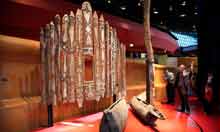
Inside the museum walls are more than 1 million exhibits, including 300,000 artefacts and artworks from indigenous cultures around the world, 700,000 photographs and 320,000 documents that unveil the history of the collection. Treasures include a Siberian shaman's cloak, a magic Minkisi statuette from the Congo, rare frescoes from Ethiopia and a ceremonial stone seat from the island of Nias, off Sumatra. A special permanent exhibit of more than 10,000 musical instruments is stored in an impressive glass tower that spans four levels of the building.
The museum is the kind of place that warrants multiple visits: 3,500 objects are on display at any one time, in constant rotation. 2013 is a banner year for the museum's temporary exhibitions: a comprehensive survey of the arts of the Philippines will take place from 9 April to 24 July and a later exhibition will explore the roots of tribal art-collecting in 1930s Paris.
Of equal importance is the museum's reputation as a centre for research and learning. Its multimedia library, with specialist departments in the fields of ethnology and the history of non-European art, is open to members of the public as well as to academics.
Children, too, will have plenty to keep them occupied at the Quai Branly Museum. There's a daily programme of activities designed to keep younger visitors entertained, including storytelling tours, film screenings and live performances of music, dance and readings in the Claude Lévi-Strauss Theatre.
To find out more about this destination, visit gotofrancenow.com/quai-branly-museum-in-paris