Queensland has recorded three new cases of COVID-19 in Goondiwindi, with another two people discovered to have been infectious while in the southern border town.
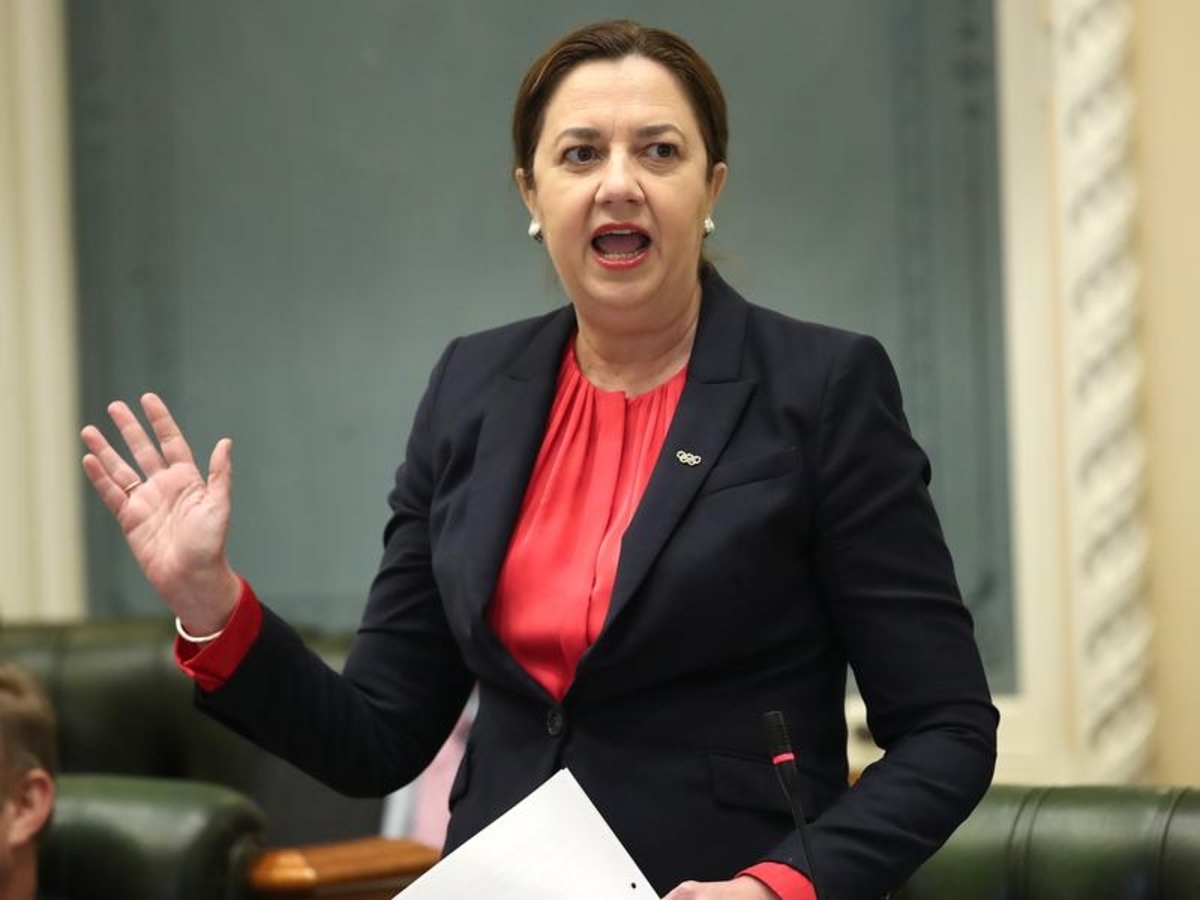
Premier Annastacia Palaszczuk says the cases emerged after 5098 tests in the 24 hours to 6.30am on Thursday.
She says one is a known household contact of a case, another has been infectious in the community for five days, and a third for four days.
The three are all women aged from their teens to their 30s. Two are unvaccinated and one has had her first dose.
Two of them recently visited Moree in northern NSW, and the third is linked to one of them.
"My message is very clear ... if you are unvaccinated and the virus comes into your community, the virus will hunt you out," Ms Palaszczuk told reporters.
"Now it's really important in Goondiwindi if anyone has any symptoms to please get tested."
Deputy Chief Health Officer Peter Aitken said all three cases were in hospital and would be transferred to a COVID-19 facility, most likely on the Gold Coast.
He said there were a number of household and other close contacts who were in isolation or being tracked down on Thursday.
Dr Aitken said a NSW woman and a Victorian truck driver had also tested positive interstate after being infectious in Goondiwindi.
Exposure sites include a Kmart and supermarket in Goondiwindi on Monday, and the domestic terminal at Brisbane Airport on Sunday afternoon.
It's unlikely restrictions will need to change given the high vaccination rates in the town, Deputy Police Commissioner Steve Gollschewski says.
Commonwealth figures show that as of Monday, 90.9 per cent of eligible Goondiwindi residents have had one dose of a COVID-19 vaccine and 81.5 per cent are fully vaccinated.
But the high rates are not replicated across the state, and there is concern about some of Queensland's regional communities and vulnerable populations, with more cases expected when borders open.
"Time's running out. We've got to get them vaccinated," Ms Palaszczuk said.
Borders could open sooner than the December 17 deadline if the statewide vaccination rate increases faster than expected.
For Queensland's Indigenous communities, Ms Palaszczuk said part of the problem was the distribution of "misinformation".
"It is wrong, and it is going to have a big impact on communities," she said.
"I'm urging all of our Indigenous Australians to disregard the false information that has been circulated on Facebook and get vaccinated."
Residents in areas with low vaccination rates will receive a text message alert encouraging them to get the jab from Thursday onwards.
The health alerts include a link to a government website with information on how to get vaccinated.
It's the same alert system used during disasters, and authorities are asking Queenslanders not to block the number.
At least 65.81 per cent of eligible residents are fully vaccinated, and 78.81 per cent have had one dose, the latest commonwealth figures show.