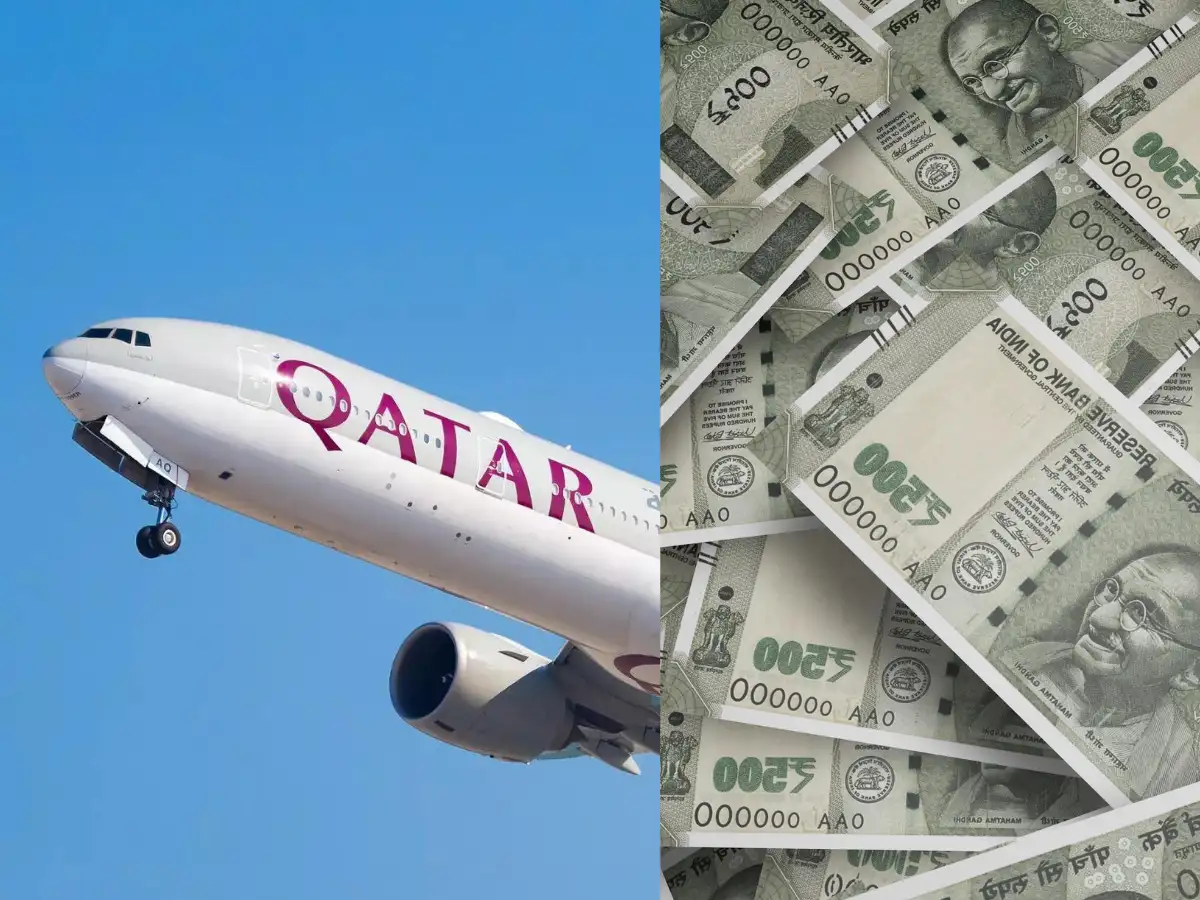
A consumer commission in Kerala has held Qatar Airways guilty of deficiency in service and unfair trade practice after the airline denied boarding to two children — including a 10-month-old breastfeeding infant — during a family's return journey from Kochi to Italy, despite having verified their travel documents and issued boarding passes, reported TOI.
In its July 14 order, the District Consumer Disputes Redressal Commission, Ernakulam, directed the airline to pay Rs 10 lakh as compensation to the family, along with Rs 25,000 towards litigation costs, according to the TOI report.
How did the dispute arise?
According to the commission's order, the complaint was filed by Roshan Jose, an Indian expatriate employed in Italy. Jose, his wife Vinaya, and their two children had travelled from Venice to Kochi in November 2018 for a holiday. Before the journey, Qatar Airways verified the family's travel documents and issued tickets and boarding passes to all four passengers, including the infant.
On December 3, 2018, when the family arrived at Kochi airport for their return flight, they were kept waiting at the check-in counter for nearly two-and-a-half hours. Just 10 minutes before departure, airline officials refused to allow the couple's six-year-old son to board, claiming he did not have a separate visa. The parents and the infant, however, were issued boarding passes.
With no other option, the parents left their elder son with relatives at the airport and boarded the flight to Doha.
The ordeal continued during the transit in Doha, where the airline denied the 10-month-old infant boarding on the connecting flight to Venice, despite the child having already been issued a valid boarding pass at Kochi after document verification.
After waiting for several hours without a clear explanation, the family was informed that the infant would not be permitted to travel. As Vinaya had to return to work in Italy, she continued alone to Venice, while Jose flew back to Kochi with the infant. The baby remained in India with relatives for several weeks before being taken back to Italy, with Jose bearing the additional expenses, reported TOI.
Why did the commission rule against Qatar Airways?
The bench comprising President D.B. Binu and Members V. Ramachandran and Sreevidhia T.N. noted that Qatar Airways had accepted and verified the family's travel documents before allowing them to travel from Venice to Kochi. It held that denying boarding to the children on the return journey using the same documents was arbitrary and unjustified.
"The conduct of the opposite party in preventing a child from accompanying his parents on the return journey is wholly arbitrary and has shocked the conscience of this commission," the bench observed.
The commission further held that if the airline believed the children's documents were inadequate, it should not have permitted them to travel from Italy to India or issued boarding passes for the return journey after verifying the same documents.
"Having allowed the infant to travel from Venice to India, the subsequent refusal of permit for the return journey from India on the very same set of documents is patently inconsistent, unjustified and highly reprehensible," it further added.
The commission also considered the emotional and financial hardship caused to the family. It noted that the parents were forced to separate from their children because they feared losing their jobs abroad. While the mother travelled alone to Italy, the father returned to Kochi with the infant, who was later left in the care of relatives in India for several weeks.
"The mental agony, emotional trauma and untold hardship suffered by the parents were the direct and inevitable consequence of the wrongful conduct of the opposite party," the commission noted.
Holding that Qatar Airways' actions amounted to deficiency in service and an unfair trade practice, the commission directed the airline to pay Rs 10 lakh as compensation for the family's mental agony and hardship, along with Rs 25,000 towards litigation costs. It also ordered the airline to comply within 45 days, failing which the compensation amount will carry interest at 9% per annum from the date of filing of the complaint until its realisation.