IRBIL, Iraq _ The presidents of Turkey and Russia outlined a plan late Tuesday meant to reduce tensions along the Turkey-Syria border, where Turkish forces launched a military offensive almost two weeks ago.
Authorities meeting in the Russian Black Sea resort of Sochi said the effort would involve Russian and Syrian government forces and a so-called border safe zone long demanded by Turkish President Recep Tayyip Erdogan.
Erdogan met with Russian President Vladimir Putin in a session that reportedly lasted almost seven hours, apparently reflecting the difficulty of crafting an agreement.
"We want peace and stability in Syria," said Erdogan, who called himself a "friend of Syria."
The new plan was set to unfold beginning Wednesday, officials said. The details of how it was going to work remained unclear, but officials said that Russian and Syrian government forces would be involved in enforcing the safe zone demanded by Turkey.
A U.S.-brokered, five-day cease-fire in northeast Syria had been set to end at 10 p.m. local time Tuesday. The cease-fire was meant to allow for the safe withdrawal of Kurdish fighters from Syria's border zone with Turkey, a pullout demanded by Erdogan.
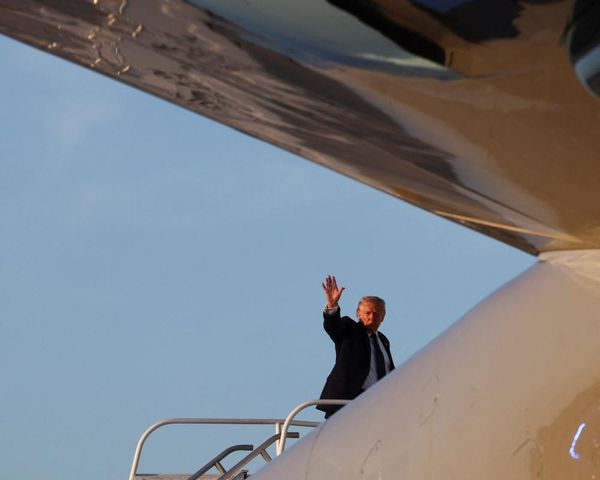
Tuesday's declarations in Sochi represented the latest fallout from President Donald Trump's decision to withdraw U.S. troops from northern Syria_ a move that critics said emboldened Turkey to launch an assault Oct. 9 on northern Syrian areas bordering Turkey.
Turkey and proxy forces attacked across a broad section of its southern border with Syria, sending more than 200,000 civilians scrambling for safety elsewhere in Syria and in northern Iraq, authorities say. Reports late Tuesday indicated that a new wave of Syrian civilians was on the move away from the Syria-Turkey border as the cease-fire was set to expire.
Turkey says it plans to create and control a zone of 275 miles along the border with Syria. The strip, Ankara says, would serve as a bulwark against potential Kurdish attacks and as a potential area to settle millions of Syrian refugees now living in Turkey.
Erdogan has long denounced Syrian Kurdish militias _ key U.S. allies in the fight against Islamic State extremists_as "terrorists," because of their ties to Kurdish insurgents in southeastern Turkey.
The Syrian Kurds, in turn, accuse Turkey of using "terrorist" proxy forces _ including al-Qaida-style militants who formerly fought as anti-government Syrian rebels _ in its assault into northern Syria.
As part of last week's cease-fire agreement, Turkey demanded that the Syrian Kurdish forces withdraw from a strategic Turkish border strip about 75 miles and 20 miles deep. The stretch is between the Syrian border towns of Ras al-Ayn and Tal Abyad, both of which have been occupied by Turkish-backed forces.
But it was unclear late Tuesday whether all the Syrian Kurdish fighters had completely pulled back.
Before Tuesday's meeting in Sochi, Erdogan told reporters that 800 Kurdish fighters had withdrawn from the border zone, while another 1,200 or so were in the process of moving out.
"All will have to get out," Erdogan said before the Sochi meeting. "The process will not end before they are out."
In recent days, convoys of U.S. troops have been pulling out of northern Syria and heading out on major roads into neighboring Iraq. The pullout has drawn wide condemnation in the multi-national Kurdish region _ video of residents of the mostly Kurdish Syrian city of Qamishli pelting departing U.S. vehicles was aired widely in the Kurdish regions of Syria and Iraq.
Trump's decision has prompted the Kurdish-led forces _ seeking allies against Turkey _ to begin a limited reconciliation with the government of Syrian President Bashar Assad in Damascus. With the cooperation of the Kurdish Syrian leadership, Syrian government troops and allied Russian forces have moved into some areas long controlled by the Kurdish-led regional coalition in northeast Syria.
The Kurdish Syrian command views the presence of Syrian military forces as preferable to a broad incursion of Turkish troops and its proxy militias.
The dispute about Kurdish forces represents the latest turn in the Syrian war, which began in 2011 with anti-government street protests. The conflict soon morphed into a bloody geopolitical proxy battle pitting the United States and its allies, which armed anti-government rebels, against Assad's principal allies, Russia and Iran.
Damascus withdrew much of its forces from northeast Syria in 2012, as the government sought to stave off attacks from rebels across several fronts. Kurdish-led forces stepped into the security vacuum in the northeast and later received direct U.S. aid _ including air power_ in fighting off militant forces in the region.
Russia intervened directly on Assad's behalf in 2015 at a point when the government in Damascus was in danger of toppling. Russian air power helped turn the tide of the battle in Syria.
With Moscow's aid _ along with assistance from Iran and its proxies, especially the Lebanese Hezbollah group _ Syrian government forces regrouped and pushed back against rebel forces. Much of Syria and its major population centers are now firmly in government control.
Assad has made it clear that he intends to bring the northeastern zone long under Kurdish control back into the orbit of the central government in Damascus. He has condemned as a land grab Turkey's efforts to expand into Syrian territory.
In comments Tuesday before Syrian troops in northwest Idlib province, Assad denounced Erdogan as a "thief" and a "slave" of Washington. The Syrian president said he had urged the Kurds in northeast Syria to remain loyal to Damascus and not to rely on Washington.
"We repeated the same thing: Don't place your bet on the Americans," Assad said he advised the Kurdish leadership. "The Americans will sell you out."