Drug-testing facilities should be set up in UK town centres to prevent “needless” deaths, the parents of two teenagers killed by high-strength ecstasy have urged.
Janine Milburn and Fiona Spargo-Mabbs said their children’s lives could have been saved if they had been able to check the dosage of the drugs they were about to take.
Other countries including the Netherlands, Switzerland and Spain have government-funded services where users can take illegal drugs to be tested. Staff at the labs flag up dangerously strong or contaminated substances and also provide users with harm reduction advice.
There are no equivalent public services in the UK, where drug-related deaths hit record levels last year and are among the highest in Europe.
“As a country, we are still very much sticking our heads in the sand where drugs are concerned,” said Ms Milburn, whose 18-year-old daughter, Georgia Jones, was one of two young people who died after taking ecstasy at Mutiny music festival in Portsmouth this summer.
An inquest last week heard the teenager collapsed after swallowing two double-strength pills at the event in June. Her mother has since launched a petition calling for mandatory drug-testing facilities at festivals.
Ms Milburn, 41, told The Independent: “I think testing at festivals is maybe a first step and hopefully things like clubs would follow.
“Having testing centres available to anyone and everyone would solve a lot of these deaths. They don’t need to be happening.”
Ms Spargo-Mabbs’s son Daniel, 16, died of multiple organ failure after taking “incredibly strong” MDMA at a rave in west London in January 2014.
The teenager's last words as he left his family's home in Croydon, south London, were: "I love you mum, I promise I won't die."
Ms Spargo-Mabbs, 51, told The Independent: “If he had that MDMA tested and knew it was incredibly strong, then he wouldn’t have taken it or wouldn’t have taken all of it and he might still be here.
“Whether he would have done that if it was available, I don’t know … But anything that can be done to reduce to risk to young people has to be a good thing.”
Drug testing has been carried out at a handful of British festivals by The Loop, a charity which began piloting the service in 2016. It has taken pop-up labs, staffed by volunteers, to nearly 20 festivals in the past two years.
The Loop’s chemists test drugs submitted anonymously by users, with results often available within half an hour. Healthcare professionals then discuss the results on a one-to-one basis, providing harm reduction advice, while stressing they do not condone drug use. The charity issues alerts on social media about dangerous pills and powders it has found to be in circulation.
This summer, The Loop tested drugs which were four times stronger than usual and detected a growing circulation of N-ethylpentylone, a powerful psychoactive substance often mis-sold as MDMA.
About half of the 8,000 people who got their drugs tested at seven festivals this year said they would take smaller quantities after speaking to The Loop’s healthcare workers about strength and dosage. Another 10 per cent chose to hand their drugs over to police.
The charity is now looking at offering drug-testing in town centres, a service aimed at clubbers as well as more vulnerable users, such as opiate addicts. The number of people in England and Wales killed by the synthetic opioid fentanyl rose by 29 per cent last year.
Fiona Measham, a director of The Loop and professor of criminology at the University of Durham, told The Independent: “We started testing at festivals but that was never the end point, because we are well aware that actually fairly privileged people can afford to go to festivals.
“If you test in a city centre it’s more inclusive – any drug-using groups can use it.”
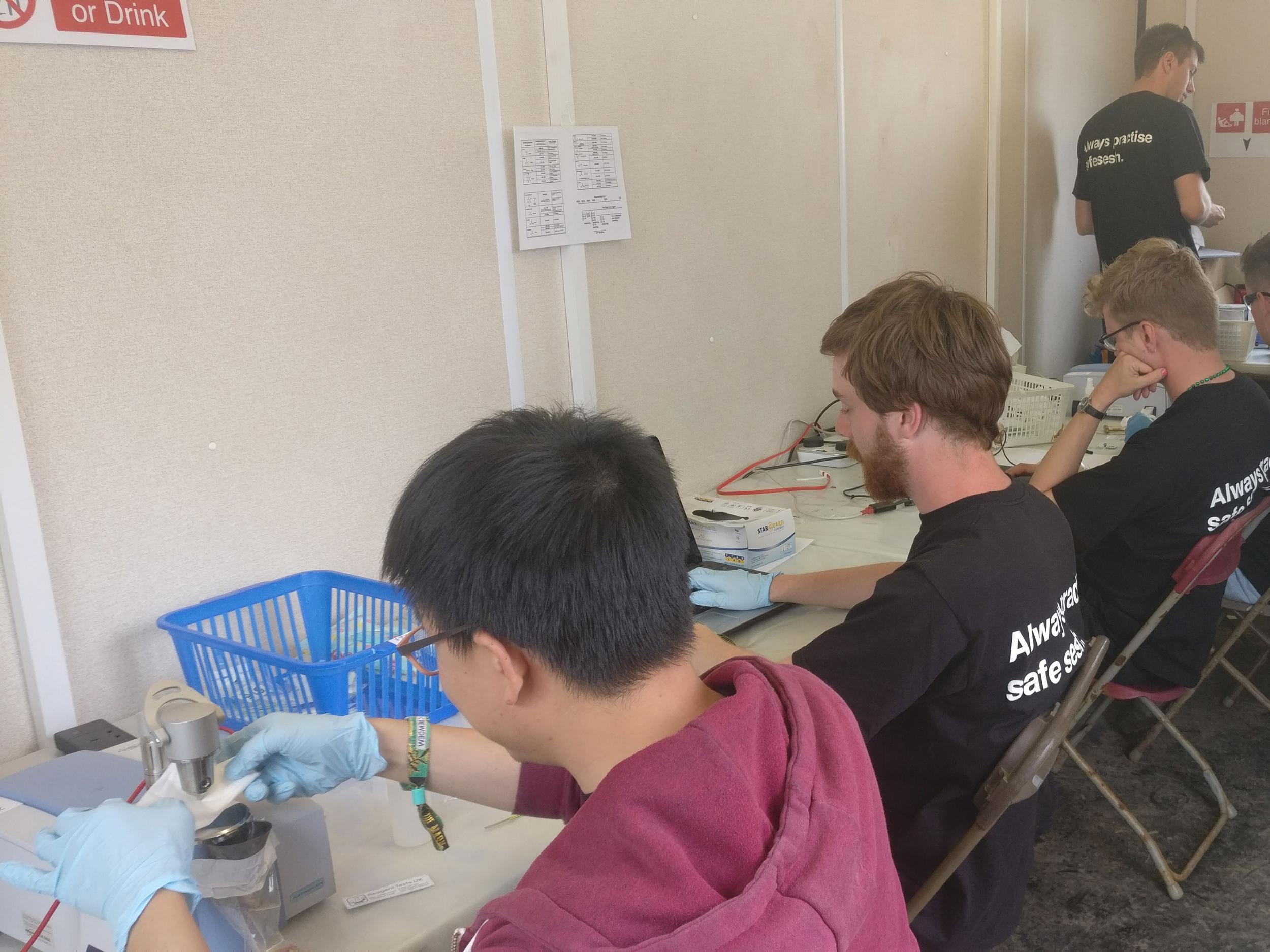
Next month, The Loop will run a pop-up lab in Bristol city centre for the second time this year.
But the charity would need substantial funding if it were to expand operations widely across the UK city centres. The Dutch drug-testing service receives about £1m from the country’s government to operate labs in dozens of towns and cities across the country.
In the UK, drug testing remains sensitive, vociferously opposed by sections of the media and politicians who argue it signals official endorsement of drug-taking.
”I understand that at the moment we have still got to win people over that this is something that’s valuable, and can actually save money as well as saving lives,” said Prof Measham, who is compiling research on the effectiveness of drug-testing to present to the Home Office.
She added: “City-centre testing benefits everybody; it benefits non-drug users as well as drug users because it reduces the burden on the NHS for everybody who is paying taxes into that.
“If we can identify contaminants or adulterants, or if we can identify really high-strength drugs and talk about dosing, and people take less, then that’s obviously beneficial.”
Ms Spargo-Mabbs, who set up a charity founded in her son’s name to provide drugs education in schools, added: “In an ideal world, nobody would take drugs and nobody would come to harm from drugs. But people have always taken drugs to make themselves feel different and it’s fraught with risk.
“There will always be risks, but it’s being pragmatic and saying 'What is the best thing we can do for them?
A Home Office spokesperson said: “Drugs can devastate lives, ruin families and damage communities. This Government's approach remains clear that we must prevent drug use in our communities and support people through treatment and recovery.
“Our drug strategy brings together police, health, community and global partners to tackle the illicit drug trade, protect the must vulnerable and help those with a drug dependency to recover and turn their lives around."