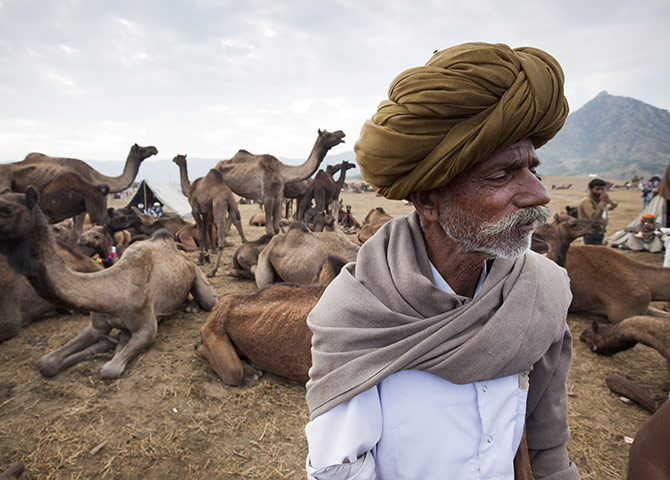
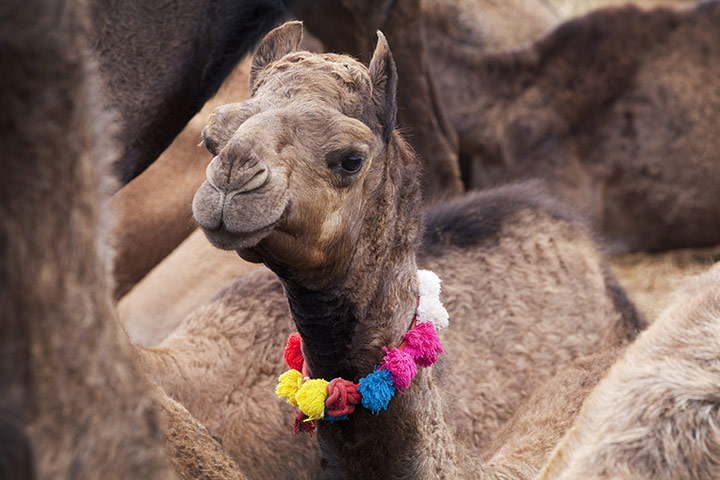
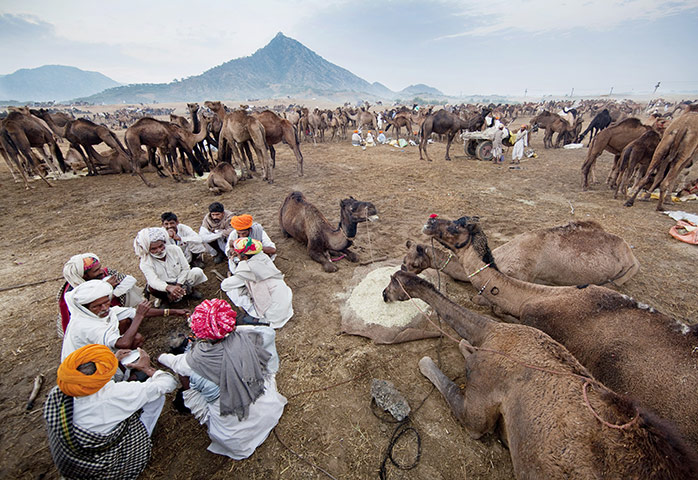
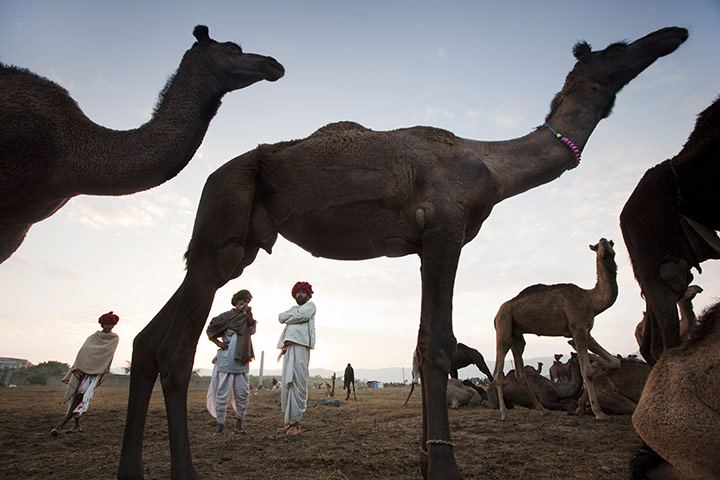
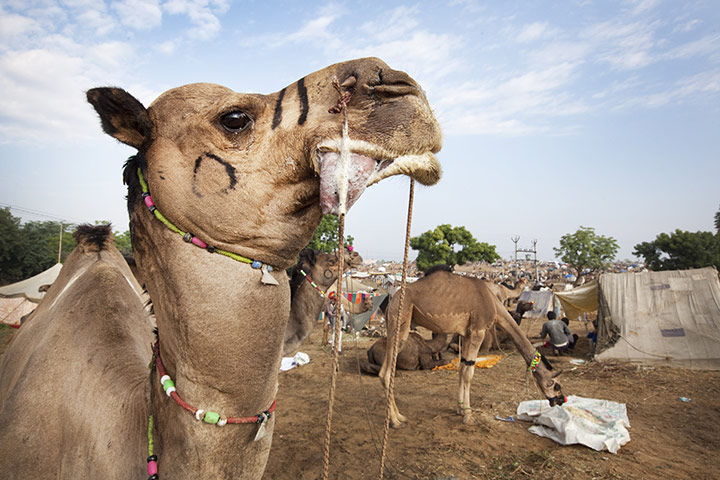
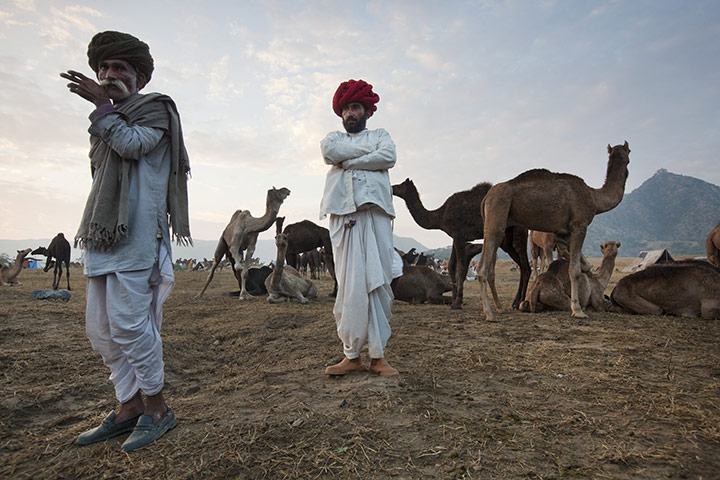
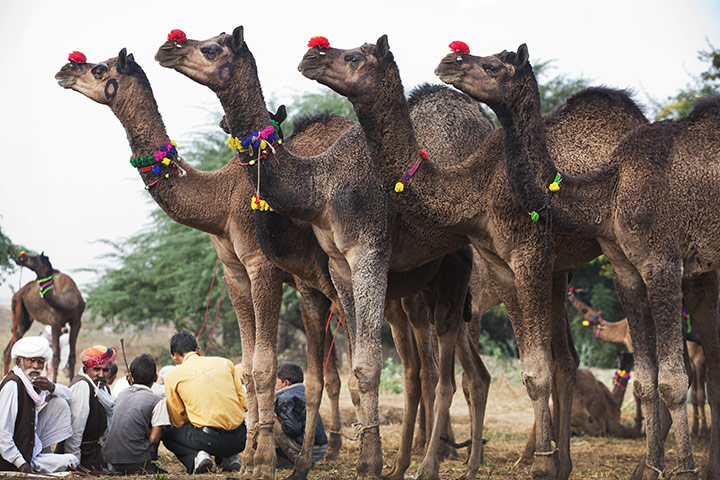
Pushkar Camel Fair, Rajasthan, India. The fair attracts hundreds of Rabadi herdsmen who buy and sell many thousands of camels here each year However because of rain in recent days many sellers are reporting that trade is worse than usual and that many farmers who would be buyers have chosen to remain with and protect their freshly harvested crops (typically groundnut and millet) rather than travel to the fair. Wholesale merchants who bring anywhere from 15 to 70 camels to sell at the fair can travel for up to 2 weeks from across RajasthanPhotograph: David Levene for the GuardianThis young camel has been sold, identifiable to the buyer by his necklacePhotograph: David Levene for the GuardianJagdish Rabari and his extended family (from Bavasia village in Nagaur, Rajasthan) eat breakfast alongside some of the 70 camels they have brought to the fair for sale. They have so far sold only 25 camels – sales are poor this year Photograph: David Levene for the Guardian
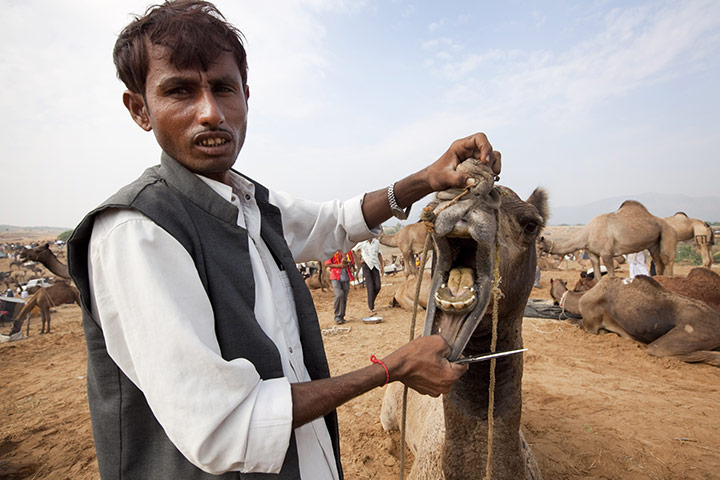
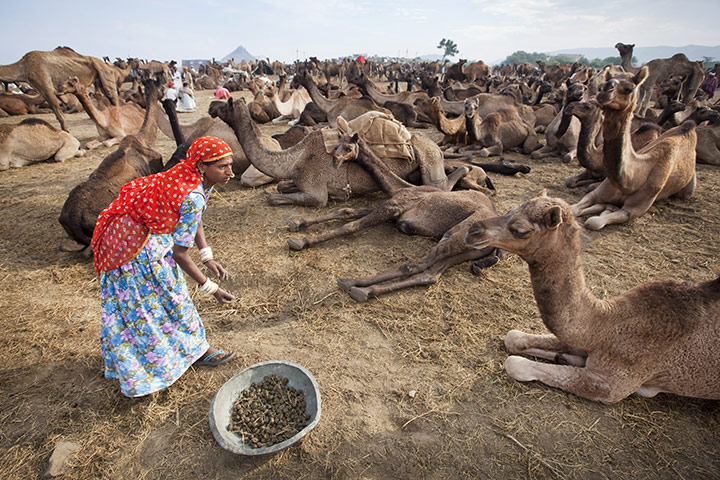
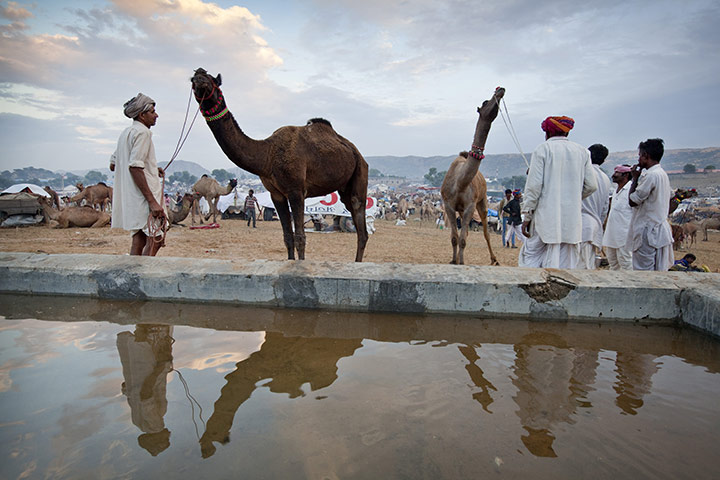
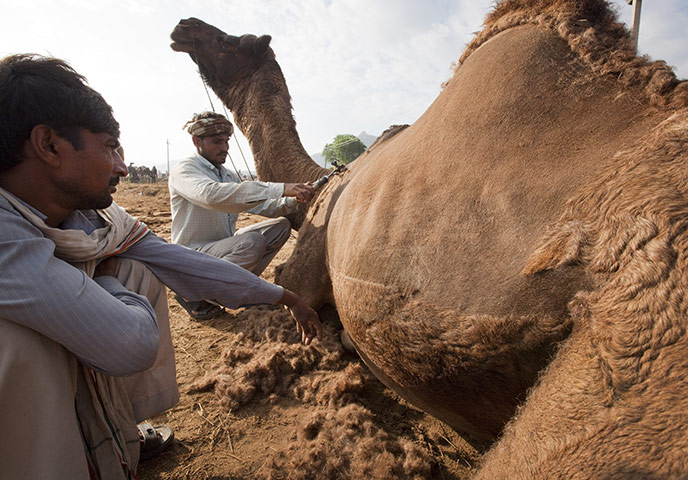
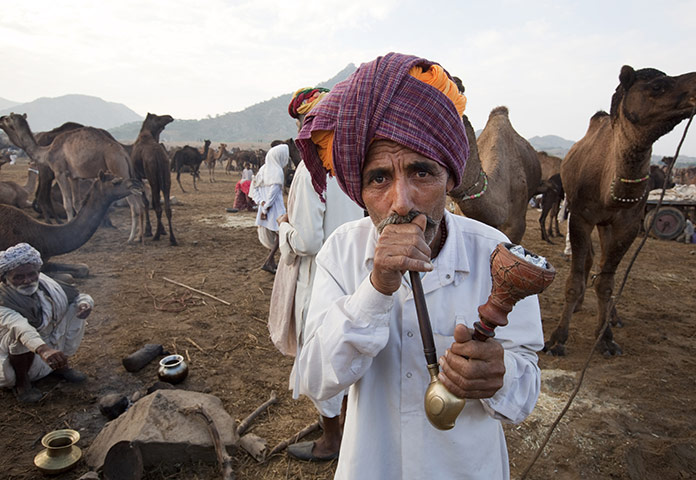
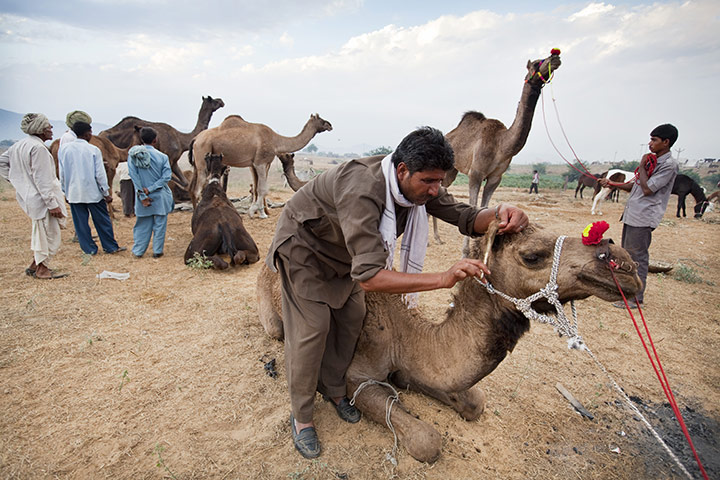
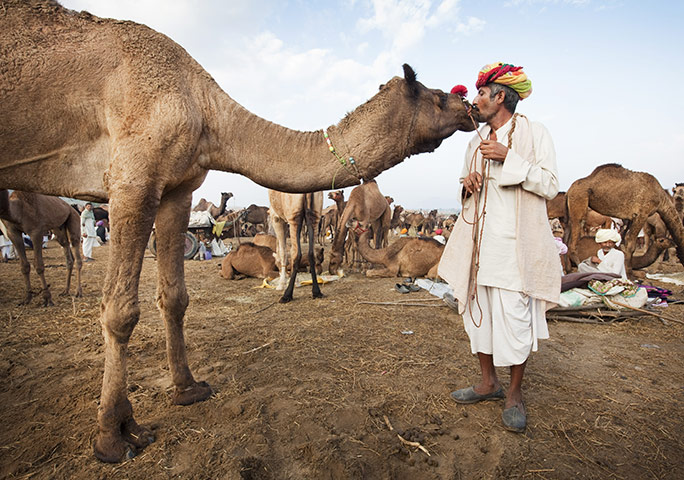
Buyers always check the camel's teeth, a sign of good pedigree and good healthPhotograph: David Levene for the GuardianBhairav, from Pali, Rajasthan (red turban) and his two partners are ready to pay around 15,000 rupees for this camel, about £200 Photograph: David Levene for the GuardianCamel trading is almost exclusively dominated by men. One of the jobs for local women is to constantly circle the fairgrounds collecting camel dung and take it to a 'dung shop' where it is laid out and dried. The camel owners and other fairgoers buy back the dung as fuel for cooking firesPhotograph: David Levene for the GuardianIndividual markings on the camel's face identify the town or village they hail from, as well as the trader or breeder Photograph: David Levene for the GuardianCamels at a water troughPhotograph: David Levene for the GuardianA camel has its hair trimmed Photograph: David Levene for the GuardianA fairgoer smokes a traditional pipePhotograph: David Levene for the GuardianA Raika herdsman trims the ear hair of one of a camels before showing it for salePhotograph: David Levene for the GuardianBhairav, from Pali, Rajasthan (red turban, centre) and his partner look at camels for purchase in the wholesale areaPhotograph: David Levene for the GuardianBuyers typically hail from across the north-western states of India. These days many more female camels are being sold, the higher prices they command compared to male camels is due to increased demand for camel milk as well as their added value for breedingPhotograph: David Levene for the GuardianJagadish Rabadi, from Bavasia in Nagaur, Rajasthan, kisses one of the 70 camels he has brought to sell. Although he has so far sold 25 he remains less than happy with tradePhotograph: David Levene for the Guardian
Sign up to read this article
Read news from 100’s of titles, curated specifically for you.