For more than two decades, Black residents of Rhode Island have argued that the official name of their state, "The State of Rhode Island and Providence Plantations," connotes slavery and should be changed.
It's a "hurtful term" that "conjures extremely painful images for many Rhode Islanders," said Democratic state Sen. Harold Metts, who traces his family lineage to a plantation in Virginia and is the only Black man in the Senate.
Metts sponsored a bill to amend the state constitution to remove "Providence Plantations" from the official state name. Rhode Island voters will decide in November, but Democratic Gov. Gina Raimondo already has issued an executive order removing the phrase from official state documents, websites and paystubs.
Citing the George Floyd killing in Minneapolis, Raimondo said Rhode Island must do more to fight racial injustice. "Plantation" is a word "associated with the ugliest institution that our country has ever had," she said at a news conference. "That's why I think it's time — it's past time — to get rid of it."
But opponents say it doesn't make sense to apply today's standards to historical figures and phrases.
"Unnecessary and inadvisable," Patrick T. Conley, a retired Providence College history and constitutional law professor, author and the state historian laureate, said in an interview. He noted that in the 17th century, when the Rhode Island colony received its royal charter, the word plantation meant a settlement, not what it means today.
"History is history, and we shouldn't try to impose today's standards on the past," said Conley, who hopes the amendment fails again. He dismisses the movement to rename offensive places as "a craze — part of the whole rewriting of our history."
From Boston to Austin, from tiny islands off the coast of Maine to majestic mountain peaks in Colorado and California, Americans are scrubbing the names of Confederates, slaveholders and avowed racists from streets, schools and public spaces and eliminating terminology judged to be derogatory to Black people, Native Americans and other minorities.
Jim Grossman, executive director of the American Historical Association, said in an interview that changing demographics and community values should prompt people to reconsider who should be honored. He suggests putting names of buildings and streets up for reconsideration every 25 years. The state, city or county would hold a referendum on whether to keep the names or change them.
"We are learning the history we thought happened didn't happen the way we thought. That happens all the time," Grossman said. "Revisionism isn't lying or making it up. There's new evidence."
But critics say renaming can go too far. At the end of August, a Washington, D.C., government task force recommended renaming, relocating or adding context to dozens of monuments, schools, parks and buildings in the city because the people for whom they were named were involved in slavery, encouraged the oppression of Black people and other communities of color or contributed to systemic racism.
The original review named federal memorials and statues including the Washington Monument and Jefferson Memorial. Washington and Jefferson were slaveholders. But Democratic Mayor Muriel Bowser later emphasized that the city does not have jurisdiction over federal monuments, and said she was surprised they were included.
The review also cited a Benjamin Franklin statue, which is federal property, as well as a school named for Franklin. His inclusion highlights the complexities of the issue: Franklin did own enslaved people at one point in his life, but he later became an outspoken abolitionist.
The White House issued a statement in response to the review, accusing Bowser of "repeating the same left-wing narrative used to incite dangerous riots: demolishing our history and destroying our great heritage."
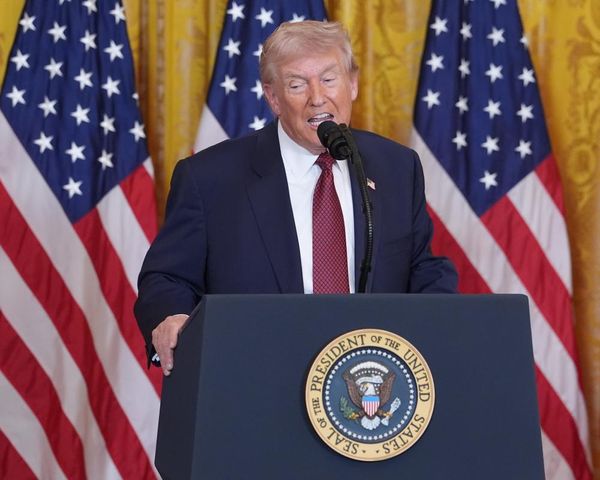
"President Donald J. Trump believes these places should be preserved, not torn down; respected, not hated; and passed on for generations to come," the statement said.
Grossman sees a bright line between those who committed treason by taking up arms against the United States for the right to own other human beings and those who owned slaves earlier in history. Removing monuments to Confederates "is a no brainer," he said, adding they can be relocated to museums.
"The issue of individuals who owned slaves but were memorialized for meaningful accomplishments in their lives," Grossman said, "is a far more complicated issue and should be addressed by conversations with historical experts and relevant communities."