A retired U.S. Army captain and Iraq War veteran is taking legal action after National Guard troops approached her outside her Washington, D.C. home, pushed her to the ground and detained her in an aggressive, caught-on-camera confrontation.
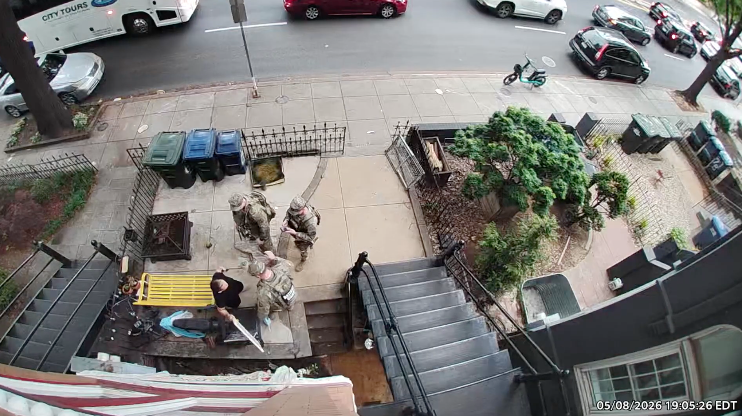
Anna King, who received a Purple Heart and Bronze Star for her service, was cornered on her front porch by three National Guard troops on the evening of May 8.
“Get away from me right now,” King can be heard telling the guards in footage taken on a Ring security camera. “You have absolutely no authority to detain me.”
Footage shared by the ACLU of the District of Columbia shows King trying to go inside her home as the men, three Idaho National Guard members, grab King and force her to the ground as she screams for them to get off her.
“Get off of me, you f***ing a******,” King exclaimed in the clip, crying out for help as the men handcuffed her tightly — and refused to loosen the handcuffs when she complained.
King suffered serious injuries from the incident, and her wrist required surgery afterward, according to the ACLU.
As a result, the ACLU of the District of Columbia and the law firm Levy Firestone Muse have filed a federal tort claim against the Idaho National Guard on King’s behalf. The Federal Tort Claims Act allows private citizens to file claims against the federal government for injuries caused by neglect or wrongful acts of federal employees.
They are seeking $3 million in damages for the National Guardsmen’s “needlessly rough treatment” of King, which left her dominant hand severely injured. King is still limited in her use of that arm and hand, and “everyday tasks, including showering and using the bathroom, remain a struggle,” according to the claim.
However, the National Guard claims that King was approached by the troops because she was a suspect in an assault of a National Guardsman two days earlier.
King’s lawyers slammed the assertion as “baseless,” noting that no charges related to such an incident have been filed against King.
The two-minute video released by King’s lawyers shows her sitting on a bench outside her home scrolling on her phone when the three guardsmen approach. King, who is holding a sign, tells the troops they can’t detain her and demands they leave — as they move in closer surrounding her. She begins yelling at them, telling them to “get out of my face,” and tries to go up the stairs into her home when the guards grab her by the arms and pull her toward the ground.
One of the guards can be seen on the phone while the two others wrestle with King as she repeatedly screams “Get off of me!” as the two guardsmen secure her in handcuffs.
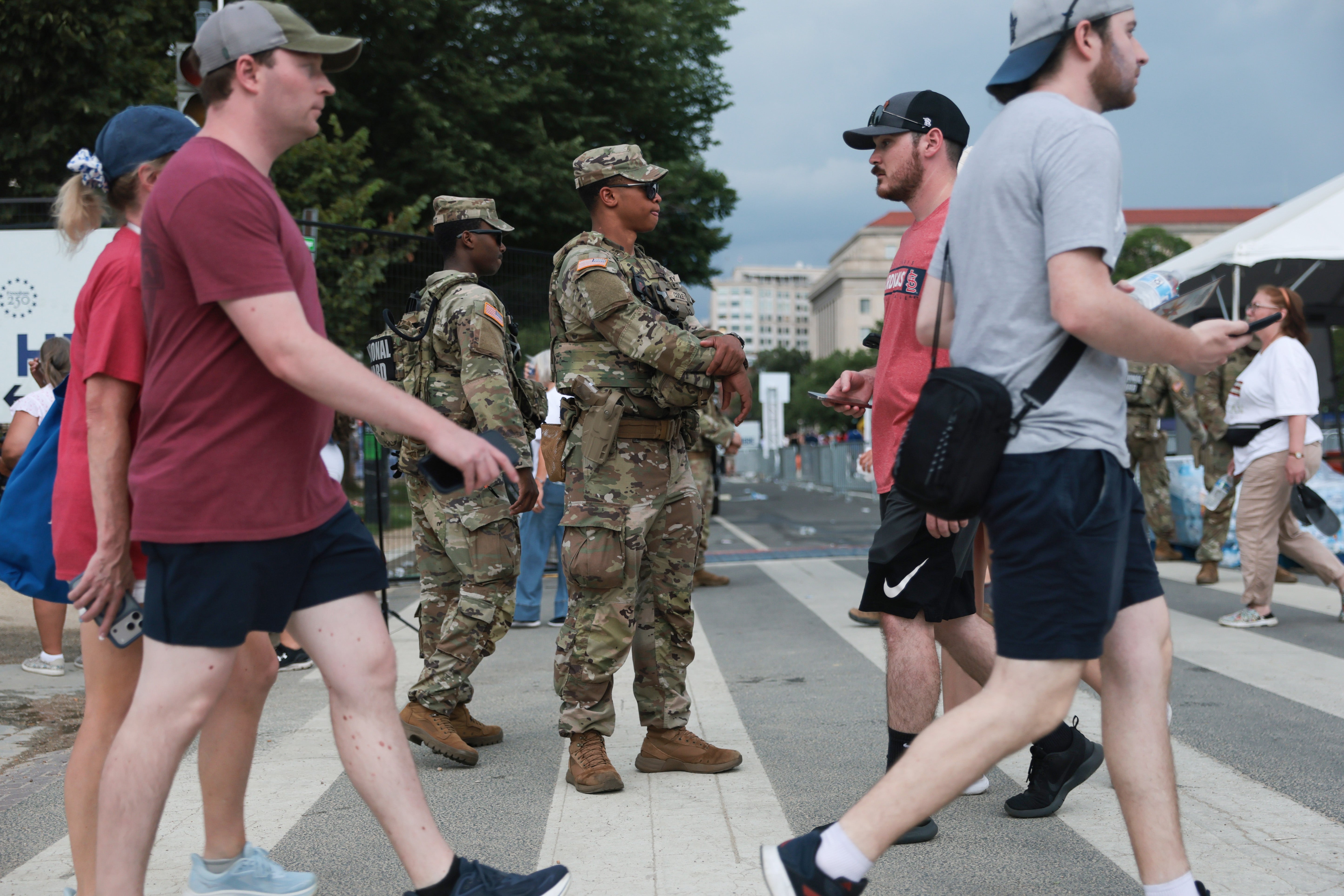
The three National Guardsmen are among the 5,000 troops deployed to Washington, D.C., since last summer as part of President Donald Trump’s efforts to combat crime — though the troops have been found to have had “no measurable effect,” according to a study.
The deployment, which is set to last until January 2029, will cost an estimated $1.4 billion. It also comes as D.C. is experiencing a 30-year-low in crime.
While the National Guards troops carry handguns, they do not have arresting powers. However, they can detain individuals — such as what happened to King — until police arrive.
A spokesperson for the Idaho National Guard told The Independent that it is aware of the legal claim filed against some of its members, but cannot comment on the claims.
King’s attorneys said they believe she was targeted because she has been outspoken against the National Guard’s presence in D.C., including putting signs on her front patio that are critical of their deployment. Two signs read: “Occupation: Troops Out” and “National Guard Stop Being So Embarrassing.”
In addition to causing severe injuries to King’s hand, the filing claims that the guardsmen’s actions “reactivated” King’s post-traumatic stress disorder, which she was diagnosed with after her deployment to Iraq.
In a video shared by the ACLU, King acknowledged the ongoing physical injuries that she is dealing with as a result of the detainment as well as the emotional and psychological impacts of the incident.
“Being a veteran, being a combat veteran, having served in war, to then be abused and assaulted by National Guardsmen at home, has decreased my ability to sleep again. I’m having nightmares daily,” King said.
“I know for a fact that protesting is one of the very protected things we have here,” she continued.
“I’m not going to stop protesting, I’m not going to stop sitting outside of my home on my bench, and I’m not going to stop bringing awareness to the fact that armed National Guardsmen in any city in the U.S. is uncalled for.”